ADAD

Updating your news feed...
NEWS EXPRESS is Nigeria’s leading online newspaper. Published by Africa’s international award-winning journalist, Mr. Isaac Umunna, NEWS EXPRESS is Nigeria’s first truly professional online daily newspaper. It is published from Lagos, Nigeria’s economic and media hub, and has a provision for occasional special print editions. Thanks to our vast network of sources and dedicated team of professional journalists and contributors spread across Nigeria and overseas, NEWS EXPRESS has become synonymous with newsbreaks and exclusive stories from around the world.









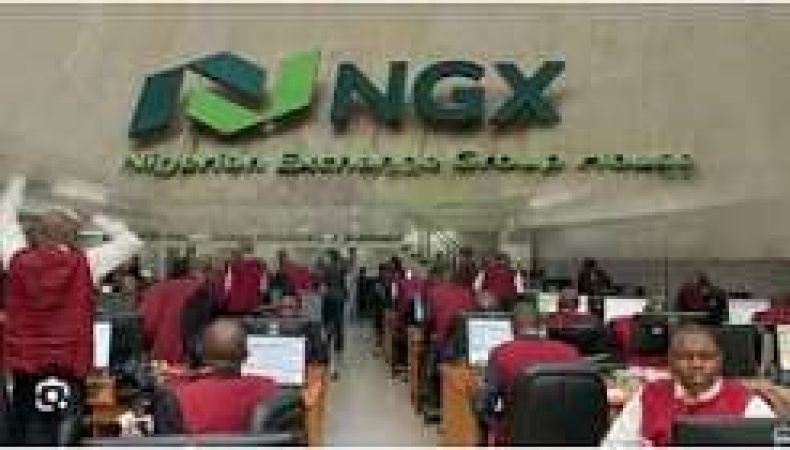












NGX LOGO
Despite the growing competition from financial technology companies offering low-cost digital payment services, 10 banks listed on the Nigerian Exchange Limited (NGX) earned N2.01 trillion in fees and commissions in the nine months that ended September 30, 2026, up 10.7 per cent from N1.81 trillion in the corresponding period of 2025.
THISDAY reviewed Zenith Bank Plc, Access Holdings Plc, United Bank for Africa Plc (UBA), Guaranty Trust Holding Company Plc (GTCO), First HoldCo Plc, Stanbic IBTC Holdings Plc, FCMB Group Plc, Wema Bank Plc, Sterling Financial Holdings Company Plc, and Jaiz Bank Plc.
Account maintenance charges and electronic banking fees and commissions were among the major sources of income.
Transactions through point-of-sale (PoS) terminals, Unstructured Supplementary Service Data (USSD) channels, automated teller machines (ATMs) and internet banking platforms also contributed to the earnings.
THISDAY gathered that an expanding customer base helped lift revenue from credit-related fees, account maintenance charges, foreign currency transaction fees and electronic banking services. ReadNewspapers
The rise in income came as providers such as MoMo Payment Service Bank and Airtel SmartCash continued to offer free cash deposits and fund transfers, putting pressure on traditional banks’ fee income.
UBA recorded the highest fee and commission income among the institutions reviewed, followed by Zenith Bank and First HoldCo.
Despite leading the group, UBA’s fee and commission income fell by 1.5 per cent to N401.19 billion from N407.20 billion a year earlier.
Zenith Bank’s income rose by 24 per cent to N370.80 billion from N299.04 billion, while First HoldCo reported a 40.9 per cent increase to N367.06 billion from N260.50 billion.
Stanbic IBTC Holdings recorded a 23.9 per cent increase to N236.06 billion from N190.52 billion, while Access Holdings’ income fell by 23.7 per cent to N215.80 billion from N282.90 billion. GTCO posted N213.55 billion, up 1.4 per cent from N210.50 billion.
FCMB Group’s fee and commission income climbed by 32.6 per cent to N93.60 billion from N70.60 billion, while Wema Bank’s rose by 28.5 per cent to N55.14 billion from N42.90 billion. Sterling Financial Holdings Company reported a 12.3 per cent increase to N49.80 billion from N44.35 billion. Jaiz Bank’s income edged up to N4.20 billion from N4.14 billion.
On December 1, 2024, digital payment platforms, including OPay, Moniepoint, PalmPay and Kuda, began applying the N50 Electronic Money Transfer Levy (EMTL) to qualifying transfers of N10,000 and above. The Finance Act 2020 introduced the levy.
The Central Bank of Nigeria (CBN) had earlier introduced a negotiable current account maintenance fee, capped at N1 per N1,000 on eligible debit transactions, following the phasing out of the commission on turnover.
Under the CBN’s revised Guide to Charges by Banks and Other Financial Institutions, which took effect on May 1, 2026, banks can no longer charge maintenance fees on naira-denominated debit and credit cards. Virtual cards remain free, while the charge for issuing or replacing physical debit and credit cards rose from N1,000 to N1,500.
The revised framework replaced the previous guidelines, which took effect in January 2020. It applies to institutions supervised by the CBN, including commercial banks, microfinance banks, payment service banks and mobile money operators.
Some financial market analysts attributed certain banks’ reliance on customer charges to a lack of alternative fee income sources. They also cited limited CBN enforcement against excessive charges.
Competition from digital payment providers continues to pressure banks to improve their services and diversify their income sources. (THISDAY)