ADAD

Updating your news feed...
NEWS EXPRESS is Nigeria’s leading online newspaper. Published by Africa’s international award-winning journalist, Mr. Isaac Umunna, NEWS EXPRESS is Nigeria’s first truly professional online daily newspaper. It is published from Lagos, Nigeria’s economic and media hub, and has a provision for occasional special print editions. Thanks to our vast network of sources and dedicated team of professional journalists and contributors spread across Nigeria and overseas, NEWS EXPRESS has become synonymous with newsbreaks and exclusive stories from around the world.














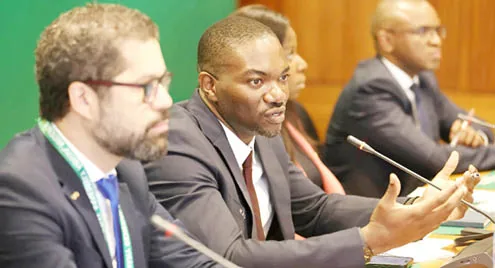



Vice-President of SOFPON, Dr Ibrahim Yakubu
The Society of Family Physicians of Nigeria, SOFPON, yesterday raised the alarm over the state of primary healthcare in the country, revealing that only about 20 per cent of more than 30,000 Primary Healthcare Centres, PHCs, nationwide are fully functional.
Vice-President of SOFPON, Dr Ibrahim Yakubu, who disclosed this during a press conference themed, “Primary Health Care Without Family Physicians: Can Nigeria Afford the Gap?”, will also focus on “The Double Burden of Disease and the Cost of Fragmented Care” and “The Stressed Family Physician and Continuity of Care”. on November 19th 2026 ahead of the society’s 29th Annual General and Scientific Meeting, AGSM, said the country’s primary healthcare system was facing a serious operational crisis.
He explained that the shortage of skilled medical personnel, poor funding and increasing migration of doctors were undermining access to quality healthcare, calling on the Federal Government and state governors to urgently integrate family physicians into the leadership of primary healthcare facilities.
Yakubu who said the majority of PHCs were unable to provide essential medical services due to structural decay, inadequate funding and shortage of skilled health professionals.
According to him, the conference will develop policy and clinical recommendations on integrating specialist services into primary healthcare, improving physician welfare and retention, and developing integrated care models for infectious and chronic diseases.
He described the situation was being worsened by the increasing migration of doctors, particularly frontline medical professionals, due to poor working conditions, inadequate equipment and weak welfare structures.
He said loss or sidelining of family physicians could further weaken the country’s healthcare delivery system, particularly at the grassroots where continuous and comprehensive medical care is required.
He further explained that family physicians were specially trained to manage patients holistically, coordinate treatment and address both infectious and chronic diseases at the primary healthcare level.
Yakubu said the country’s healthcare system was battling a double burden of disease, with communicable illnesses such as malaria, tuberculosis and cholera existing alongside rising cases of non-communicable diseases, including hypertension, diabetes, kidney diseases and cancer.
He warned that the absence of coordinated healthcare services was increasing treatment costs for families and making it difficult to manage patients with multiple health conditions.
He said the society also urged governments to move beyond constructing PHC buildings to adequately equipping existing facilities and providing sufficient funding and personnel to operate them.
Yakubu added that positioning family physicians at the centre of primary healthcare would promote early detection of chronic illnesses, reduce treatment costs and ensure continuity of care.
He said: “Data shows that only about 20 per cent of the over 30,000 PHC facilities across Nigeria are fully functional, with a vast majority unable to provide essential medical services.
“The rest suffer from structural decay, severe funding deficits that fall far below the 15 per cent Abuja Declaration target, and a devastating shortage of skilled medical professionals.
“When you remove the Family Physician, the specialist trained specifically to manage multi-dimensional, continuous, and holistic patient care from the community level, you create an unfillable gap.
“We are here today to tell the government and the public that Nigeria cannot afford this gap. Fragmented care is too expensive, too dangerous, and completely unsustainable,” he said.
“The society also raised concerns over the welfare of doctors, warning that excessive patient workloads, burnout, economic pressures and security threats were affecting the quality and continuity of healthcare delivery. A single family doctor in Nigeria today routinely consults for numbers of patients that far exceed international safety standards.
“Why does the stress of a doctor matter to the average Nigerian citizen? It matters because a stressed doctor is a direct threat to the continuity of care. If we want a healthy nation, we must care for the people who care for the sick. A broken doctor cannot heal a broken healthcare system.
Against this backdrop, SOFPON called on the Federal Ministry of Health, state governors and health sector administrators to make the integration of certified family physicians into the administrative and clinical leadership of primary healthcare authorities mandatory.
I further called for targeted rural allowances and improved security measures for doctors working in underserved and high-risk communities.” Yakubu said.
SOFPON said the issues would form part of discussions at the 29th AGSM, where family physicians, medical scholars and policymakers would examine strategies for strengthening primary healthcare delivery. (Vanguard)