ADAD
Updating your news feed...

NEWS EXPRESS is Nigeria’s leading online newspaper. Published by Africa’s international award-winning journalist, Mr. Isaac Umunna, NEWS EXPRESS is Nigeria’s first truly professional online daily newspaper. It is published from Lagos, Nigeria’s economic and media hub, and has a provision for occasional special print editions. Thanks to our vast network of sources and dedicated team of professional journalists and contributors spread across Nigeria and overseas, NEWS EXPRESS has become synonymous with newsbreaks and exclusive stories from around the world.























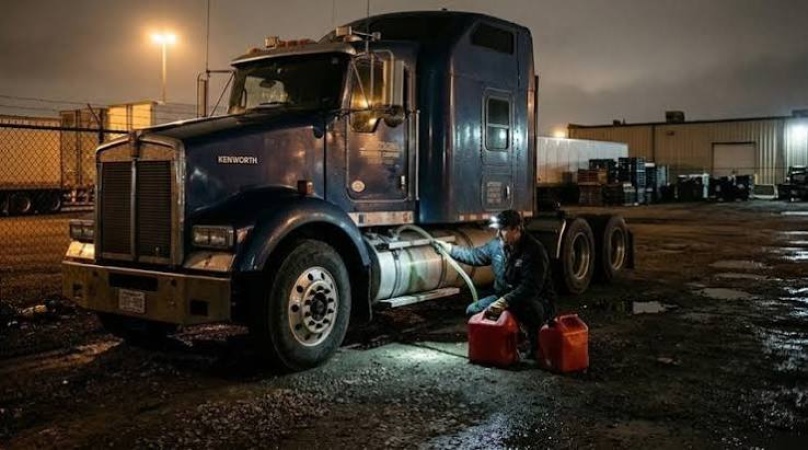


Diesel trucks
Running a haulage or logistics business is no small task. With rising operational expenses, high maintenance costs, and fluctuating fuel prices, every drop of diesel counts. Fuel usually accounts for the single largest operating expense for heavy-duty commercial trucks.
Many transport owners suffer huge losses not because business is slow, but because fuel is leaking out of their system through dishonest means. Fleet managers and logistics companies often record missing liters that cannot be accounted for at the end of long journeys.
According to reports from Cartrack Fleet Management Solutions, fuel siphoning and fleet fuel diversion remain major operational challenges for haulage operators globally, draining millions in revenue when left unchecked.
Here are four common ways dishonest drivers divert diesel from company fleet trucks:
Direct hose siphoning from the fuel tank
The most straightforward and widely used method is direct physical siphoning. Drivers or their accomplices wait until the truck is parked overnight at unmonitored locations, layover parks, or secluded highway stops.
They insert a flexible rubber hose directly into the neck of the fuel tank and draw out diesel into jerry cans or storage drums. A driver can remove 20 to 50 liters in just a few minutes without leaving obvious physical damage on the truck.
Because the driver controls the vehicle during long-distance trips, they can easily blame the heavy fuel loss on bad roads, heavy traffic jams, or poor engine performance.
Fuel card misuse and dual pumping scheme
Another common trick does not involve siphoning from the truck at all, but happens right at the filling station pump. When fleet companies give drivers company fuel cards or cash for refueling, some drivers collude with dishonest petrol station attendants.
The driver authorises a full tank purchase on the company account—say 300 liters—but only pumps 250 liters into the truck. The remaining 50 liters are pumped into a third-party vehicle, a private car, or jerry cans brought by illegal fuel vendors.
The station attendant gives the driver a genuine receipt for the full 300 liters, and both parties split the cash proceeds from the diverted portion. To the manager reviewing receipts back at the office, the transaction appears completely clean and legitimate.
Tampering with fuel return lines and sensors
As fleet owners invest in technology like GPS tracking and digital fuel level sensors, dishonest drivers have also adopted more subtle techniques. Drivers sometimes modify or loosen the fuel return line that carries excess diesel from the engine back to the tank.
By attaching a small side valve or T-connector to the return line, fuel slowly bleeds out into a hidden container while the truck is actively running on the road. Because the diesel is diverted while the engine is running, telematics software often mistakes the loss for normal engine consumption.
In other instances, drivers disable or short-circuit capacitive fuel sensors inside the tank or block GPS signals using jammers to create blackouts in data reporting. Once the sensor loses power or signal, the driver siphons the fuel undetected before restoring the device.
Fake mileage claims and route manipulation
Drivers also cover up diesel diversion by intentionally manipulating their travel distance or engine idle time. A driver might take unauthorized detours to offload diverted diesel to local black-market buyers.
To justify why the fuel level is low, the driver claims they encountered major road diversions, long traffic standstills, or engine idling during overnight stops. Some drivers even tamper with the odometer to show higher mileage than the vehicle actually covered.
By inflating the distance traveled or exaggerating idle hours, the driver creates a convincing excuse for why the truck consumed far more diesel than expected on a standard route.
How fleet owners can protect their fuel
Stopping fuel diversion requires a combination of physical hardware and digital monitoring. Installing heavy-duty anti-siphon neck inserts prevents hoses from entering the tank. Adding locking fuel caps further secures the tank entry points.
On the technology side, pairing GPS tracking with real-time digital fuel level sensors allows fleet managers to receive instant alerts whenever tank levels drop suddenly. Restricting fuel card usage with PIN verification, location limits, and strict daily volume caps also prevents pump collusion.
By regularly comparing mileage against actual fuel consumption, logistics companies can eliminate hidden losses and protect their bottom line. (Sunday Tribune)