 ADAD
ADADUpdating your news feed...

NEWS EXPRESS is Nigeria’s leading online newspaper. Published by Africa’s international award-winning journalist, Mr. Isaac Umunna, NEWS EXPRESS is Nigeria’s first truly professional online daily newspaper. It is published from Lagos, Nigeria’s economic and media hub, and has a provision for occasional special print editions. Thanks to our vast network of sources and dedicated team of professional journalists and contributors spread across Nigeria and overseas, NEWS EXPRESS has become synonymous with newsbreaks and exclusive stories from around the world.





Loading banners
Loading banners...

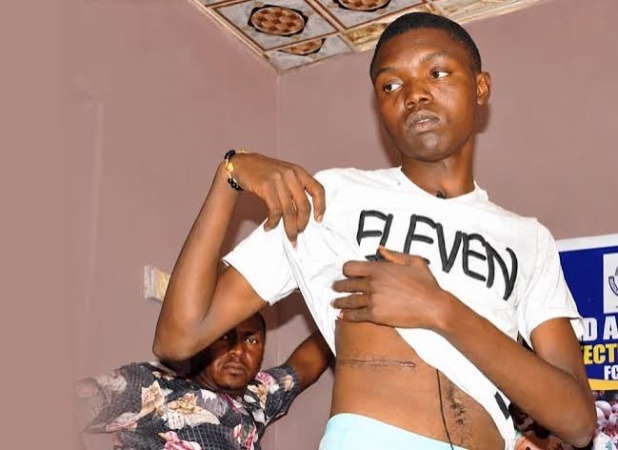
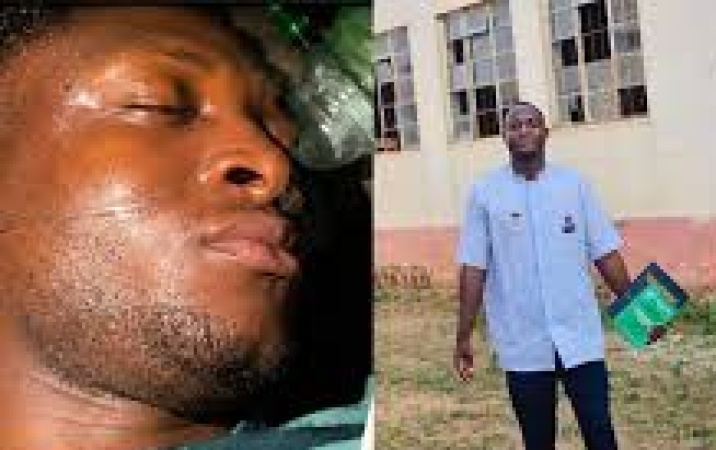
A victim of organ harvesting
Illegal organ harvesting in Nigeria is apparently booming and becoming increasingly brutal. It could be only a matter of time before the nation is flooded with a large number of young people facing kidney-related health challenges. For the syndicates and their collaborators, the abominable trade has become another oil well, allowing them to smile all the way to the bank at the expense of vulnerable children’s lives. The menace may assume more disturbing dimensions in the days ahead if it continues to be treated with kid gloves. INNOCENT DURU reports.
When Oluwatobi Salaudeen, a secondary school leaver, received a call from a friend informing him about a job opening, he leapt with excitement, happy that an opportunity had come for him to work and earn some income to meet basic needs.
The opportunity appeared to demand urgent response as it required Oluwatobi to be at the place the following day.
Without hesitation, he left for his friend’s house when the day broke. Getting there, they left for the supposed place of work where developments that he did not recognise as red flags began to emerge. “We went for a scan,” he said innocently. Thereafter, “I followed another woman to sign a document. We finished very late. When I wanted to go home, my friend told me that I should not go. He urged me to stay back and go the following day.”
Still not suspecting anything, Oluwatobi spent the night in the place with his friend.
While he was asleep, Oluwatobi’s friend and the doctor were awake, working out something sinister. “When I was sleeping at night, my friend came and woke me. He said we should walk into the theatre. When we entered the theatre, I was given some injections that made me fall asleep.”
Before he opened his eyes, the deed had been done. He woke up to see a stitched scar on one side of his stomach. The scar marked the site from which one of his kidneys had been harvested.
“We didn’t discuss anything about money at the beginning. It was after we finished that the man said he was going to give me N1 million,” he said.
Then came the big rip-off.
“Eventually, he (the doctor) didn’t give me the entire money. He gave it to me in parts. He didn’t even give me the money directly,” Oluwatobi said.
Narrating how the payment was made, Oluwatobi said: “He sent the first money to a phone. They bought the phone and claimed that the phone was lost. Thereafter, they said I should go to a phone vendor whom he sent N500,000 to. The vendor sent N220,000 to my account. Before I went to remove the stitches and go to Lagos, he sent N380,000 to a friend of mine’s account. I was the one who bore the cost of going to remove the stitches. They didn’t assist or support me to do that.”
Even if he had been paid the entire N1 million, Oluwatobi would still have been grossly exploited.
Reports said harvested organs are resold downstream sometimes for foreign patients for between N50 million to N70 million.
A report by Science Insights, a foreign publication, lent credence to this with a grim picture of the magnitude of exploitation that people like Oluwatobi were subjected to, allowing the syndicates to harvest their vital organs. The report said: “A kidney’s “worth” depends entirely on who you ask and which side of the transaction you’re on. On the black market, a buyer pays between $50,000 and $200,000 for a kidney. The person who actually gives up the organ typically receives less than 10% of that, often between $1,000 and $10,000. In the legal medical system, a kidney transplant in the United States costs an average of $414,800 when you include all pre- and post-transplant care, but the organ itself has no price tag. Selling organs is illegal in virtually every country on earth.”
A report by DW ranked Nigeria among the top five countries in Africa with disturbing cases of organ trafficking. It said “Though details about the illicit world of human organ trafficking are unclear, it is believed that Egypt, Libya, South Africa, Kenya and Nigeria are the most affected countries in Africa.”
Apparently seeking to keep Oluwatobi away from his relatives, the syndicates “ eventually asked me to leave for Lagos. I still spent my money to travel to Lagos. My parents were mad at me when they got to know about it. To make matters worse for my father, my mother was sick around that period.”
Oluwatobi’s case is one of many in which syndicates use vulnerable children’s peers to lure them to where their kidneys are harvested for peanuts.
A consultant nephrologist at Aminu Kano Teaching Hospital, Professor Aliyu Abdu, at a seminar on National Organ and Tissue Transplantation Standards held in Abuja, revealed that no fewer than 651 kidneys were illegally harvested and transplanted in Nigeria between 2015 and 2020, with an estimated global value of more than $41 billion.
According to him, Nigeria’s cases are part of a wider global organ trade in which about 10,000 kidneys are sold on the black market annually.
“Many donors are abandoned after surgery and left to suffer long-term complications and emotional trauma,” he said.
Data from The Lancet, a weekly peer-reviewed general medical journal indicate that 30 per cent of victims die within one year from complications and inadequate care.
Following the rise in organ harvesting cases, another nephrologist, Dr Zumnan Gimba told our correspondent that “if it is not regulated, and if somebody cannot get it through monetary inducement, then the next thing that may happen, it will be obtained by force. A parent can because there’s no money, say come and harvest the organ of one child.”
Musa Yahaya is another victim. Like Oluwatobi, he was also lured by a friend. Providing a background to why he began a desperate job hunt, he said: “They were always quarreling with me at home that I wasn’t doing anything. Tired of the complaints at home, I started telling my friends about my ordeal. I told them I wanted something I would be doing to get money and start doing something.”
Seeing his vulnerability, one of his friends told him that there “is one hospital where they do operations and put something and later give money to the person. When I asked him what the hospital will put in the person, he said they would not put anything, that it is just an operation. He said, after the operation, they will just carry N1 million and give to me.”
The promise of a N1 million reward by the friend captivated Musa.
“I asked when we are going to go to the hospital and he told me that the doctor used to call to tell him when he needs O-positive or any other. He promised to inform me anytime the doctor called him.”
Musa eventually met the doctor who asked if “I used to collect transfers. I told him I didn’t have a phone or a bank account. I said I didn’t know where he could transfer the money to. I told him I just needed the money in cash. The doctor said the cash wasn’t a problem. He said he had N1 million at home. He said he would bring the money after the operation.”
The deal was sealed, and his kidney was harvested for a paltry sum of N1 million.
When the time they gave him to stay in the clinic to recover ended, Musa went back home. Unfortunately, he couldn’t hide his condition for too long.
“My brother observed the way I was sleeping. He said the way I used to sleep before wasn’t the same way I was sleeping. My brother asked me to raise my shirt. When I did, he saw the iron they arranged on my stomach and took me to my father. My father started asking me probing questions. He demanded to know who did it to me and who took me to the place. I told him it was one of my friends that took me to a hospital in Area 11 Garki for the operation.”
The founder of the Boy Advancement and Protection Foundation, Uchechukwu Paul, shared the video of the victims’ confessions with our correspondent.
The video was recorded during one of his advocacy works with the victims and their community leaders.
Uchechukwu called for protection of vulnerable children, saying: “The question you should ask is, where are the laws that protect the boy-child? Where is the Nigeria Medical Association? These children are kidnapped without the consent of their families and kept in the hospital after harvesting their kidneys for months. The money they promised them is not even given to them. The aim of keeping them is what we don’t know. How can we allow that kind of evil to happen in Nigeria?”
The victims’ community head, Mai Angwa of Tundu Wada, said in the video: “The victims are so many. It is not only these two that you are seeing here.”
His remarks attest to concerns in the land that the criminal business of organ harvesting especially of vulnerable young ones is more than it appears on the surface.
Other heartbreaking exploitation
A recently reported case of organ harvesting involved a dark-complexioned boy, Samuel Ezekiel. His ordeal began after he placed unquestioning trust in a friend.
He said “my friend, Emmanuel Odey deceived me. I always did anything he asked me to do.”
Narrating how his friend made the arrangements for his kidney to be harvested, he said: “Emmanuel called the agent who said he will get back to us after two days. After two days Emmanuel called back the agent who said they have got somebody that my kidney matches his own. Emmanuel took me to Ben’s place.”
The criminal operation also involved changing victims’ identities, as Samuel later explained.
“Ben said I will have to change my name to Hassan Abubakar. We were taken to the hospital. They gave us money in dollars. When I was entering the theatre, I gave Emmanuel the money. When I came out from the theatre, Emmanuel had gone to change the money and bought two phones, two power banks and two Wi-Fi. He took one set and gave me the other.”
Thereafter, he said: “We spent about a week in the hospital. After we were discharged from the hospital, Emmanuel took me to a hotel. We stayed in the hotel for two days. We later went to his state in Cross River and spent almost three months there. When I asked him for the money, he said it had finished. He said we didn’t have money to transport ourselves back. He collected my phone and sold it. That’s how we got money to return to Abuja.”
In another video, in which police appeared to be questioning him, Samuel said he sold his kidney for N1.7 million.
Emmanuel Odey admitted to his role in the ugly deal.
“I collected $1,250 from the donor. I didn’t sell my kidney because my blood group didn’t match. I signed the consent form. They didn’t actually state it was a consent form.”
David, another victim who was arrested with Samuel and Emmanuel, said: “ I sold my kidney for N7 million. Nothing is left from the N7 million. The person who brought me into it is not here. His name is Michael.”
Hospital harvests patient’s kidney secretly
While the above cases were borne out of deception, poverty and financial inducement, the next victim’s experience suggests that some cases of organ harvesting may be carried out secretly, without regard for how the victims feel afterwards.
Social media influencer and rights activist Very Darkman recently streamed online, a case of a patient who had his kidney secretly harvested by a hospital where he had gone for treatment.
His words: “Two days ago, this young boy came to my office. He said he went to a hospital and said his kidney was removed. I called a hospital and asked if they do scan for kidney. The doctor said yes. I drove the boy to the hospital to check if the kidney was there or not.
After a thorough check, the doctor was heard in the video confirming the left kidney in the boy’s stomach was no longer there. The activist vowed to pursue justice for the victim.
Reasons for the rise in organ harvesting
A nephrologist, Dr Zumnan Gimba attributed the rise in organ harvesting to the gap between demand and supply.
About 11 per cent to 19 per cent of adults in Nigeria reportedly live with chronic kidney disease (CKD). Globally, the World Health Organisation estimates that 674 million people are living with chronic kidney disease, with most affected people in low- and middle-income countries.
Gimba said: “There’s a demand for organs, but the supply is not enough. And the way God has made us, it’s not any organ that can fit into a human system. I know that recently, there’s been some research where they’ve tried to do a kidney transplant of a pig’s kidney. That worked for some time but it’s not a perfect thing yet.
“It means that nearly all the time, the organ must come from another human being who most times, would be a healthy human being to donate.
“Ideally, the idea would be that the person who should donate should be someone who is donating willingly, someone who is donating without being induced, someone who is donating without being coerced. Those are the premises where donations happen. And it’s something that is encouraged. We want to encourage what is called an altruistic donation. It’s the same way people are encouraged to donate blood. There is nothing wrong if somebody says, “I want to donate an organ.”
The danger, according to him, is where this demand is commercialised, “there is that attraction of some monetary gains. You have people who may be like middlemen, who shop for people, oftentimes these are people who are maybe not really doing too well financially.
“When someone who is trying to struggle to make ends meet, gets an offer of a couple of millions that would come to his account if he donates an organ, that becomes very, very tempting. Again, it’s still a matter of demand and supply. Because these organs do not grow back, it makes it a very difficult event to navigate. And commercialization also is kind of worsening the thing.”
He stated that any hospital that is found to be involved in those kinds of issues should be sanctioned properly, and anybody who is involved in that should also face the law. That way it will be a strong deterrent to anyone.
Dr Gimba said where the problem even becomes more dangerous, apart from commercialisation, is that it will entrench that divide of rich versus poor because it will be the poor that will want to sell their organs. And it’s the rich that will be able to afford the organ. So, that rich versus poor divide, it becomes entrenched.
“The other thing that can also happen is that it will also entrench the divide of the strong versus the weak, because again, if it is not regulated, and if somebody cannot get it through monetary inducement, then the next thing that may happen, it will be obtained by force where the strong will dominate over the weak. Again, it’s not proven. I know there is the accusation of the Western societies against countries like China, where I think in their own society, people who are condemned prisoners, by force, they remove their organs.
It also brings in ethical issues. Again, is it right to do that?
How to guard against illegal organ harvesting
To guard against such practices, Dr Gimba advocated adopting the international agreement known as the Declaration of Istanbul.
He said if there’s no regulation, “a parent, because of financial hardship, could say “come and harvest the organ of one child. If it is unregulated, anything can happen.
“It’s not something that you give money to induce someone to buy, no. Some countries in Europe, I think Spain, have a system where you have to choose to opt out. What they did was to pass legislation. They do what is called a cadaveric donation. Cadaveric donation means if somebody is dead or somebody is dying, you know, you can take the organ of that person. In those countries, they have a system where the person would elect to opt out. For some of the countries in Europe, everybody is a potential donor. Once it gets to that time and they say, no, this person may not survive. The system can take the organ of that person and give it to somebody who needs it.
“But if the person says, I don’t want, the person must sign and say, I don’t want, don’t take my organ. The person can choose to opt out. Some countries have the opt-in option where you can also sign a form and say, oh, I was involved in a very bad accident and I may not survive or oh, I have one illness and you are free to take my organ.
“Then I think some countries like Iran, also have a universal reimbursement. Iran has a system where anybody who wants to donate is paid by the state, not individuals or people. If someone says, “I want to be a kidney donor, there’s a standard amount the state government will pay the person.”
It’s becoming an issue of national concern – NAPTIP
National Agency for the Prohibition of Trafficking in Persons (NAPTIP) told The Nation that the menace of organ harvesting is becoming an issue of national concern, regretting that a number of the victims suffer complications after their experience.
NAPTIP’s spokesman Vincent Adeokoye, said a few cases are being reported to law enforcement agencies.
His words: “On our part, as an agency of government, we have been receiving cases of this. I may not be able to give you for obvious reasons, the exact number that has been reported to us. But we have received cases of organ harvesting reported to us and we have investigated a whole lot of them. We are also prosecuting some individuals and health facilities on this.”
Adekoye said NAPTIP has scaled up awareness, advocacy and enlightenment because “from our findings, we discovered that the target of those traffickers are those disadvantaged communities where there is no education. They target uneducated and desperate youth; youth that are desperate to survive and achieve their dreams in life.
“They deceive, brainwash, recruit and traffic them to some health facilities where their organs are cruelly removed. The most painful aspect of it is that these youths are not educated. There is no informed consent on this. The whole activities are purely illegal. It is purely shrouded in secrecy. When it happens some of the victims don’t know what to do. Some of them walk away. We don’t know what probably may have happened to a whole lot of them. A few ones that have come to complain, some of them had complications from the place they were incised or from their system generally. It is becoming an issue of national concern which every Nigerian should rise up against.
“ NAPTIP has stepped up advocacy in this area. We are embarking on community dialogue in those areas we identify as vulnerable societies.”
Adekoye further said: “We have doubled our strategies. We have reinvigorated our system. We have also connected with stakeholders in those areas. We have connected with sister security agencies, organized men and women bodies, youth bodies and constituted them into a community vanguard that will be able to see what is happening in the community.
“We have also created an avenue to enlighten the youth also. If you go to our social media handles we have also been coming up recently also with some enlightenment to let people know the dangers of organ trafficking. NAPTIP is committed to ensuring that Nigerians are protected from all forms of trafficking, exploitation and whatever it is.” (The Nation)




