 ADAD
ADADUpdating your news feed...

NEWS EXPRESS is Nigeria’s leading online newspaper. Published by Africa’s international award-winning journalist, Mr. Isaac Umunna, NEWS EXPRESS is Nigeria’s first truly professional online daily newspaper. It is published from Lagos, Nigeria’s economic and media hub, and has a provision for occasional special print editions. Thanks to our vast network of sources and dedicated team of professional journalists and contributors spread across Nigeria and overseas, NEWS EXPRESS has become synonymous with newsbreaks and exclusive stories from around the world.










Loading banners
Loading banners...

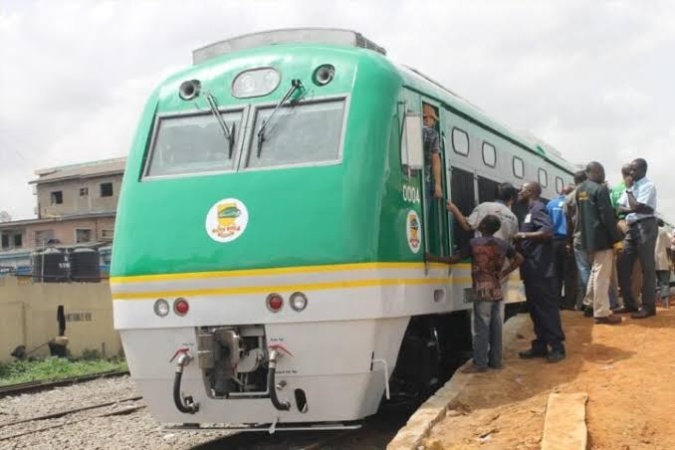
UjevwuItakpe train
Steel lines stretch into the distance, cutting through the landscape like a promise that was supposed to endure. The station stands as a symbol of modern transportation and of a government investment that was expected to connect communities, open new economic opportunities and give travellers an alternative to Nigeria’s often difficult roads.
But there is a question that has become increasingly difficult to ignore: Where is the train?
For the people who depend on the Ujevwu–Itakpe corridor, the railway story is no longer simply about the construction of tracks or the commissioning of infrastructure.
It is about reliability. It is about safety.
It is about livelihoods. And, increasingly, it is about waiting.
The Itakpe–Warri standard-gauge railway, which includes the Ujevwu station, was completed and commissioned in 2020, 33 years after construction began. The Federal Government presented the 327-kilometre line as an important addition to Nigeria’s modern rail network. Commercial freight operations also began on the corridor in 2021.
For communities along the route, however, the true value of a railway cannot be measured by kilometres of track. It is measured by whether the train arrives. And whether passengers can trust that it will arrive tomorrow.
A promise interrupted
The Warri–Itakpe Train Service has experienced a succession of disruptions.
In February 2025, operations were halted because of a technical fault and later resumed.
In April, the Nigerian Railway Corporation suspended full services after technical and operational problems, including engine failures, affected operations.
The NRC said additional time was needed to introduce safety redundancies, improve equipment safety standards and undertake procedural upgrades. Then came another prolonged interruption.
In August 2025, the NRC said urgent and critical track repairs were necessary to guarantee passenger safety, reliability and comfort. The corporation later announced that services would resume on October 29 after repairs, maintenance and system checks on the track and rolling stock. Operations were initially scheduled with seven coaches and temporary speed restrictions for safety monitoring.
For passengers, the return of the train should have represented a return to normalcy. Instead, the corridor encountered another setback.
Just days after the October resumption, a train derailed near Agbor. The NRC suspended services to allow a comprehensive safety and security audit. The corporation subsequently said preliminary investigations pointed to suspected track vandalism, and it announced the arrest of two suspects.
The service eventually returned.
But the cycle of interruption was not over.
Then came 2026. In May 2026, the NRC again suspended the Warri–Itakpe service. This time, the corporation cited operational exigencies and technical advice from its engineers. It said the suspension was necessary to carry out critical operational assessments aimed at ensuring safety, reliability and improved service delivery.
The service resumed again in January 2026 after another delay, with the NRC announcing scheduled operations between Ujevwu and Itakpe. But one of the most serious incidents came on June 8, 2026. A Warri–Itakpe train travelling from Itakpe derailed near Owa-Oyibu in Delta State. According to the NRC’s preliminary report, the train was carrying 482 people—442 passengers and 40 operational personnel.
Four people died and 64 were injured
The NRC said five coaches, one locomotive and a power car were affected, with three coaches and the power car overturning.
The tragedy inevitably changed the conversation. It was no longer simply about delayed trains or inconvenient suspensions. It was about whether the railway could consistently deliver the most basic promise of public transportation: to take people to their destination safely.
What caused the derailment?
This question remains important because the answer is not yet final.
The NRC’s August 2026 preliminary report said its internal investigation found a possible sudden bogie or wheel defect while the train was in motion. It also said the possible manner of brake application may have contributed to the severity of the incident.
But the corporation stressed that these were working hypotheses, not definitive findings. An independent investigation by the Nigerian Safety Investigation Bureau is ongoing, and the final report remains pending. Significantly, the NRC said its investigators found no evidence of track vandalism at the June crash site.
That distinction matters
The corporation had previously attributed two incidents on the same service in November 2025 to track vandalism. The June 2026 incident, however, is being investigated on a different basis.
The track has since been recovered and restored, according to the NRC.
But the corporation says the locomotives are undergoing reconditioning and that service resumption will depend on detailed track and equipment safety audits.
And Ujevwu waits
This is where the statistics become human. For passengers, traders and residents around Ujevwu, every suspension has consequences. A railway station is rarely just a place where trains stop. It can support a small economy of food sellers, transport operators, traders, ticket agents and other informal businesses.
Passengers who arrive at a station buy food, drinks and other necessities. Commercial transport operators carry passengers to and from the station. Businesses emerge around the movement of people. When the train stops, that movement stops with it.
The question therefore extends beyond the railway itself:
What happens to the people whose livelihoods have become connected to the railway?
Reports from the resumption of service at Ujevwu in late 2025 captured renewed calls from stakeholders for the Federal Government to procure more trains, with the argument that rail could reduce pressure on Nigerians travelling by road.
That demand points to another contradiction. Nigeria needs more dependable public transportation.
Yet the railway that should provide part of that alternative has itself experienced repeated interruptions.
Is this abandonment?
To say that government has abandoned the Ujevwu–Itakpe corridor would require more evidence than a series of service interruptions.
The government and the NRC have continued to repair the line, investigate incidents and announce plans for safer operations.
The NRC’s latest report specifically says the corporation is committed to strengthening railway safety, improving operational resilience and restoring public confidence.
The unanswered question
The most revealing thing about Ujevwu is that the railway itself has never disappeared. The tracks are still there. The station is still there. The investment is still there. What keeps disappearing is the certainty that the train will be there when people need it.
That is why the story of Ujevwu–Itakpe cannot be reduced to a question of whether government built a railway.
It did.
The more difficult question is whether government can sustain it. Can the authorities provide reliable services?
Can technical failures be addressed before they become emergencies?
Can the people whose lives and businesses depend on the corridor plan their lives around a timetable they can trust?
Until those questions are answered consistently, Ujevwu will remain a place of waiting. Waiting for the train. Waiting for reliability. Waiting for safety. (Saturday Vanguard)




