Updating your news feed...

NEWS EXPRESS is Nigeria’s leading online newspaper. Published by Africa’s international award-winning journalist, Mr. Isaac Umunna, NEWS EXPRESS is Nigeria’s first truly professional online daily newspaper. It is published from Lagos, Nigeria’s economic and media hub, and has a provision for occasional special print editions. Thanks to our vast network of sources and dedicated team of professional journalists and contributors spread across Nigeria and overseas, NEWS EXPRESS has become synonymous with newsbreaks and exclusive stories from around the world.



.webp)




Loading banners
Loading banners...

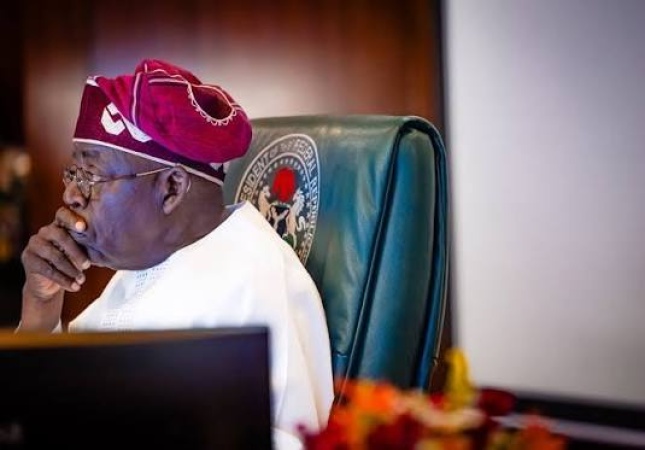
Many commuters across the country said yesterday that transportation fares remained unchanged despite President Bola Ahmed Tinubu’s promise to reduce the cost from October 1, 2026.
Checks by Daily Trust at major inter- and intra-state motor parks across several states showed that fares have not reduced, with passengers questioning the measures put in place by the federal and state governments.
President Tinubu had promised cheaper transportation across the country from October 1 after meeting with state governors on August 27.
He said the governors had agreed to take immediate measures, including deployment of compressed natural gas (CNG) and electric vehicles, to reduce transport costs in their states.
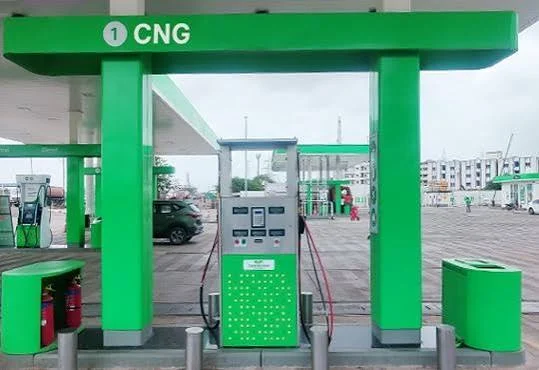
The president further directed the rollout of 500 additional CNG refuelling stations nationwide, in addition to the 500 earlier approved, bringing the planned total to 1,000 stations.
Later on September 19, Tinubu said Nigerians had started experiencing reductions in transport costs through CNG-powered and electric public transport services.
“These are not projections. Nigerians are already experiencing these savings,” he said.
In his Independence Day address on Thursday, Tinubu again said his administration’s priority was to reduce the cost of living by lowering the cost of production and transportation.
However, findings by Daily Trust showed that while some states have started putting measures in place to actualise the promise, fares remain largely unchanged in several others.
Transport operators and passengers attributed the high fares mainly to the rising cost of petrol and the limited availability of CNG-powered vehicles.
Some commuters said they expected the October 1 deadline to bring immediate relief, but noted that there was little difference in fares as of Thursday.
They said a sustained reduction in fuel costs and wider access to CNG would be necessary before commuters could experience significant relief.
Kano
In Kano, fares remained unchanged at major motor parks, while CNG-powered buses were not available at some government-owned terminals.
Checks at Na’ibawa, Unguwa Uku and Dogon Banki/Zaria Road bus stations showed that passengers were still paying existing fares.
An official at the Na’ibawa bus station said there had been no directive from the management to reduce fares.
He said passengers travelling from Kano to Abuja paid N11,000, while those going to Kaduna and Bauchi paid N7,000 each. The fare to Yola was N17,000.
The official said some private operators had even increased their fares following the rise in petrol prices.
Another official at a state-owned bus station said they had received neither new CNG buses nor any directive to reduce fares.
He said only one operator had so far introduced a CNG-powered bus in Kano, but the fare was the same as that charged by petrol-powered vehicles.
Passengers confirmed that fares had not dropped.
Zahraddeen Sani, travelling to Abuja, said he paid N11,000, while Musa Hassan, travelling to Kaduna, paid N7,000. Bashir Ibrahim said he paid N17,000 for the trip to Yola.
Mustapha Audu Jauro expressed doubts about an immediate reduction in fares, saying most inter-state buses were privately owned.
“When the president announced that transport fares would be reduced from October 1, I thought he was joking. How can you expect fares to come down when over 80 per cent of vehicles operating between states are privately owned?” he asked.
A driver at the station said he was unaware of the president’s promise, adding that operators would have to consider their operating costs.
Sokoto
In Sokoto, checks at NURTW and Sokoto State Transport Authority (SSTA) parks showed that fares on several routes had risen.
Abubakar Nura said the fare from Sokoto to Birnin Kebbi increased from N3,500 two months ago to N5,000.
Another passenger, Abdul’azeez Kasim, said he now paid N12,000 to Yauri, compared with N2,500 in 2021.
A driver said the increase was linked to petrol prices, which he said had risen from between N1,200 and N1,300 per litre last week to N1,480.
At the SSTA park, Abubakar Yakasai said the fare from Sokoto to Kano rose from N12,000 to N14,000.
A park worker said fares to Katsina, Kaduna and Kano were N14,000, while Sokoto-Abuja cost N18,000.
The NURTW secretary in Sokoto State, Garba Muhammad Labaran, said the union was not aware of any arrangement to reduce fares.
He said rising petrol prices, low passenger numbers, insecurity and high operating costs were affecting drivers.
FCT
In the FCT, fares also remained unchanged, with some routes recording further increases.
A transporter, Jude Ngochi Nwanke, said operators were also unable to switch to CNG because of limited conversion facilities and inadequate access to the gas.
“As it stands now, we have not observed any reduction in fares,” he said.
Nwanke said operators had not received any subsidy or palliative that would enable them to reduce fares.
Passengers also complained about the rising cost.
Juliet Sunday, travelling to Kano, said CNG-powered vehicles alone would not immediately reduce fares unless the government ensured adequate CNG facilities.
Victor, at the Ifesinachi Transport Limited in Abuja, said reducing petrol prices would have a more direct impact on fares.
Daniel Chinedu, another transport stakeholder, however, said CNG could reduce fares if the government provided enough stations and ensured proper management.
Kogi
The situation remains the same in Kogi State, where CNG and electric vehicles are not operating on established intra- or inter-state routes.
The 10 CNG buses donated by the federal government to kick-start the programme in 2024, were not in use, according to findings.
At various motor parks across the state, no government-owned CNG buses were found operating on regular routes.
Only a few privately converted CNG buses operate between the Adankolo campus and the permanent site of the Federal University, Lokoja.
Students pay N600 on the route, compared with between N1,000 and N1,500 for tricycles and motorcycles.
Some commercial transporters who converted their vehicles to CNG also continue to charge the same fares as petrol-powered vehicles.
“Motorists are charging the same fares on all routes across the state, whether on gas or fuel. Except for the Federal University shuttle buses, no CNG buses are running on any established route in Kogi,” said Adebayo Daramola, a motorist at the Lokoja Mega Park.
Inter-state fares have also risen sharply. Lokoja-Anyigba, which cost N3,000 in mid-2025, now costs N5,000.
Lokoja-Okene increased from N1,500 to N3,000, while Lokoja-Kabba rose from about N3,000 to N5,000.
Katsina
In Katsina State, transport operators and passengers said rising petrol prices had continued to affect their businesses and daily movement.
Abdullahi Dandume, chairman of the National Union of Road Transport Workers (NURTW), Katsina Central Motor Park Branch, said the branch had not received any CNG vehicle from either the federal or state government.
“We have not received any CNG vehicle from either the state or federal government. The situation is becoming very difficult for both transporters and passengers,” he said.
Dandume said the high cost of fuel had increased operating expenses, while some operators were now making losses.
He said some residents had resorted to motorcycles and bicycles because they were cheaper.
Transport operators also complained about declining passenger numbers.
Ibrahim Idris, who operates inter-state services to Abuja, Kaduna, Kano and Sokoto, said passengers were increasingly avoiding unnecessary journeys because of the cost.
“Look at the situation here. It is already 12 noon, and only two passengers are available for a Kaduna-bound vehicle,” he said.
Another driver, Babangida Bado, described the situation as difficult and called for stronger government intervention.
Muhammadu Sa’adu, publicity officer of the National Association of Road Transport Owners (NARTO), Katsina branch, said rising operating costs and declining passenger numbers were weakening the sector.
He said some drivers could spend days at motor parks without getting enough passengers to cover their costs.
Jigawa
In Jigawa State, commercial drivers said fares had increased as petrol prices rose from about N950 to between N1,450 and N1,500 per litre in some areas.
Adamu Abdu, popularly known as Dan-Kargo, said the fare from Dutse to Gumel had risen from N3,000 to N4,000.
The Dutse-Hadejia fare also increased by N1,000, while Dutse-Kano rose from N3,000 to N3,500.
He said most vehicles remained petrol-powered because many operators could not afford CNG conversion.
Abdu also cited limited access to CNG as another challenge, saying the only operational CNG station known to them was in Dutse.
Isyaku Muhammad, a member of the National Association of Road Transport Owners (NARTO), said fares from Dutse to Birnin Kudu had increased from N1,000 to N1,500, while the Dutse-Ringim fare had also risen by N500.
Passengers said the increases were putting additional pressure on households.
Musa Ismail said he had recently started pleading with drivers to reduce fares because of the rising cost of living.
Ababa Muhammad, who said his Dutse-Kano fare had risen to N3,500, appealed to the government to intervene.
Ondo
At major motor parks in Ondo Garage, operators attributed the high fares to petrol prices and rising vehicle maintenance costs.
Idowu Babalola, chairman of the transport union at Ondo Garage, said petrol was selling for about N1,400 per litre, while spare parts and tyres had also become expensive.
“The CNG programme is not working for us at the moment because we are not even seeing it. We cannot reduce transport fares now because it will amount to a loss for operators,” he said.
A commercial driver on the Akure-Lagos route, Unisa Aliyu, said the cost of fuel for a Lagos trip had increased sharply.
He said the fare to Lagos was now N12,100 per passenger and could only come down if petrol prices dropped significantly.
A passenger, James Momoh, said commuters understood the difficulties facing drivers but urged the government to reduce fuel prices or support mass transit operators with cheaper fuel.
Edo
In Edo State, fares remained unchanged across major motor parks visited in Benin City, findings showed.
At Afemai Park, Dawson Junction, the fare from Benin City to Auchi remained N7,000, while a trip to Abuja still cost N33,000.
Fares at the government-owned New Edo Line park were also unchanged.
A driver, Jerry Peter, said petrol was still selling for about N1,400 per litre, making it difficult for operators to reduce fares.
“We are still using petrol and subsidy has not been restored. So, the price remains the same,” he said.
The CNG buses promised by the state government were also yet to be distributed. The buses were still parked at the Government House, according to findings.
Nasarawa
In Lafia, the state capital, passengers told our correspondent on Thursday that they paid the same fares despite the October 1 deadline.
Usman Nuhu, travelling to Asaba, Delta State, said he paid N23,000, the same amount he paid two weeks earlier.
“There is no change. Last time I paid N23,000; today I paid N23,000,” he said.
Another passenger, Clifford Ewejiofor, said he paid N22,000 to Onitsha, Anambra State.
He urged the government to reduce petrol prices, saying fuel costs affect transportation and other commodities.
Commercial drivers also complained of low patronage. Ukandu Ugbuaje said parks that previously had four or five vehicles loading at once now struggled to fill one vehicle.
Garba Arikya, secretary of the NURTW, Yahaya Sabo Park, said the union was aware of the president’s promise but had yet to see concrete measures to achieve it.
Ekiti
Transport fares also remained high in Ekiti State.
Ado-Ekiti to Lagos costs N15,000, while fares to Akure, Ibadan and Ilorin are N4,000, N8,000 and N7,500 respectively.
The state government has, however, rolled out about 15 CNG buses under the Ekiti Transport Services scheme.
The buses are expected to operate on routes including Lagos, Ibadan and Port Harcourt.
A resident, Wasiu Aliyu, urged the federal and state governments to find a lasting solution to rising transport costs, saying cheaper transportation would ease pressure on households.
Kwara
In Ilorin, transport operators said fares had not fallen because petrol prices continued to rise.
A transporter, Adebayo Qazeem, said CNG-powered vehicles were cheaper to operate, but the cost of conversion remained a major barrier.
Qazeem urged the government to support operators with between N200,000 and N300,000 to convert their vehicles.
Another transporter, Sulyman Malik, said petrol, which sold for about N1,205 per litre in August, had risen to around N1,375.
He said the fare to Ife had increased from about N5,000 to N8,000.
A tricycle rider, Jamiu, said commuters would only feel meaningful relief if petrol prices dropped substantially.
Niger
In Niger State, transport operators and passengers called for wider access to affordable CNG buses.
Mohammed Madiwu, a driver on the Minna-Lokoja route, said his fuel cost for the journey had risen from N30,000 to N60,000.
He said passengers now paid N12,000 for the trip, leaving operators with little profit.
Another driver, Ibrahim Hassan, said he spent about N80,000 on fuel to travel from Minna to Jos, with the current fare at N15,000.
Usman Ibrahim Kula, secretary of the Road Transport Employers Association of Nigeria (RTEAN), Abdulsalami Abubakar Park, said only six drivers at the park had converted their vehicles to CNG.
He said the conversions were carried out in Abuja because the process had yet to begin in Niger State.
Kula said drivers who had converted their vehicles reported significant savings, but some operators remained reluctant because of concerns over vehicle safety.
He also said electric vehicles were yet to be seen in Minna.
Adamawa
In Adamawa, the Federal Government’s CNG intervention is yet to begin, as the state is still awaiting the delivery of the promised vehicles.
Checks at major motor parks in Yola showed that no Federal Government CNG buses had been deployed.
However, some CNG buses procured by the Nigeria Labour Congress (NLC) in 2025 were operating from Adamawa Sunshine Motor Park.
The commercial manager of the company, Aminu Mohammed, said the NLC buses charge N21,000 from Yola to Abuja, compared with N22,000 for conventional buses.
On the Yola-Kano route, conventional buses charge N17,000, while the NLC CNG buses charge N16,000.
The Chief Press Secretary to Governor Ahmadu Fintiri, Humwashi Wonosikou, said CNG and electric vehicles were already operating in the state under the Ministry of Transport.
He said an electric tricycle assembly plant had been established along the Girei Road near Modibbo Adama University, Yola.
He also said Adamawa had a CNG conversion centre at the entrance to the state capital, where vehicle owners could convert petrol-powered vehicles.
Yobe
In Yobe, transport fares have increased rather than fallen.
The Damaturu-Kano fare rose from N10,000 two months ago to N12,000. Damaturu-Maiduguri increased from N2,000 to N4,000, while Damaturu-Potiskum rose from N2,000 to N3,000.
Chairman of the Yobe Traders Association, Muhammad Mukhtar Kime, said traders who travel to Kano to buy goods were yet to feel any relief.
“We call on the federal and state governments to quickly provide a solution to reduce our travel expenses,” he said.
NURTW chairman in the state, Muhammad Maina, said the union had not received any directive on fare reduction.
He said the North East Development Commission (NEDC) had provided electric vehicles for distribution to drivers across the six states in the region, but they were yet to be deployed.
Checks at the state Ministry of Transport showed that the government had procured 20 Toyota Civic cars and nine luxury buses, although it was unclear whether they were linked to the federal initiative.
Bauchi
Bauchi has no CNG conversion facility or filling station, according to findings.
The situation has coincided with a rise in petrol prices from about N1,230 to N1,450 per litre.
A commuter, Rabiu Mohammed, said his fare from Bauchi to Jos increased from N4,000 in August to N4,500.
Ibrahim Tanko, chairman of the Road Transport Employers Association of Nigeria (RTEAN) on the Bauchi-Abuja route, said the fare for a Sharon bus had risen from N17,000 to N18,000, while the mini-bus fare increased from N25,000 to N27,000.
He said high fares had reduced passenger patronage, leaving some drivers waiting for days before getting enough passengers.
Tanko called for support for vehicle purchases and fuel, saying lower fuel prices alone would not solve the problem if operators could not afford vehicles.
He also cited bad roads and the rising cost of spare parts as challenges.
Gombe
In Gombe, fares remained unchanged and increased on some routes.
At Ibrahim Hassan Dankwambo Mega Park, a driver, Adamu Safana, said the Gombe-Taraba fare had increased from N12,000 to between N13,000 and N14,000.
The Gombe-Yola fare also rose from N10,000 to N11,000.
Safana attributed the increases to petrol prices, which had reached about N1,460 per litre at some filling stations.
A passenger, Sani Ibrahim, said she expected fares to fall from October 1 but met the same prices.
“We are suffering. Government should fulfil its promise because this transport fare is too high for us,” she said.
An NURTW official, Saleh Hassan, said the union had not received CNG buses or any directive on fare reduction.
Bayelsa
In Bayelsa, inter-state transport fares have increased by between N1,000 and N10,000, depending on the route.
Checks at the Igbogene transport terminal in Yenagoa showed that the Akwa Ibom Transport Company (AKTC) fare to Uyo rose from N11,000 to N12,000.
Commercial operators increased the Yenagoa-Port Harcourt fare from N5,000 to N7,000.
The fare to Lagos rose from about N38,000 to between N45,000 and N50,000, while Yenagoa-Abuja increased from N40,000 to between N45,000 and N50,000.
A transport company manager attributed the increases to the rising cost of petrol, saying fares would fall if fuel prices dropped.
A driver, Emeka, said high fares had reduced passenger patronage.
He said a route from Bayelsa to Ughelli, Delta State, which he previously operated four or five times daily, now struggled to attract enough passengers for even one full trip.
Kebbi
The Compressed Natural Gas (CNG) and electric vehicle programme has yet to take off in Kebbi State, while transport fares remain unchanged as of Thursday, checks at major motor parks in Birnin Kebbi showed.
A driver, Aminu Dakingari, said the fare from Birnin Kebbi to Jega, a journey of about 15 minutes, remained N1,500, while the fare to nearby Kalgo was N1,000.
At the Argungu motor park near Sir Yahaya Specialist Hospital, drivers charge N2,000 for the 35-kilometre journey from Birnin Kebbi to Argungu.
At the Central and Sango motor parks in Birnin Kebbi, fares to Abuja range between N28,000 and N30,000.
The fare to Kano and Kaduna is between N19,500 and N20,000.
Another driver, Sanusi Inuwa, said passengers travelling to Lagos pay up to N39,000, while fares to Ibadan and Ilorin are N34,000 and N26,000 respectively.
Transport operators said the absence of CNG and electric vehicles in the state had left them dependent on petrol, making it difficult to reduce fares.
Long queues at CNG stations in Abuja
Long queues have continued at Compressed Natural Gas (CNG) stations in Abuja as commercial drivers struggle to get the product amid high demand.
Checks by Daily Trust showed that motorists still spend considerable time at some CNG stations waiting to refill their vehicles, although the queues appeared shorter than usual in recent days.
A commercial driver who spoke with Daily Trust said queues had remained a common feature at CNG stations.
“Nothing has changed, and queues remain one of the features of CNG stations,” he said.
Another commercial driver and CNG user said he had avoided buying the product in recent days because of the time required to join the queues.
He said there was little change in the CNG market, adding that prices remained largely the same while demand continued to outstrip supply.
Show cheaper transport route you promised, Atiku tells Tinubu
Meanwhile, former Vice President and presidential candidate of the African Democratic Congress (ADC), Atiku Abubakar, challenged President Tinubu to show Nigerians the cheaper transport fares promised from October 1.
Atiku made the call in his Independence Day message to Nigerians, saying commuters were still asking where they could access the promised lower fares.
“Show them the routes and the prices. Nigerians cannot board an announcement,” he said.
Atiku said while lower fares on some routes were welcome, they did not address the wider transport difficulties facing Nigerians.
He also criticised the president’s statement that Nigerians had “made hard decisions together”, saying the decisions were made by the government while citizens bore the consequences.
“Today is October 1. Did your promise miss the bus?” Atiku asked, adding that Nigerians needed to know which routes had become cheaper, the previous fares and the new rates.
ADP: Judge CNG transport relief by fares Nigerians pay
The National Chairman of the Action Democratic Party (ADP), Engr. Yabagi Yusuf Sani, has said the success of the Federal Government’s planned transport relief should be judged by the fares Nigerians pay at bus stops and motor parks.
Sani said Nigerians were expecting the promised relief from the government’s Compressed Natural Gas (CNG) and affordable transportation programme to take effect from October 1, 2026.
In a statement issued on Thursday, he said the programme would only have a meaningful impact if adequate CNG infrastructure was available across the country.
He said Nigerians should not have to rely on government announcements or commissioning ceremonies to determine whether the programme was working.
“October 1 must therefore be more than another government deadline. Nigerians deserve to know: How much will fares fall? Which routes and states will benefit? How many CNG buses are actually operating? And how will government ensure that savings from cheaper CNG reach passengers?” he said.
FG to deploy 61 buses
Meanwhile, the Presidential Initiative on Compressed Natural Gas and Electric Vehicles (Pi-CNG & EV) said 61 buses would soon be deployed to ease transportation costs.
In a statement signed by its Head of Brand and Communications, Onyekachi Eke, the initiative said 13 buses each would be deployed in the FCT, Kano and Lagos.
Five buses each would go to Delta, Kaduna and Katsina, while Enugu would receive three and Borno and Niger two each.
The initiative said the deployment was expected to expand the number of routes where commuters could benefit from the lower operating costs of CNG and electric vehicles.
Its Executive Chairman/CEO, Ismaeel Ahmed, said the October 1 target should be viewed as part of an expanding programme rather than the end of efforts to reduce fares.
Ahmed said the key measure was whether lower energy costs were reflected in fares paid by passengers.
He said the initiative is also targeting at least 150 operational CNG refuelling stations before the end of the year.
CSOs demand accountability
The Country Director of Accountability Lab Nigeria, Friday Odeh, said continued increases in fuel prices and transport fares had raised questions about the implementation of the president’s promise.
Odeh said setting October 1 as a target date could not by itself reduce fares because transportation costs were affected by fuel prices, vehicle maintenance and spare parts.
“Transportation costs are influenced by fuel prices, vehicle maintenance, spare parts, etc. So announcing a target date alone cannot bring fares down,” he said.
He said the government needed to address the structural factors driving transportation costs and ensure that its interventions produced measurable relief for commuters.
The International Society for Social Justice and Human Rights (ISSJHR) also questioned the implementation of the October 1 commitment.
Its Chancellor, Dr Omenazu Jackson, said reports from different parts of the country showed that fares remained high, with some routes recording further increases.
“This raises a legitimate question: what happened to the October 1 commitment?” he asked.
Jackson acknowledged government efforts to promote CNG-powered transport but said Nigerians needed clearer information on the areas benefiting from the programme and the challenges limiting its expansion.
He said the issue was about accountability rather than an attack on the president.
“Where implementation falls short, government should communicate honestly with the people about the challenges, the measures being taken and the realistic timeline for achieving the stated objective,” he said.
The organisation called for greater transparency and measurable results in the implementation of measures aimed at reducing transportation costs. (Daily Trust)