Updating your news feed...
NEWS EXPRESS is Nigeria’s leading online newspaper. Published by Africa’s international award-winning journalist, Mr. Isaac Umunna, NEWS EXPRESS is Nigeria’s first truly professional online daily newspaper. It is published from Lagos, Nigeria’s economic and media hub, and has a provision for occasional special print editions. Thanks to our vast network of sources and dedicated team of professional journalists and contributors spread across Nigeria and overseas, NEWS EXPRESS has become synonymous with newsbreaks and exclusive stories from around the world.

Loading banners
Loading banners...

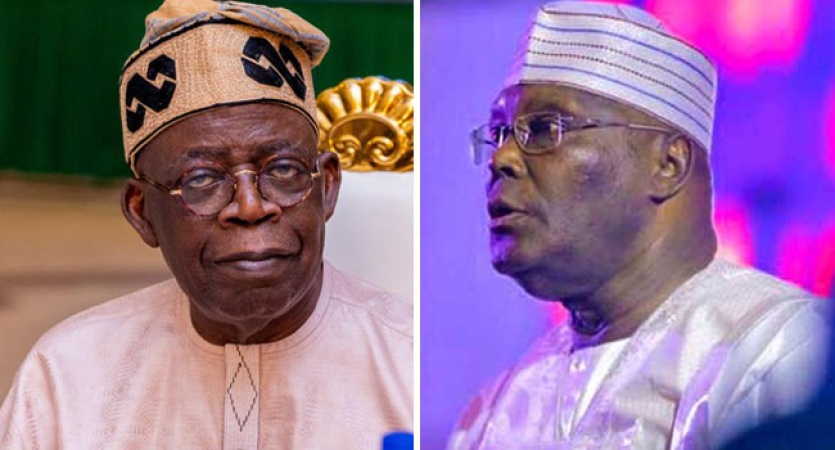
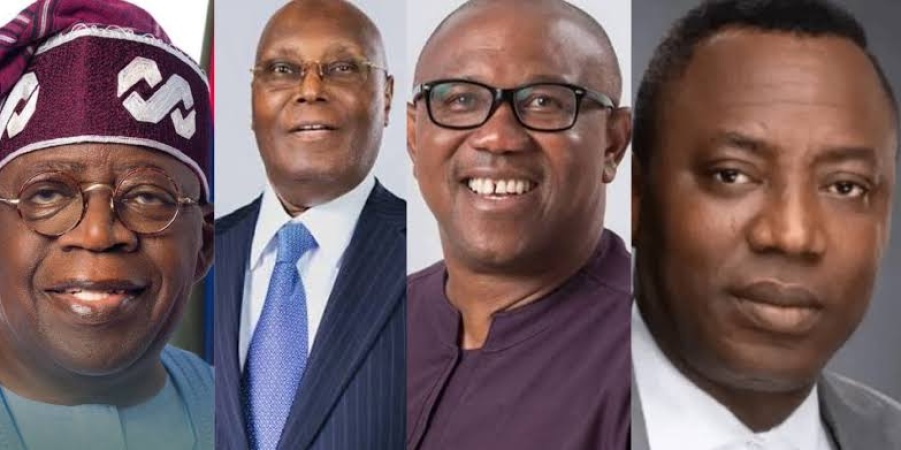
Atiku, Obi, Makinde, Sowore
Economic reality, new political culture force opposition parties to rejig campaign strategies
FELIX NWANERI reports on how cash-strapped opposition political parties and their presidential candidates are shunning the razzmatazz that usually characterise election campaign seasons for direct messaging methods to woo voters
Less than four months to the commencement of the 2027 general election, there are indications that cash-strapped political parties and their candidates have opted for other alternative campaign methods. This development is said to be the reason for the lull in political activities across the country more than a month the campaigns for the elections got under way.
Campaign periods are usually characterized by a beehive of activities including rallies, town hall meetings, door-to-door canvassing, media blitzes and intense political debates. Campaigns for the elections commenced on August 19 with that the presidential and National Assembly campaigns, while the governorship and state Houses of Assembly campaigns started on September 9.
However, over five weeks after commencement of the campaigns for the presidential election, most of the contending parties and their candidates, are yet to constitute their respective campaign councils for the election that will hold on January 16, 2027 alongside the National Assembly polls.
The final list of candidates for the presidential election published by the Independent National Electoral Commission (INEC) shows that18 candidates have been cleared for the poll. They are President Bola Tinubu of All Progressives Congress (APC), Atiku Abubakar of African Democratic Congress (ADC), Peter Obi of Nigerian Democratic Congress (NDC) and Seyi Makinde of Allied Peoples Movement (APM).
Others are Donald Duke of Peoples Redemption Party (PRP), Adewole Adebayo of Social Democratic Party (SDP), Sunday Okereke of Labour Party (LP), Omoyele Sowore of African Action Congress (AAC), Sandy Onor of Peoples Democratic Party (PDP), Rufai Omo-Aje of Action Alliance (AA) and Aliyu Abbas-Bin of Action Democratic Party (ADP).
Also on the list are Kabiru Yusuf of Allied Peoples Party (APP), Sunday Adenuga of Boot Party (BP), Moses Adebisi of Democratic Leadership Alliance (DLA), Esther Okereke of National Rescue Movement (NRM), Daniel Nwanyanwu of Zenith Labour Party (ZLP), Peter Agada of Young Progressive Party (YPP) and Elizabeth Okwori of National Democratic Party (NDP).
The final lists, covering the two chambers of the National Assembly, contain 4,408 candidates. A breakdown of the figure shows 1,195 candidates for the Senate and 3,213 candidates for the House of Representatives. For the governorship elections billed for February 6, a total of 106 candidates across 18 political parties have been listed as candidates in the 28 states where the polls will hold, while states Assembly polls will hold in all the 36 states of the federation.
APC, ADC announce campaign councils
Out of the 18 parties fielding candidates for the presidential election, only the APC and ADC have officially announced their respective Presidential Campaign Councils (PCCs). The APC announced its PCC on August 22, while the ADC announced its PCC on Thursday last week. However, both parties are yet to inaugurate the councils. The ruling party’s PCC has a former governor of Zamfara State and the senator representing Zamfara West Senatorial District, Abdulaziz Yari, as its Director-General, while President Tinubu will serve as chairman of the council.
Vice President Kashim Shettima and APC National Chairman, Prof. Nentawe Yilwatda, were appointed as vice chairmen. The ADC, which has former Vice President Atiku Abubakar, on its part, named Kashim Ibrahim-Imam and Senator Augustine Akobundu as chairman and director- general, respectively. A former governor of Kaduna State, Nasir el-Rufai, presently incarcerated for alleged corruption, abuse of office and unlawful communication interception, was named as deputy chairman.
While some stakeholders, who spoke with New Telegraph, said inability of the political parties and their presidential candidates to constitute their respective PCCs should not stop them from campaigning, it was learnt that the harsh economic situation in the country is the main reason why most of them are resorting to alternative campaign methods, particularly town hall and volunteerism. Some of the parties have even announced public crowd funding and micro-donations instead of relying on elite financiers.
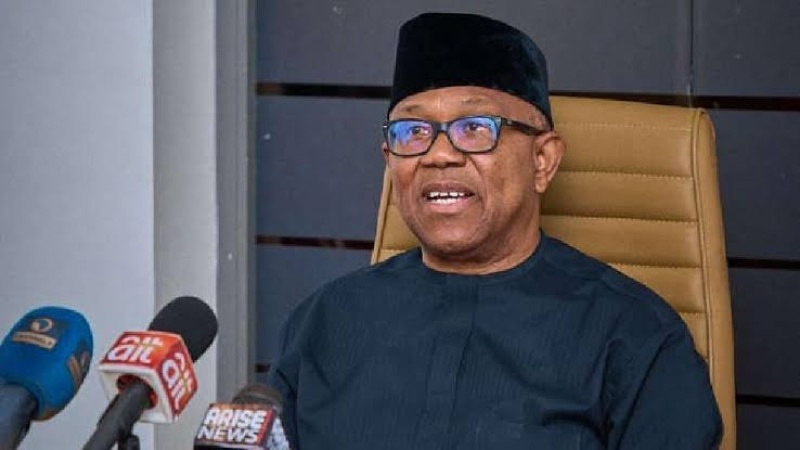
For instance, the Nigeria Democratic Congress (NDC), which has a former governor of Anambra State, Mr. Peter Obi, as its presidential candidate has launched initiatives inviting ordinary citizens to contribute small sums as little as N1,000 via digital channels to fund its activities. National Leader of the NDC, Senator Seriake Dickson, who disclosed this in a recent media interview, said the party will seek campaign donations from those he described as “ordinary Nigerians” to reduce the influence of wealthy individuals in the country’s democracy.
Noting that the NDC is the only political party in Nigeria not funded by the government treasury, he said: “You cannot allow your democracy to be funded by moneybags and billionaires who are now trillionaires using government resources. You will continue to be oppressed. “So, we have got to help Nigerian poor people, oppressed people, break loose from the oppressors. We want a process by which Nigerians, ordinary Nigerians, can contribute N1,000, N2,000, as it happens all over the world.”
He, however, revealed that the party is consulting on the composition of its presidential campaign council and will announce its members soon. “We don’t want to do what the other party in government has done, publishing something and withdrawing it,” he said.
Other parties, particularly the smaller ones, are resorting to digital and social media blitzes to get their campaign messages across to the electorate. This shifts the narrative to issue-based, media-driven political discourse without the exorbitant expenses of nationwide physical rallies.
The PDP, for Instance, has said that it will not be pressured into inaugurating a presidential campaign council simply because other parties have already done so. The party said it has the sole discretion to determine when and how to organise its campaign structure, insisting that it will not copy the approach adopted by other political parties.
National Publicity Secretary of the party, Jungudo Haruna Mohammed, who spoke on the party’s position, said: “The PDP does not take decisions simply because of what people think or say. We make decisions when it is right for us to do so and, more importantly, when the time is right. It is not about how early we act, but about how well we act and the outcome we achieve.”
Spending limits for candidates
The spending limit for each of the 18 presidential candidates as provided by the new Electoral Act in section 92, is N10 billion, a total of N180 billion for the presidential campaign, while each of the 106 governorship candidates cannot spend beyond N3 billion, a limited collective spending of N318 billion. For the National Assembly elections, the ceiling is N500 million for a senatorial candidate and N250 million for a House of Representatives candidate.
A candidate seeking election to a state House of Assembly is allowed spend up to N100 million. The law also places a ceiling on individual contributions to candidates, providing that no Individual donor may contribute more than N500 million to a single candidate. Section 92 further provides sanctions for candidates who knowingly exceed the prescribed limits.
Such a candidate faces a fine equivalent to one per cent of the permitted expenditure limit, or imprisonment for up to 12 months, or both. The provision also makes compliance with the new spending thresholds a statutory obligation rather than a voluntary guideline.
ADC, NDC hit by paucity of funds
While the figures cannot be interpreted to mean that N180 billion would be spent by the presidential candidates, sources close to the ADC and NDC, who spoke with New Telegraph in separate interviews, confirmed that their candidates are really finding it difficult to raise needed funds to prosecute the campaign and election.
The sources also confirmed that prominent businessmen are also refraining from supporting the candidates of the main opposition parties financially to avoid provoking the anger of the ruling party. “I must confess that it has not been easy for our candidate as regards to sourcing for funds to prosecute this election.
So, some of us involved in this project have been spending personal funds because we believe that his victory in the election will salvage this country from this messy situation that the APC has plunged Nigeria into,” a source within Atiku’s camp, pleaded not to be quoted, said.
He added: “Also, you may be shocked to hear that even before last week’s announcement of members of ADC presidential campaign council, some us that served in the various strategic groups of the Atiku presidency project did so without being paid. “However, whatever we are doing is not about monetary reward. It is about the need to rescue Nigeria from APC’s bad governance and to save millions of Nigerians from being plunged into poverty and economic hardship.”
An aide to Obi, who also spoke on the issue on the condition of anonymity, revealed that their camp is being hindered by lack of funds. “The truth is that we don’t have the resources to embark on an elaborate campaign, so we are resorting to other means.” He added that even if the money is available, Obi will not go on spending spree like the candidate of the ruling party.
Nigeria is a very vast country, especially for those who are contesting for the office of the president. So, it may not be strategic to launch a nationwide campaign at the moment becausee the cost is quite enormous
“Everyone knows Mr. Peter Obi as someone who is frugal when it comes to money, so he is not looking at the razzmatazz usually associated with presidential campaigns in Nigeria,” the source said. He added: “Obi believes that you don’t have to spend billions of naira because you want to serve the people and that is why he is adopting other conventional means to get his message to the people.
“He is also of the view that the 2027 presidential election would not be won by the spending power of the candidates but by the candidates’ plans on how to tackle the economic hardship and insecurity plaguing Nigerians.”
Economic reality, new political culture behind shift
Analysts say the opposition parties are embracing alternative campaign methods given the fact that it will be difficult for them to match the ruling APC’s spending power and financial war chest for the presidential election. It was also posited that the strategies adopted by opposition parties will help them to avoid unnecessary spending ahead of the poll as fallouts of recent elections show that election day spending, which involves vote buying has become a major determinant of electoral contests.
There are other analysts, who said that the new political culture in the country as a result of belief in what they described as “stomach infrastructure,” by most Nigerians, partly explains why most of the presidential hopefuls are being careful with their spending plans. “I know some of them, who have acquired buildings for campaign offices across the states but I believe that the lull in political activities is because of the mood of the nation.
Things have changed as it has become a culture of stomach infrastructure. “Immediately anyone launches his campaign, you will see people besiege him and he will start spending. You and I know that such individual is likely to run short of funds before December and early January when the campaign is expected to get to the peak,” one of the analysts said.
Pioneer National Chairman of the All Progressives Grand Alliance (APGA), Chief Chekwas Okorie, who shared this line of thought, told New Telegraph in an interview that there is still time to adjudge the readiness or otherwise of the various parties and their candidates for the presidential contest.
His words: “The way I look at what is in this campaign season is that before now, that is in previous elections, the Electoral Act, has always allowed a little above two months for campaigns. For the 2027 elections, we have almost six months. Right now, we still have four months before the elections proper.
“Nigeria is a very vast country, especially for those who are contesting for the office of the president. So, it may not be strategic for the candidates to launch a nationwide campaign at the moment becausee the cost is quite enormous. “But it doesn’t mean that they are all idle because we can see interventions in terms of issues that are being discussed, which perhaps, are issues emanating from their manifestos.
“For the APC that is rated to have so much money in its war chest, I haven’t seen a single rally that the party has done. The APC has simply announced a campaign committee, which has not been inaugurated. However, I believe they are also working, waiting for the appropriate time to launch out. “Even their own candidate, who is the president of Nigeria, is perhaps abroad to prepare himself health-wise for the physical challenges ahead.
Yes, the APC has announced its campaign council, but we have not seen any activity. “The NDC, which is the other front-line party in this election, has announced the way its campaign committee would be composed, who will nominate officers of the campaign committee for various offices, the ones that the presidential candidate will bring, the ones that the vice presidential candidate will bring and what the party will contribute. “So, you can say that the structure for NDC campaign council has already been made public. I expect that, at least before the first week of October, they will make the composition of their campaign council public.
“Now, I anticipate that campaigns in terms of flag-offs and rallies and so on will gradually begin to peak in the month of October. But by November/December, it will get to its peak. And the candidates who are running for various offices will also launch out about the same time. “So, as far as I am concerned, if the situation is like by this time in October, then I will get worried.
But for now, I am not bothered. I know they are all ready, but they don’t have to launch out because when they get to the critical time, it will become difficult to continue.”
The Permanent Representative of the Centre for Convention on Democratic Integrity (CCDI) to the United Nations Economic and Social Council (ECOSOC), Olufemi Aduwo, who also spoke on the issue, told New Telegraph that the campaign is not about composition of campaign councils but getting the message across to the voters. His words: “It’s not even about whether campaign councils have been announced or not.
If you notice, there are certain things the NDC is doing. They have been mobilizing their members in some of the states. However, you know that in some states, especially in the South-East, there is a kind of stupid law by the governors that pegged campaign fees at N200 million. It’s madness.
“I agree that the parties and their candidates ought to be doing more by now. However, I think some of them holding back in order to manage the resources they have. In Nigeria’s presidential contest, consultation matters a lot, and that is what most of them are doing.” (New Telegraph)