Updating your news feed...
NEWS EXPRESS is Nigeria’s leading online newspaper. Published by Africa’s international award-winning journalist, Mr. Isaac Umunna, NEWS EXPRESS is Nigeria’s first truly professional online daily newspaper. It is published from Lagos, Nigeria’s economic and media hub, and has a provision for occasional special print editions. Thanks to our vast network of sources and dedicated team of professional journalists and contributors spread across Nigeria and overseas, NEWS EXPRESS has become synonymous with newsbreaks and exclusive stories from around the world.






















Loading banners
Loading banners...

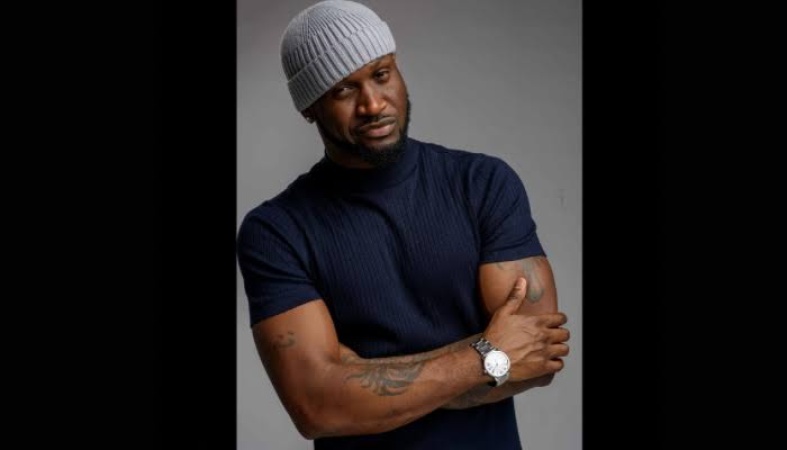
Peter Okoye aka Mr P
Peter Okoye has turned the intense public attention on his ongoing family dispute into measurable commercial success for his clothing line. In a post on X on 9 August 2026, the singer known as Mr P announced that nearly 3,000 units of the red ZR cap he wore throughout his multi-part Instagram video series had sold within seven days.
At a retail price of N20,000 each, the reported figure places sales for Zipp Republic at more than N60 million in that short window, with orders still arriving. He described the response as unexpected and asked customers for patience while the brand worked to fulfil every request. The post also signalled plans to expand into gym wear, sportswear and possible children’s items.
The red cap became a visual constant in the videos Peter released in early August, videos in which he detailed alleged financial irregularities involving his brothers Jude and Paul Okoye and the companies linked to the P-Square brand.
Viewers watching the series repeatedly for more than a week saw the same branded accessory, creating an immediate association between the story and the product.
The resulting spike in demand illustrates how a personal narrative, when sustained across multiple instalments, can drive direct consumer action for an associated brand. Whether the outcome was planned as a deliberate marketing sequence or simply followed from the visibility of the videos, the numbers show a clear commercial effect.
Psquare feud and the missing documentation that turned family trust into court battles
That commercial moment sits against the deeper structural problems that the same videos and related court proceedings have exposed. The long-running dispute among the Okoye brothers over Psquare earnings, brand control and company structures offers a clear lesson in what happens when family businesses operate for years without precise written agreements.
Peter and Paul Okoye burst into the Nigerian music industry in the early 2000s as a twin duo with singing prowess and well-choreographed dance steps. With records like Omoge mi and Señiorita, they hit the airwaves and fan base long before the era of digital streaming.
Psquare, under the Square Records label, managed by their elder brother Jude Engees Okoye and his company Northside Entertainment Limited, went on to give Nigerians hit songs over the next decade. Songs like Do Me, Ifunnanya, Alingo, Personally, No one like you, Chop my Money, and others across six albums together became household music and became classics.
Nigerian lawyer Benedicta Wokocha has examined the P-Square dispute from a contractual perspective and identified the documentation gaps that allowed ordinary family disagreements to escalate into years of litigation and public confrontation. Her analysis begins with a basic fact confirmed in court: when Jude Okoye took on the role of manager around 2004 or 2005, after earlier managers had worked with the group, there was no written contract or formal letter of employment setting out his duties, remuneration or limits of authority.
An MOU later produced by Jude outlined income shares of 30 percent each for Peter and Paul, 25 percent for Jude as manager, and 15 percent for projects and staff of Northside Entertainment. Even that document has not resolved competing claims about whether the percentages applied to gross or net revenue, whether they covered later streaming royalties, or how they interacted with new corporate structures.
When Northside Music Limited was incorporated with Jude and his wife as directors and the wife holding a substantial shareholding, the absence of a clear prior agreement on the relationship between the original group entities and any new company left open the question of where royalties properly belonged.
Wokocha’s central observation is that family trust cannot replace paper. Brothers who begin a business together frequently assume shared understanding about bank access, transfer authority and exit rights. In this case the early years appear to have operated on that assumption. Jude functioned as primary manager and signatory for extended periods.
Peter and Paul were later added as Category B signatories on certain Northside Entertainment accounts, yet Peter has testified that he never personally signed cheques. Bank mandates and statements later placed before the court show transfers that each side interprets differently. Without a single governing agreement that fixed decision-making thresholds, reporting obligations and equal access to financial records, each brother could later reconstruct events according to his own recollection.
A second missing element is an effective dispute-resolution clause. When disagreements arose over property division, catalogue access and royalty statements, the parties had no agreed private process that required mediation or arbitration before petitions or public statements. The result was a sequence of open videos, cross-allegations and parallel court cases that have continued for years.
A properly drafted partnership or shareholders’ agreement normally contains a staged mechanism for resolving deadlocks, appointing independent valuers and protecting the brand while differences are sorted. The absence of that mechanism turned every disagreement into a contest of public narrative and legal endurance.
Ownership of the intellectual property and the brand name itself remained similarly unsettled. Jude has asserted rights that would restrain Peter from performing certain songs. Peter has maintained that the catalogue belongs to the performing twins. Company registrations, bank mandates and contracts with digital distributors exist, yet they do not form a complete chain that settles every claim.
When income was directed into a similarly named company, the challenge could only be mounted after the fact through investigation and litigation rather than by reference to a pre-existing prohibition or consent requirement.
The commercial success of the red ZR cap therefore sits in instructive contrast to the contractual failures that produced the dispute itself. One brother used the visibility of his account of events to generate immediate sales for a personal brand. The underlying conflict, however, continues because the original business relationship lacked the written framework that would have defined roles, money flows and exit paths from the start.
Wokocha warns that artists and managers who work with family or close friends should treat the P-Square experience as a practical warning. Register the company early and record exact shareholdings. Execute a written management agreement that states the manager’s duties, remuneration, reporting frequency and limits on authority.
Include a shareholders’ agreement that covers capital contributions, profit distribution, intellectual-property ownership, brand use, and what happens on death, disability or exit. Insert a dispute-resolution clause that requires good-faith negotiation, then mediation, before any party may go to court or the press.
Keep every bank mandate, royalty statement and third-party contract in a shared repository so that no one can later claim surprise. Update the documents whenever the business model changes, for example when streaming replaces physical sales or when a new company is formed to hold specific assets.
These steps do not eliminate conflict. They do, however, convert conflict into a process with known rules and known evidence. The Okoye brothers built one of Africa’s most successful music brands while relying largely on blood ties and informal understandings. When those ties frayed, the missing paperwork left each side free to reconstruct history in its own favour.
Other artists can avoid the same outcome by insisting on clear contracts from the first day money or rights begin to move. (BusinessDay)