Updating your news feed...
NEWS EXPRESS is Nigeria’s leading online newspaper. Published by Africa’s international award-winning journalist, Mr. Isaac Umunna, NEWS EXPRESS is Nigeria’s first truly professional online daily newspaper. It is published from Lagos, Nigeria’s economic and media hub, and has a provision for occasional special print editions. Thanks to our vast network of sources and dedicated team of professional journalists and contributors spread across Nigeria and overseas, NEWS EXPRESS has become synonymous with newsbreaks and exclusive stories from around the world.




















Loading banners
Loading banners...

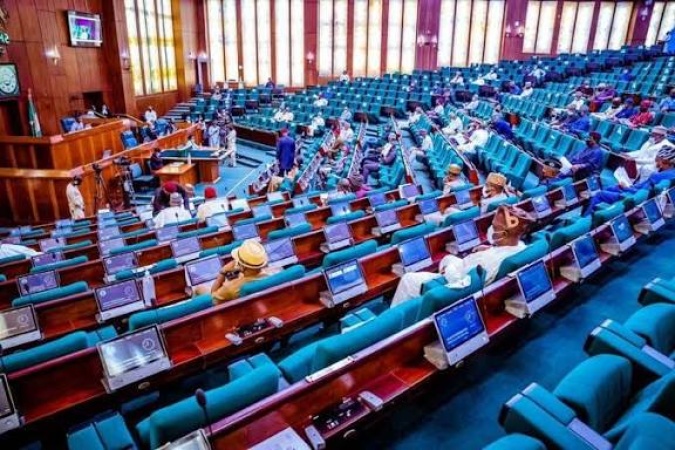
Stakeholders in Kogi, Nasarawa and Niger have called for a broader, more inclusive and better-publicised constitution review process, urging lawmakers not to focus solely on the proposed establishment of state police.
The stakeholders made the call in separate interviews on Friday with the News Agency of Nigeria (NAN) during a survey on the preparedness of state Houses of Assembly for the ongoing constitutional review and the implementation of previous constitutional amendments.
They observed that public discourse and legislative attention had largely centred on the state police proposal, while other key constitutional reforms requiring equal consideration had received limited attention.
In Kogi, Mr Umar Yusuf, Speaker of the State House of Assembly, reaffirmed the Assembly’s commitment to giving comprehensive legislative consideration to all constitutional amendment bills transmitted by the National Assembly.
Yusuf said that although the Assembly had publicly supported the establishment of state police because of its importance to national security, every amendment bill would undergo committee scrutiny, stakeholder engagement and plenary consideration.
He listed devolution of powers, local government autonomy, electricity sector decentralisation and the transfer of correctional services to the Concurrent Legislative List among other proposals the Assembly would consider.
According to him, the Assembly plans to engage traditional rulers, civil society organisations, professional bodies, youth and women groups to ensure broad public participation.
Yusuf added that Kogi had already demonstrated its readiness for constitutional reforms through the enactment of the Kogi State Electricity Regulatory Commission Law, signed by Gov. Ahmed Ododo, to regulate the state’s electricity sector.
Also speaking, Mr Hamza Aliyu, Chairperson of the Kogi NGO Network (KONGONET), called for greater public enlightenment on the constitutional review process.
Aliyu said awareness was relatively high among government officials and civil society organisations but remained low among the general public.
He Identified devolution of powers, local government autonomy, electricity sector decentralisation, State Independent Electoral Commission reforms, state control of solid minerals, financial autonomy for the legislature and judiciary, and protection of vulnerable groups as issues requiring wider public awareness.
Aliyu urged the Assembly to organise town hall meetings across the state’s three senatorial districts, publish proposeLad amendments and voting records, and develop implementation plans backed by adequate funding, timelines and legislative oversight.
Mr Taiwo Elijah, a legal practitioner, said constitutional reforms should extend beyond state policing to include fiscal federalism, judicial and legislative autonomy, electricity reforms and local government autonomy.
“The Constitution is not the problem; the challenge lies with those responsible for implementing it faithfully in the interest of the people,” he said.
Other lawyers, Mrs Joy Inah and Mrs Joy Akinola, also called for wider stakeholder consultations and greater public awareness, urging the Assembly to ensure prompt implementation of approved constitutional amendments.
In Nasarawa, the State House of Assembly said it had already demonstrated its commitment to constitutional reforms through the passage of the Local Government Autonomy Law.
Alhaji Jibrin Gwamna, Chief Press Secretary to the Speaker, told NAN in Lafia that the law, passed on Oct. 31, 2024, and assented to by Gov. Abdullahi Sule in November 2024, followed extensive public hearings and legislative scrutiny.
He said that the legislation was expected to strengthen grassroots governance and improve the welfare of local government workers.
Gwamna added that the Assembly remained prepared to consider any constitutional amendment bill transmitted by the National Assembly or the Executive that would promote national development.
In Niger, Abdullahi Abdulmumin-Jibril, a constitutional lawyer, urged the National Assembly to adopt a more comprehensive and consultative approach to the review process.
He observed that while the state police bill had passed both chambers of the National Assembly and awaited ratification by at least 24 state Houses of Assembly, other proposals such as devolution of powers, military autonomy, local government autonomy and regional government also deserved equal attention.
Abdulmumin-Jibril said effective implementation remained the major challenge, noting that many states still operated the State Joint Local Government Account despite the Supreme Court’s July 2024 judgment on local government financial autonomy.
He, therefore, urged the National Assembly to amend Sections 7 and 162 of the Constitution to guarantee direct allocation of funds to local governments and remove constitutional ambiguities.
He also advocated treating state police, devolution of powers and local government autonomy as a single federalism reform package, backed by stronger enforcement mechanisms.
Similarly, Mr Aliyu Baba-Saidu, General Secretary of the Blue Resolution Initiative (TBRi), a Minna-based civil society organisation, urged the National Assembly to broaden the constitutional amendment process.
Baba-Saidu said while decentralised policing could improve security, it should form part of wider constitutional restructuring aimed at strengthening Nigeria’s federal system.
He said sustainable security required not only policing reforms but also economic empowerment, effective local governance, judicial efficiency and stronger institutional accountability.
Baba-Saidu lamented poor public awareness of the constitutional review process and identified weak implementation, rather than inadequate legal provisions, as the country’s major governance challenge.
He urged the National Assembly to guarantee direct allocation of Federation Account funds to local governments, and reduce the Exclusive Legislative List to give states greater authority over sectors such as mining and infrastructure.
He also urged the National Assembly to strengthen enforcement mechanisms for local government autonomy and intensify civic education on constitutional reforms.
According to him, Nigeria requires reforms that are comprehensive, enforceable and faithfully implemented to strengthen governance and national development. (NAN)