ADAD
ADADUpdating your news feed...

NEWS EXPRESS is Nigeria’s leading online newspaper. Published by Africa’s international award-winning journalist, Mr. Isaac Umunna, NEWS EXPRESS is Nigeria’s first truly professional online daily newspaper. It is published from Lagos, Nigeria’s economic and media hub, and has a provision for occasional special print editions. Thanks to our vast network of sources and dedicated team of professional journalists and contributors spread across Nigeria and overseas, NEWS EXPRESS has become synonymous with newsbreaks and exclusive stories from around the world.



















Loading banners
Loading banners...

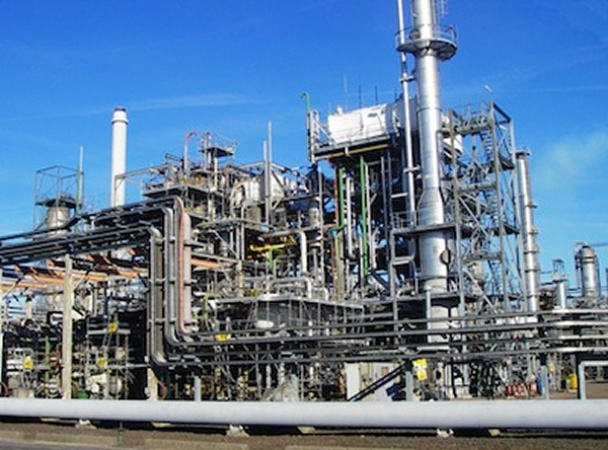
The moribund NNPCL Refinery in Port Harcourt
As the deadline for the submission of candidates for next year’s general election expired yesterday, political parties made conflicting claims over compliance with the Independent National Electoral Commission’s (INEC) nomination timetable, amid requests for an extension, court cases over candidate nominations and denials of reports that some parties failed to meet the deadline.
While the Accord Party appealed to INEC for more time to resolve its internal crisis, the Peoples Democratic Party (PDP) and Labour Party (LP) denied reports that they missed the deadline.
The All Progressives Congress (APC), meanwhile, rejected allegations that it was using the courts and INEC to undermine opposition parties.
The deadline also coincided with the Federal High Court’s issuance of amended practice directions to expedite the determination of pre-election cases.
Accord Party chieftain, who pleaded anonymity, told The Guardian that the extension would allow its presidential candidate, Gbenga Olawepo, to conclude his court case with the party leadership.
The source said the Accord Party leadership had become unwilling to back Olawepo as its presidential candidate after Osun State Governor Ademola Adeleke allegedly pledged support for President Bola Tinubu’s re-election, prompting judicial intervention.
Also, on Arise Television’s Morning Show, the presidential candidate of the Social Democratic Party (SDP), Adewole Adebayo, said the party experienced technical hitches that delayed the upload of its list of candidates.
Adebayo said the SDP used the extension granted by INEC to resolve the problem, adding that the party had done everything possible to prevent detractors from frustrating its participation in the forthcoming election.
However, the SDP National Secretary, Dr Olu Agunloye, and the National Publicity Secretary of the African Democratic Congress (ADC), Bolaji Abdullahi, said their parties would not seek any further extension, having successfully completed the submission process.
Agunloye commended INEC for granting what he described as a reasonable extension, saying it enabled the SDP to upload the names of all its candidates.
“We acknowledge that INEC was gracious in granting the extension. It was reasonable, and we utilised the opportunity to complete the submission of our candidates’ names,” he said.
Responding to allegations that the APC and President Tinubu were using the courts and INEC to weaken opposition parties, Agunloye said the opposition should first address its internal challenges.
“There are instances where the courts or INEC may have been misled. Such issues should be identified and corrected,” he said, stressing that most opposition crises stemmed from internal disputes rather than any coordinated effort by the ruling party.
Abdullahi, while dismissing interpretations of the recent Appeal Court judgment against the ADC, insisted that congresses were state matters governed by the party’s constitution. He added that the ADC remained committed to complying with electoral requirements under the law.
When contacted, INEC’s Director of Voter Education and Publicity, Mrs Victoria Eta-Messi, said the commission had not discussed any further extension.
“I am surprised to hear this. The Commission has not met on this. I have no information on whether there will be an extension because I have not received any instruction,” she said.
PDP denies missing INEC deadline, says presidential ticket submitted on time
The Peoples Democratic Party yesterday dismissed claims that it failed to submit the names of its presidential and vice-presidential candidates before the deadline set by the Independent National Electoral Commission, insisting that it fully complied with the electoral timetable.
The rebuttal followed a report alleging that the PDP was among three political parties that failed to upload their presidential tickets before INEC closed its nomination portal.
Rejecting the claim, the party said the particulars of its presidential and vice-presidential candidates were submitted well within the deadline prescribed by the electoral commission.
In a statement issued by its National Publicity Secretary, Jungudo Haruna Mohammed, the PDP described the report as “false, misleading and a gross misrepresentation of the facts”, maintaining that it had met all of INEC’s nomination requirements.
“For the record, the Peoples Democratic Party successfully uploaded the names and particulars of its presidential and vice-presidential candidates to the INEC nomination portal at exactly 11:50 a.m. on Thursday, July 10, 2026, in full compliance with the commission’s requirements and within the stipulated timeline,” Mohammed said.
The party said it was surprised that the report was published without any attempt to verify the information with its leadership, particularly as it was attributed to an anonymous source.
LP insists candidates duly submitted
The Labour Party has strongly denied reports alleging that it failed to submit the names of its presidential and vice-presidential candidates before the Independent National Electoral Commission closed its nomination portal, insisting that it fully complied with the electoral timetable.
In a statement issued on Tuesday by the party’s National Publicity Secretary, Ken Eluma Asogwa, the LP described the report as “false, misleading and unfounded”, maintaining that all its presidential, vice-presidential and National Assembly candidates were successfully nominated within the deadline prescribed by INEC.
The party disclosed that the names of its presidential and vice-presidential candidates were uploaded on July 10, 2026, four days before the commission closed its nomination portal on July 14.
According to the statement, the submission process was completed without any hitch and in line with INEC’s guidelines.
The LP expressed concern over what it described as the publication of an unverified report allegedly based on information from an anonymous INEC official. It accused the media organisation involved of neglecting basic journalistic standards by failing to seek clarification from the party before publication.
Marketers demand revival of refineries amidst Dangote’s dollar sales
The Petroleum Products Retail Outlets Owners Association of Nigeria (PETROAN) has called on the Federal Government to urgently revive the country’s state-owned refineries amidst decision by Dangote Refinery to suspend the sale of petroleum products in naira while switching to dollar-denominated transactions.
PETROAN National President, Dr. Billy Gillis-Harry, said the operation of the Port Harcourt, Warri and Kaduna refineries would provide a vital price-check mechanism in the downstream petroleum sector and prevent market dominance by a single supplier.
Speaking in Lagos on Wednesday, Gillis-Harry said although the association supports a deregulated petroleum market, the reported decision by Dangote Refinery underscores the need for multiple operational refineries to guarantee competition, protect consumers and strengthen Nigeria’s energy security.
Daily Trust reports that Dangote Refinery had switched to dollar-based transactions following the near collapse of the naira-for-crude arrangement introduced by the federal government.
Under the new framework, Dangote fixed petrol at $0.779 per litre, diesel at $1.087 per litre, and aviation fuel at $0.942 per litre for gantry sales.
Using the prevailing official exchange rate of about N1,376.54/$, the new dollar price translates to approximately N1,072 per litre for PMS, N1,497 per litre for diesel and N1,297 per litre for aviation fuel.
The refinery also fixed the coastal delivery price of PMS at N1,044.62 per metric tonne and invalidated all previously issued naira-denominated Proforma Invoices (PFIs) and Deal Recaps for gantry and coastal transactions.
While marketers are apprehensive over the new development, checks by our correspondent indicated that fuel prices have remained virtually unchanged. For instance in Lagos, NNPCL retail stations dispense at N1118 per litre as of yesterday; Bovas N1,132; AP, 1120; North-West stations, N1,160 per litre.
However, the PETROAN boss expressed concern that petroleum marketers earn revenue in naira but could now be required to source foreign exchange to purchase petroleum products, a development he warned would increase operational costs, expose marketers to exchange rate risks and place additional pressure on the retail market.
He appealed to the Group Chief Executive Officer of the Nigerian National Petroleum Company Limited (NNPCL), Engr. Bayo Ojulari, to direct the immediate resumption of temporary operations at the Port Harcourt, Warri and Kaduna refineries while discussions with two prospective Chinese technical partners continue.
Gillis-Harry recalled that the refineries were operational before their shutdown in May 2025 and said temporary production would immediately increase domestic fuel supply, moderate price volatility and provide the much-needed relief to consumers pending the conclusion of the technical partnership arrangements.
He maintained that Nigeria’s long-term energy security cannot depend on one refinery alone, irrespective of its production capacity.
He said: “At this critical period, operational government-owned refineries will serve as an effective price-check mechanism against excessive pricing and market exploitation; create healthy competition among domestic refineries, leading to more stable and affordable petroleum product prices; reduce the demand for foreign exchange by increasing local refining capacity and strengthening the naira; enhance Nigeria’s energy security by guaranteeing reliable product supply, reducing dependence on a single supplier, and minimizing the risk of supply disruptions; and improve public confidence in Nigeria’s refining capacity, stimulate economic activities, protect jobs, and support sustainable economic growth.”
Also commenting, energy expert Dr. Joseph Obele advised the Federal Government to strengthen and expand the crude-for-naira policy to ensure that domestic refineries receive sufficient crude oil to meet their production requirements.
He also called on the Nigerian National Petroleum Company Limited (NNPCL) to allocate additional crude oil to domestic refineries to reduce dependence on imported crude and support naira-denominated transactions.
Meanwhile, global oil prices rose for a fourth consecutive trading session on Thursday, with Brent crude climbing to the $85 per barrel mark as investors reacted to tightening supply expectations, geopolitical tensions and improving demand prospects in major consuming economies.
Brent crude, the global benchmark for oil prices, climbed to $85 per barrel, while U.S. West Texas Intermediate (WTI) crude also traded higher.
The development continues amidst reports indicating that Dangote Refinery continues to shield Nigerians from global shock.
Daily Trust reports that the latest price increase was driven by supply disruptions in key producing regions amidst renewed US-Iran hostilities.
The United State has intensified strikes on Iran even as the naval blockade on the Strait of Hormuz, the strategic waterway controlling one-fifth of the global oil supply.
Reports indicated that the US military, as of yesterday, “redirected” two commercial vessels since reimposing its naval blockade of ships going to and from Iranian ports.
This has triggered a spike in global oil prices and US gas prices even as the blockade and strikes continue.
Analysts said geopolitical uncertainties continue to add a risk premium to crude prices, with traders factoring in the possibility of disruptions to global energy supplies. (Daily Trust)