
Updating your news feed...
NEWS EXPRESS is Nigeria’s leading online newspaper. Published by Africa’s international award-winning journalist, Mr. Isaac Umunna, NEWS EXPRESS is Nigeria’s first truly professional online daily newspaper. It is published from Lagos, Nigeria’s economic and media hub, and has a provision for occasional special print editions. Thanks to our vast network of sources and dedicated team of professional journalists and contributors spread across Nigeria and overseas, NEWS EXPRESS has become synonymous with newsbreaks and exclusive stories from around the world.


.webp)
.webp)





Loading banners
Loading banners...

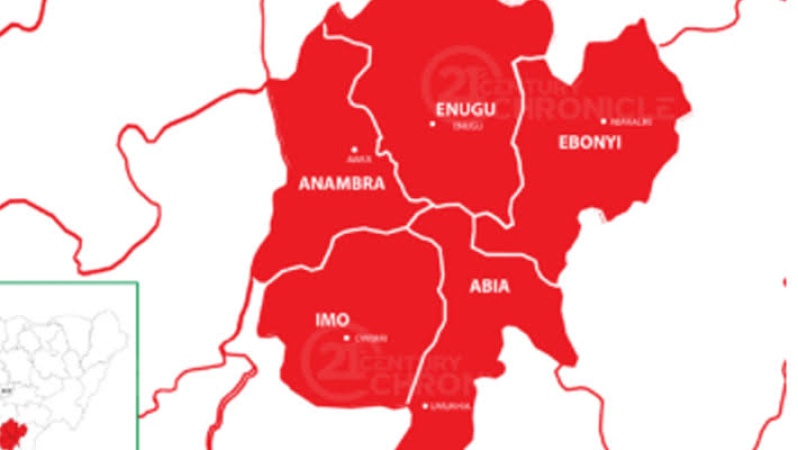
Some political stakeholders in Anambra, Ebonyi and Enugu States have said that constitutional reforms in Nigeria will not achieve the intended objectives unless the country first strengthens its democratic institutions.
The stakeholders made their views known in separate interviews, conducted by the News Agency of Nigeria (NAN) on constitution review of local government autonomy, devolution of powers and removal of Correctional Centre from exclusive list
They insisted that constitutional amendments alone could not solve Nigeria’s problems without strong democratic institutions and responsible leadership to drive their implementation.
According to them, these reforms will bring government closer to the people and improve development but needed effective and working institutions to drive them.
In Enugu, the Publisher of New Narrative Media, Kalu Okonkwo, argued that constitutional amendments alone could not solve Nigeria’s governance challenges because the institutions needed to effectively implement them remained weak.
According to him, reforms such as state policing could easily become tools for political victimisation if they are introduced without an independent judiciary, functional legislatures, and effective oversight institutions.
“You don’t start building a house from the top. You need a very solid foundation that will be able to carry the weight of the house,” Okonkwo said.
He maintained that the government should prioritise strengthening institutions before introducing additional constitutional reforms.
“The judiciary must be independent, the National and State assemblies must be functional, civil society organisations must be allowed to perform their oversight roles, and opposition parties must be able to hold government accountable,” he said.
The media expert expressed concern that the executive arm currently exerted significant influence over other arms of government, undermining the principle of separation of powers.
He also questioned the effectiveness of institutions such as Local Government Service Commissions, arguing that many local governments remained under the control of state governors in spite of constitutional provisions guaranteeing their auautonom
According to him, reforms without institutional capacity would fail to protect ordinary Nigerians but instead serve political interests.
On Nigeria’s future, Okonkwo said there was still hope, stressing that effective leadership remained the country’s greatest need.
“Leadership is not about the position you occupy; it is the ability to influence people by inspiring them. Nigeria has capable people both at home and abroad. What we need is responsible leadership,” he said.
Also speaking, the Human Rights Lawyer and the President of the Civil Rights Realisation and Advancement Network (CRRAN), Olu Omotayo, said the current push for state police was largely driven by the country’s worsening security situation.
He noted that although local government autonomy had already received judicial backing through a Supreme Court judgment, implementation now depended largely on citizens demanding accountability from elected officials.
“The Supreme Court judgment effectively granted local government autonomy, and allocations are now sent directly to local government accounts. The challenge is that citizens are not asking questions about how those funds are being spent,” Omotayo said.
He argued that Nigerians also share responsibility for ensuring democratic accountability by monitoring government spending and challenging abuses through the courts where necessary.
“In a democracy, checks and balances depend not only on institutions but also on citizens demanding transparency and accountability,” he said.
On recent constitutional amendments removing electricity from the Exclusive Legislative List, Omotayo observed that while some states have enacted enabling laws, many have yet to make the investments required to improve electricity generation and distribution.
He cited Abia State as one of the few states making visible progress in developing its electricity sector while urging other states to move beyond legislation and invest in infrastructure.
Regarding proposals affecting correctional centres, Omotayo described the reforms as part of a gradual constitutional process, noting that governments were currently prioritising state policing because of the country’s urgent security challenges.
Meanwhile, lawmakers in the Enugu State House of Assembly have expressed their willingness to support the constitutional amendment bills once transmitted to the state assembly.
In his contribution, the member representing Nkanu East Constituency, Mr Okey Mbah, described the State Police Creation Bill as a noble and timely one, as it would help to curb insecurity across the country.
Mbah hinted that the seventh assembly was eagerly waiting for the bill, which he noted, had been passed by both chambers of the National Assembly.
“I can affirm that Enugu State will align with the passed bill at the National Assembly because here in Enugu State, we have already had a template of how the state police will run.
“If you look at what Gov. Peter Mbah is doing here, you will observe that with what he has done with the the Distress Response Squad (DRS), it is a kind of template on how the state police will run.
“If you look at the operation of that DRS, the governor made it a special purpose vehicle to run a kind of organised policing system such that they have one central command system, government takes care of allowances to those officers, including fuelling their operational vehicles,” Mbah said.
Another lawmaker, Mr Harrison Ogara (Labour Party), representing Igbo-Eze South Constituency, said the assembly would critically look at the bill before passing it to avoid creating more problem in the state.
According to Ogara, while the creation of state police is needed at this time to deal with insecurity in the land, caution must be taken to ensure that the state police are not abused.
“A lot of issues have to be tabled and critically looked at, like funding.
“How do you fund the new police recruits, how do you manage them, and how do you pay them, not just paying but paying them well.
“So that we do not end up having armed robbers with AK-47 masquarading as policemen.
“Again, how do you now get the governors not to abuse the state police in hunting down political opponents or those they have political issues with?
“There was a time we used to have regional police in Nigeria. What led to it being scrapped? It is because of the overbearing of those who were managing it.
“If we don’t get our acts together, we may be walking into a ditch.
“I quite believe that if when you handle the police in your domain effectively, the issue of insecurity will be a history,” Ogara added.
In Anambra, the Majority Leader of the State House of Assembly, Mr Ikenna Ofodeme,(APGA) representing Ekwusigo constituency says the lawmakers were on top of the national discourse and will play their part once it trickles down to them.
Ofodeme, House Committee Chairman on security, disclosed that the assembly had enacted Homeland Security law, which had become one of the major frameworks supporting ongoing efforts to secure lives and property in the state.
He said that with homeland law in place, the establishment of state police would be fast because there were templates to ensure smooth running of the security affairs without undue interference from state power.
“We are going to embrace the state police once it becomes law and implement rightly once Federal Government approves it,”.
On the Local Government Administration law, he explained that the financial autonomy was already there but needed undue interference if properly implemented.
The lawmaker stated that they assembly was ready to look at the necessary amendments and implement them as the law allowed.
Mr George Enekwachi, a legal practitioner, highlighted the devolution of powers and described it as fundamental to the effective workings of any federal system.
He said the states should have the power to formulate the education policies of each state so as to meet the specific needs of each state and determine the quality of education offered in that state.
Enekwechi said on Lands use, each state should be allowed to determine their land tenure system so as to carry along and incorporate their traditional land tenure.
The legal practitioner proffered that each state should be made to be fully in charge of all the revenues generated from their states but should pay specific percentage to the federal for national responsibilities, suggesting a 60:40 ratio sharing.
He recommended that agricultural policy should be left for the states while the federal government should be primarily in charge of external affairs but can only come into states on invitation.
He said power generation, distribution, and management should be left to the states, which should also have the power to allow independent operators under each state policy.
Mr Chris Azor, Chairman, Anambra Civil Society Network (ACSONet), and President, International Peace and Civic Responsibility Centre (IPCRC), said the constitutional review should not be reduced to the debate on state police alone.
Azor said that while police decentralisation was important, it was only one element of the broader reforms needed to make Nigeria’s federal system work as several critical constitutional issues had received far less attention in spite of their direct impact on governance, democracy, security, and development.
He said that major concern was the continued non-implementation of local government autonomy over two years after the landmark judgment of the supreme court.
“The Court affirmed the financial autonomy of local governments, yet implementation remains slow and, in most cases, non-existent across the states,” he said.
He said that until the court judgment was fully respected, grassroots security, governance, service delivery, and democratic accountability would remain weak.
“The constitutional review should therefore be matched by a firm commitment to implementing both constitutional provisions and decisions of the Supreme Court.
“The review should also accelerate the devolution of powers and strengthen true federalism. Nigeria remains one of the most centralised federations in the world,” Azor submitted.
He said that more responsibilities in areas such as policing, internal security, transportation, railways, electricity, mining and solid minerals, taxation, and other sectors that could be effectively managed by states should be transferred and operationalised from the Exclusive Legislative List to the Concurrent Legislative List.
The human rights activist said that equal attention should be given to constitutional amendments that had already been passed, including the transfer of electricity and correctional services to the Concurrent Legislative List.
“The focus should now shift from constitutional amendment to implementation.
“State governments and State Houses of Assembly should enact the necessary laws, establish the required institutions devoid of conflict with federal laws, and ensure these reforms deliver measurable benefits to citizens,”.
Azor stressed the need for intentional and deliberate sensitisation and enlightenment of the citizens to participate fully in the entire process of these constitutional reforms.
Also, the Speaker of the Ebonyi House of Assembly, Mr Moses Odunwa, has expressed support for the ongoing constitutional review by the National Assembly, describing the exercise as a critical step towards strengthening Nigeria’s democracy and promoting good governance.
The speaker noted that sustained public enlightenment was necessary to enable Nigerians to understand the proposed amendments and their implications for governance and national development.
“We, in Ebonyi, strongly support the constitutional amendment process. This is what we have been canvassing for because we believe it is necessary for sustainable development.
“We are ready to implement any amendment that will benefit the people. In Ebonyi, we have already domesticated the law on the deregulation of the power sector,” he said.
The speaker noted that some constitutional amendments already approved had received limited public attention
According to him, such amendments include the transfer of the Nigerian Correctional Service from the Exclusive Legislative List to the Concurrent Legislative List, decentralisation of the power sector and constitutional provisions on local government autonomy.
He assured that the Ebonyi House of Assembly would continue to work with relevant stakeholders and government institutions to ensure that constitutional reforms translated into improved service delivery and strengthened democratic governance.
Odunwa also urged citizens, civil society organisations, and the media to actively participate in public enlightenment campaigns to promote a better understanding of the constitutional review process.
Also speaking, Mr Michael Nnachi, a legal practitioner, and Mrs Veronica Onwe, a civil servant, described the constitutional review as a welcome development and called for intensified public enlightenment across the federation.
They expressed confidence that the review process would strengthen governance and improve service delivery across the country. (NAN)