
Updating your news feed...
NEWS EXPRESS is Nigeria’s leading online newspaper. Published by Africa’s international award-winning journalist, Mr. Isaac Umunna, NEWS EXPRESS is Nigeria’s first truly professional online daily newspaper. It is published from Lagos, Nigeria’s economic and media hub, and has a provision for occasional special print editions. Thanks to our vast network of sources and dedicated team of professional journalists and contributors spread across Nigeria and overseas, NEWS EXPRESS has become synonymous with newsbreaks and exclusive stories from around the world.







.webp)



Loading banners
Loading banners...

For many patients travelling from Nigeria and across Africa to Turkiye, successful orthopedic treatment is not defined only by surgery. It is defined by walking safely again, returning to work, moving without fear and rebuilding daily independence through a structured rehabilitation journey.
Orthopedic surgery can be life-changing for patients living with severe knee arthritis, hip degeneration, spinal disc disease, chronic back pain or sports-related ligament injuries. Yet the strongest outcomes are usually achieved when surgery and rehabilitation are planned together, not treated as separate stages. At Medicana Health Group, orthopedic surgeons, physical therapy and rehabilitation specialists, physiotherapists, radiology teams and pain management experts work within the same care pathway so that each patient understands what will happen before, during and after treatment.
This integrated approach is especially important for international patients. A patient travelling from Lagos, Abuja, Accra or another African city may have a limited window abroad and may need a clear plan for hospital stay, early mobilization, post-operative therapy and safe travel home. For this reason, the recovery process should begin with a detailed medical assessment, imaging review and realistic goal-setting. A patient with a knee replacement may aim to climb stairs comfortably; a spine surgery patient may need to return to desk work without disabling pain; an athlete may need a safe and measurable return-to-sport plan.
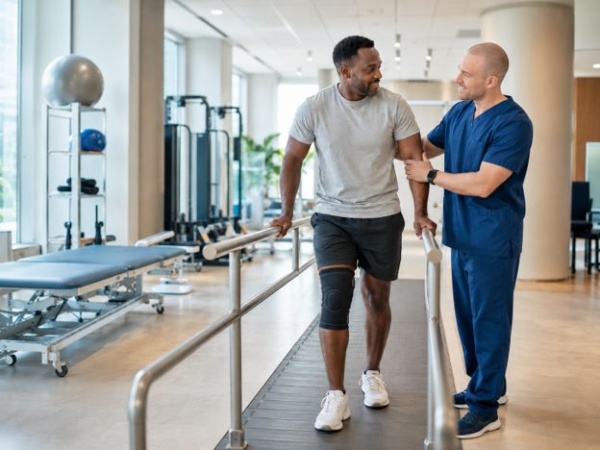
Hip and knee replacement surgeries are performed to reduce pain and restore function in joints damaged by arthritis, trauma or deformity. However, a new joint cannot deliver its full benefit if the surrounding muscles remain weak, stiff or poorly coordinated. Rehabilitation helps the patient regain range of motion, rebuild muscle strength, improve balance and relearn safe movement patterns.
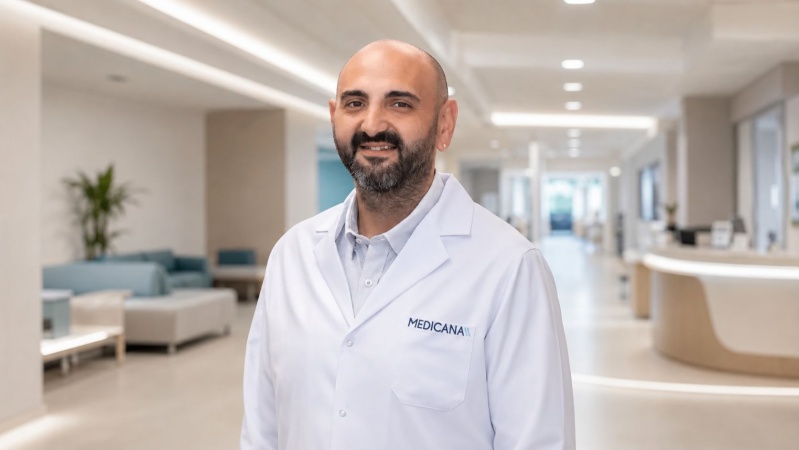
Prof. Dr. Okan Ozkunt at Medicana Health Group in Istanbul explains the principle simply: "In orthopedic care, the operation corrects the structural problem, but rehabilitation teaches the body how to use that correction. We want patients to recover with confidence, not only with a well-healed incision." This is why early guided movement is often introduced soon after surgery, depending on the patient’s condition and the surgeon’s protocol. The aim is not to rush recovery, but to prevent avoidable stiffness, reduce the risk of complications and help the patient progress safely.
Spine patients often arrive with long histories of back pain, leg pain, numbness, weakness or reduced walking distance. Some may have tried medications, injections or physiotherapy before surgery becomes necessary. When spine surgery is indicated, the rehabilitation plan must be carefully tailored to the diagnosis, the surgical technique and the patient’s neurological findings.
At Medicana Health Group, this may include posture education, protected mobilization, core stabilization exercises, gait training and gradual return to daily activities. The patient is also taught what to avoid in the early period, such as unsafe bending, twisting or lifting. Prof. Dr. Okan Ozkunt notes that one of the most important messages for patients is that pain relief and tissue healing do not always move at the same speed. "A patient may feel better quickly, but the spine still needs a disciplined recovery period. Rehabilitation helps us protect the surgical result while rebuilding function step by step."
Sports injuries are increasingly seen among younger and middle-aged adults who play football, basketball, tennis, athletics or recreational fitness sports. Ligament tears, meniscus injuries, shoulder instability, tendon injuries and muscle tears can limit performance and daily movement. In some cases, surgical repair or reconstruction is required; in others, non-surgical rehabilitation may be enough.
The key is correct diagnosis and a staged recovery plan. Returning too early can cause reinjury, while avoiding movement for too long can cause weakness and stiffness. Medicana's orthopedic and rehabilitation teams focus on objective progress: pain control, swelling reduction, strength symmetry, joint stability, balance, coordination and sport-specific movement. For an African patient who needs to return home after treatment, the team may also prepare a continuation plan that can be followed with local physiotherapists.
Many African patients seek care abroad because they want access to advanced imaging, experienced surgeons, multidisciplinary evaluation and coordinated hospital services. Medicana’s role is to make the clinical pathway understandable. This includes reviewing medical records, explaining treatment options, preparing the patient for surgery when needed, beginning rehabilitation in the hospital and giving clear post-discharge recommendations.
Prof. Dr. Okan Ozkunt emphasizes that expectations should be honest and personalized. A 35-year-old sports injury patient, a 58-year-old knee replacement patient and a 70-year-old spine surgery patient will not recover in the same way. Age, weight, bone quality, muscle strength, diabetes, heart disease, smoking, previous operations and the duration of symptoms can all influence recovery. A responsible rehabilitation plan respects these differences.
The best orthopedic recovery is not measured only in X-rays or surgical notes. It is measured in whether the patient can stand, walk, sleep, work, pray, travel and participate in family life with less pain and more confidence. With coordinated orthopedic surgery and physical therapy support, many patients can move from fear and limitation toward independence.
For patients from Nigeria and across Africa considering hip, knee, spine or sports injury treatment, Medicana Health Group offers a multidisciplinary setting where surgery and rehabilitation are planned as one continuous journey. As Prof. Dr. Okan Ozkunt concludes, "Our responsibility is not only to treat the joint or the spine. It is to help the person return to life with safer movement, realistic guidance and long-term function."