
Updating your news feed...
NEWS EXPRESS is Nigeria’s leading online newspaper. Published by Africa’s international award-winning journalist, Mr. Isaac Umunna, NEWS EXPRESS is Nigeria’s first truly professional online daily newspaper. It is published from Lagos, Nigeria’s economic and media hub, and has a provision for occasional special print editions. Thanks to our vast network of sources and dedicated team of professional journalists and contributors spread across Nigeria and overseas, NEWS EXPRESS has become synonymous with newsbreaks and exclusive stories from around the world.


























Loading banners
Loading banners...

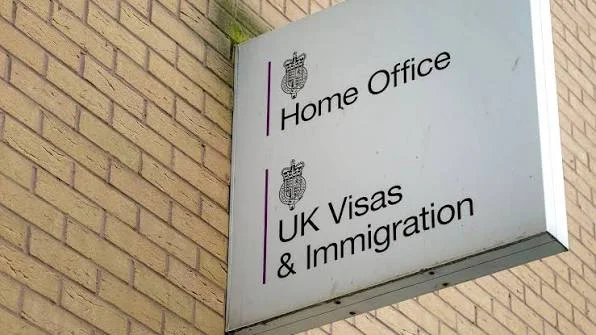
The UK government has unveiled a sweeping overhaul of its immigration rules, introducing wide-ranging changes that tighten visa requirements, strengthen deportation powers, and reshape the framework governing work, study and family migration.
The changes, contained in Statement of Changes HC 259 laid before Parliament on July 9, 2026, amend 42 sections of the Immigration Rules and introduce new measures affecting employers, educational institutions, migrants and sponsors.
Among the most significant provisions is an expansion of deportation rules, under which foreign nationals convicted on or after March 22, 2026, who receive suspended prison sentences of 12 months or more will be treated in the same way as offenders given immediate custodial sentences for the purposes of deportation.
The package also introduces a statutory requirement for the Secretary of State to review immigration regulations every five years and demonstrate that any regulatory burden placed on businesses, educational institutions or community organisations cannot reasonably be achieved through less restrictive measures.
Our correspondent on Saturday reviewed the 38-page Statement of Changes HC 259, published on the UK government’s website and ordered to be printed by the House of Commons, which sets out the amendments across the UK’s immigration framework.
Statement of Changes HC 259 outlines immediate alterations to the UK’s existing immigration framework. Stripping away previous policy variances, the document introduces a rigid, standardised text across the vast majority of visa pathways.
Here is exactly what the changes are, when they take effect, and how they alter the current rules.
The report sets out a staggered timeline for when these exact text amendments become law:
July 30, 2026: Amendments strictly concerning Appendix EU and Appendix EU (Family Permit) take legal effect.
August 3, 2026: All remaining amendments take effect.
The Safe Harbor Provision: Any application for entry clearance, an Electronic Travel Authorisation (ETA), permission to enter, permission to stay, or administrative review submitted before August 3, 2026, will be decided under the previous rules in force on August 2.
Across 30 distinct appendices, the Home Office has systematically removed localised compliance text and substituted a strict, identical standard.
The Exact Standardised Text: “If applying for permission to stay, the applicant must not be: (a) in breach of immigration laws, except that where the Exceptions for overstayers section of Part Suitability applies, that period of overstaying will be disregarded; or (b) on immigration bail, except where the Exceptions for overstayers section of Part Suitability applies.”
This exact text swap effectively eliminates previous grey areas across almost all mainstream routes, including:
Work & Talent: Skilled Worker, Global Business Mobility, Scale-Up, Start-Up, Innovator Founder, Representative of an Overseas Business, T2 Minister of Religion, Government Authorised Exchange, and Global Talent.
Study & Temporary Paths: Student, Child Student, Parent of a Child Student, Graduate, Visitor, and Youth Mobility Scheme.
Settlement & Family: Long Residence, Private Life, Adult Dependent Relative, and Settlement Family Life.
Hong Kong BN(O) (Appendix HK): The text adds a unique clause allowing immigration bail to be disregarded only if the applicant was placed on bail after making an asylum claim in the UK.
Appendix ECAA: The restriction applies specifically to conduct occurring after 11:00 PM on December 31, 2020.
Part 13 Deportation: The public interest mandate requiring a foreign national’s deportation has been rewritten. If an individual is convicted on or after March 22, 2026, and receives either a custodial sentence or a suspended sentence of 12 months or more, deportation is required unless specific narrow private/family life exceptions or Human Rights Act violations are legally met.
ETA and Child Student Paths: In Appendix ETA and Appendix Child Student, the phrase “or suspended” has been inserted directly after the word “custodial” regarding past sentences, enabling the Home Office to refuse entry clearance or travel authorisations on the same grounds.
Amendments to Part 11 (Paragraph 339NA) give the Secretary of State explicit power to bypass the personal interview phase of an asylum claim if:
The applicant is an EEA or Swiss national.
The Home Office can determine directly from the application paperwork that the claim is “clearly unfounded.”
Crucially, the rule clarifies that skipping the interview does not stall a rejection. The text substitutes a provision stating that omitting a personal interview “shall not prevent the Secretary of State from taking a positive or negative decision on the application.”
Skilled Worker Transition Safeguard: Paragraphs SW 4.2 and SW 6.1 alter how upcoming 2027 and 2028 salary rules apply. The criteria shift from checking if the “date of application” falls before the deadline to checking if the application uses a Certificate of Sponsorship (CoS) issued by the employer before the cutoff date.
Scale-Up Route Statutory Leave: The report amends paragraphs SCU 8.2 and SCU 18.3 to insert the word “, neonatal,” immediately following parental leave, ensuring neonatal absences do not penalise employment continuity calculations.
Child Care Legality: Appendix FM adds strict child protection clauses (E-ECC.1.7 and E-LTRC.1.7), explicitly stating that suitable arrangements for a child’s care and accommodation in the UK must fully comply with relevant UK law.
Indian Diplomatic Passports: Appendix V (Visitor) inserts an administrative exemption explicitly for nationals of India holding a valid diplomatic passport issued by India. (PUNCH)




