ADAD
ADAD
Updating your news feed...
NEWS EXPRESS is Nigeria’s leading online newspaper. Published by Africa’s international award-winning journalist, Mr. Isaac Umunna, NEWS EXPRESS is Nigeria’s first truly professional online daily newspaper. It is published from Lagos, Nigeria’s economic and media hub, and has a provision for occasional special print editions. Thanks to our vast network of sources and dedicated team of professional journalists and contributors spread across Nigeria and overseas, NEWS EXPRESS has become synonymous with newsbreaks and exclusive stories from around the world.




















Loading banners
Loading banners...


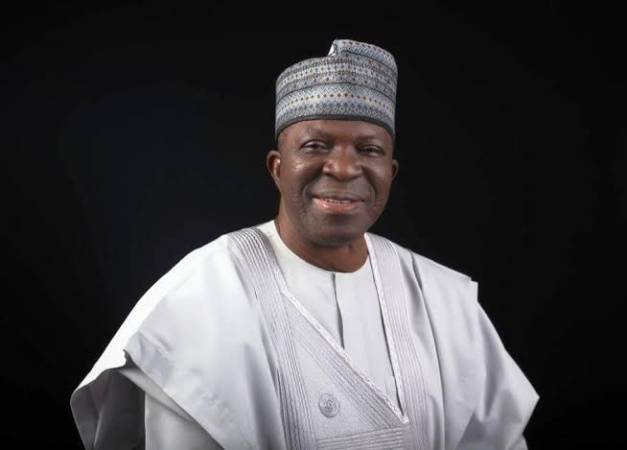
NEMA Chairman, Mr Bawo Omagbitse
By CHIAZO OGBOLU
The Nigerian Automotive Manufacturers Association (NAMA) has urged the Federal Government to strengthen industrial support alongside the 2026 Fiscal Policy Measures.
The association said the move would protect local investments and promote growth in the automotive manufacturing sector.
The call is contained in a position paper signed by NAMA Chairman, Mr Bawo Omagbitse, and Executive Director and Chief Executive Officer, Dr Harpreet Singh.
The document was made available to newsmen on Tuesday in Lagos.
NAMA Chairman said that Nigeria’s automotive manufacturing sector could face setbacks if tariff liberalisation was introduced without measures to protect local vehicle assembly.
Omagbitse said the position paper was submitted to the Minister of Industry, Trade and Investment and shared with the National Automotive Design and Development Council (NADDC).
“The current measures promote trade liberalisation without the industrial safeguards needed to sustain local vehicle assembly and component manufacturing.
“We recognise the Federal Government’s efforts to grow the economy and align Nigeria’s trade policy with the ECOWAS Common External Tariff and the African Continental Free Trade Area.
“We welcome measures that support locally manufactured vehicles, the End-of-Life Vehicle Policy and the Vehicle Conformity Assessment Programme,” he said.
He, however, expressed concern that the reduced duty difference between imported fully built vehicles and locally assembled vehicles could weaken efforts to develop the automotive industry.
Omagbitse said the situation had reduced the protection local manufacturers needed to increase production and the use of locally made components.
“Nigeria’s automotive industry is still at an infant to intermediate stage.
“Making vehicles affordable for buyers and protecting investments that create jobs are not in conflict. Our appeal is that both should move together,” he said.
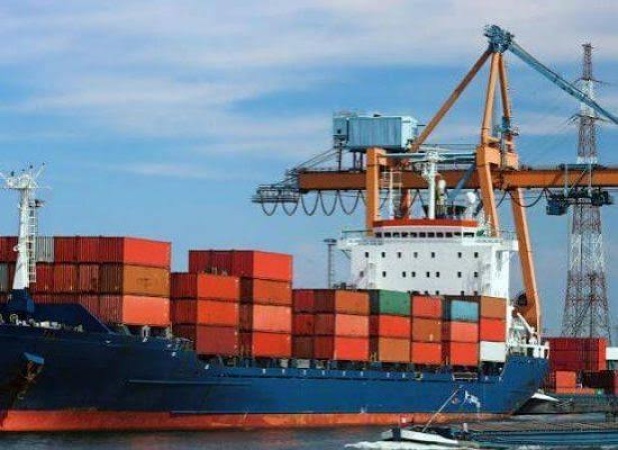
Citing official Nigerian Ports Authority data, he said vehicle imports increased by 67 per cent year-on-year.
He said imports rose from 35,262 units in the first quarter of 2025 to 58,870 units in the same period of 2026.
Omagbitse said the increase occurred before the latest measures and indicated that importers were expecting lower duties on fully built vehicles.
He said early tariff liberalisation could increase vehicle imports, reduce local assembly activities and discourage investment in manufacturing.
He noted that the impact could affect investments in assembly plants, welding and painting facilities, as well as local production of plastics, tyres, batteries, automotive glass and other components.
On his part, Singh said NAMA supported the government’s goals of making vehicles affordable, improving revenue collection and promoting regional integration.
“Our request is simply that these gains should go together with industrial incentives that successful automotive economies introduced before opening their markets.
“NAMA pointed to Thailand, Morocco, South Africa and China, which combined tariff protection with production incentives, supplier development, export promotion and infrastructure support before opening their automotive markets,” he said.
He said the association’s review of Nigeria’s automotive policy between 2014 and 2020 showed that local production and factory capacity remained low.
Singh attributed this largely to the absence of legislation backing the Nigeria Automotive Industry Development Plan (NAIDP).
He added ’hat investors needed long-term policy certainty before committing funds to the sector.
“To protect the sector, NAMA proposed three priority measures: restoring a wider duty difference between imported and locally assembled vehicles.
“Others are making consultation with NADDC and the ministry mandatory on future automotive fiscal policies and urgently passing the NAIDP into law,” he said.
He said the association also recommended production incentives, an automotive supplier development fund and priority access to foreign exchange for industrial inputs.
Singh called for dedicated energy and logistics support for manufacturers.
He said Nigeria risked becoming only a major vehicle market without developing a strong automotive manufacturing industry.
He added that the country’s automotive future depended on balancing open trade policies with continuous industrial development.
“The association also remains committed to supporting the Federal Government’s broader economic reform agenda,” he said. (NAN)