ADAD
ADADUpdating your news feed...

NEWS EXPRESS is Nigeria’s leading online newspaper. Published by Africa’s international award-winning journalist, Mr. Isaac Umunna, NEWS EXPRESS is Nigeria’s first truly professional online daily newspaper. It is published from Lagos, Nigeria’s economic and media hub, and has a provision for occasional special print editions. Thanks to our vast network of sources and dedicated team of professional journalists and contributors spread across Nigeria and overseas, NEWS EXPRESS has become synonymous with newsbreaks and exclusive stories from around the world.








Loading banners
Loading banners...

On June 11, the world’s attention would be turned to the United States, Canada and Mexico as the world’s biggest football fiesta, the FIFA World Cup, gets underway. GOWON AKPODONOR reports that amid the uncertainty surrounding the mundial, issues ranging from U.S. immigration laws, the high cost of tickets, and the difficulty in obtaining entry visas to host countries remain the major talking points, rather than who takes the crown.
As they say in American football, “the players are on the scrimmage line waiting for the ball to roll, but hold on, things don’t look the way they should.” It is less than a week to the kickoff of the 2026 World Cup, and yet there is so much uncertainty that fans are wondering what to expect in North America, particularly in the United States.
Ahead of the championship kickoff, FIFA and the tournament’s host nations face criticism over wide-ranging social, political and logistical issues surrounding the global event.
Canada and Mexico will co-host the tournament with the United States, which, alongside Israel, launched a war on World Cup participating nation Iran on February 28. While the war is currently under a fragile, temporary ceasefire, Iran’s participation in the tournament remains uncertain.
The uncertainty about Iran’s participation may be over following moves by the world football governing body to ensure as little contact between the warring nations as possible, but fans across the three host countries are in uproar over exorbitant ticket prices, which have affected sales and interest in the world’s most popular quadrennial sporting event.
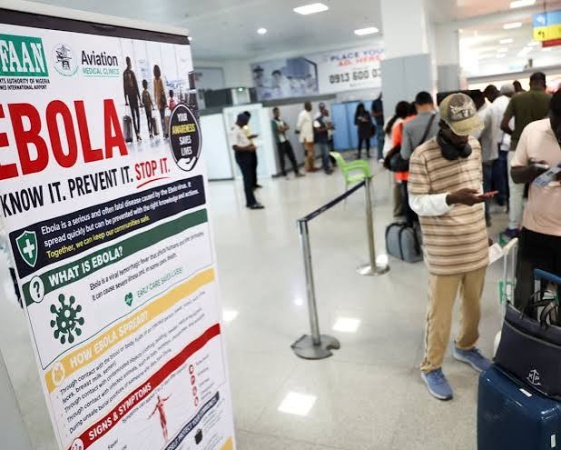
There are also concerns over the hike in transport fares on routes connecting match venues in the U.S., just as the outbreak of the Ebola virus in certain parts of the world, especially East Africa, has put question marks on the possibility of fans from DR Congo and other football lovers who have been in East Africa in the last 30 days getting into the United States.
Last week, Iran secured an agreement with Mexico and FIFA to move their team base from the United States to Mexico to avoid friction with Donald Trump’s men, but they are still not sure of their team, fans and officials’ safety as they still have to play their opening three games on American soil.
Events ahead of the 2026 World Cup are far different from what happened prior, during and immediately after the 1994 edition hosted by the United States and adjudged as one of the best in the history of the championship.
The 1994 and 2026 World Cups present a stark contrast. While both tournaments faced geopolitical tensions and doubts regarding the U.S. political climate, 2026 features unprecedented logistical complexity with its three-nation footprint, an expanded 48-team format, and intense security and travel uncertainties linked to active Middle Eastern conflicts and immigration policies.
Although racial tensions dogged the 1994 World Cup, Immigration and Customs Enforcement (ICE) activities ahead of this edition have raised doubts about the possibility of the championship reaching the heights projected by FIFA.
Already, many observers have predicted that this could be the least-attended World Cup since it expanded from a 24-nation event to 36 countries in 1998. This term, for the first time, 48 countries will play in the championship.
The President Donald Trump administration’s push for mass deportation and its efforts to tighten legal immigration pathways have spurred concerns about whether the World Cup’s international audience might be targeted by US immigration authorities.
Recently, the U.S. assured FIFA that it would halt the ICE raids for illegal immigrants during the World Cup period, but such assurances were made during the FIFA Club World Cup last year, yet their agents, as well as those of the Customs and Border Protection (CBP), were present at the matches, though the U.S denied conducting enforcement efforts.
Another area of uncertainty is transportation, where fans may be forced to pay heavily to travel between venues.
In previous World Cups, an accreditation tag guaranteed the holder free rides in the host cities during the games. But that seems likely to change in North America, especially in the United States.
Recently, reports surfaced that the cost of train rides in certain parts of the United States has doubled, meaning fans would have to pay more than they would in normal times.
There is also the sky-high match ticket prices, which have left fans outraged and excluded supporters from the tournament. A lag in ticket sales for blockbuster matches, including hosts USA vs. Paraguay, seems to be a testament to the high price tag.
FIFA put tickets on sale in December at prices ranging from $140 for Category 3 in the first round to $8,680 for the final. Later, it raised prices to as high as $10,990 when sales reopened on April 1.
The North American bid initially promised tickets would be available for as little as $21; however, the cheapest ticket is now priced at $60. Most tickets cost at least $200 for matches involving higher-ranked teams.
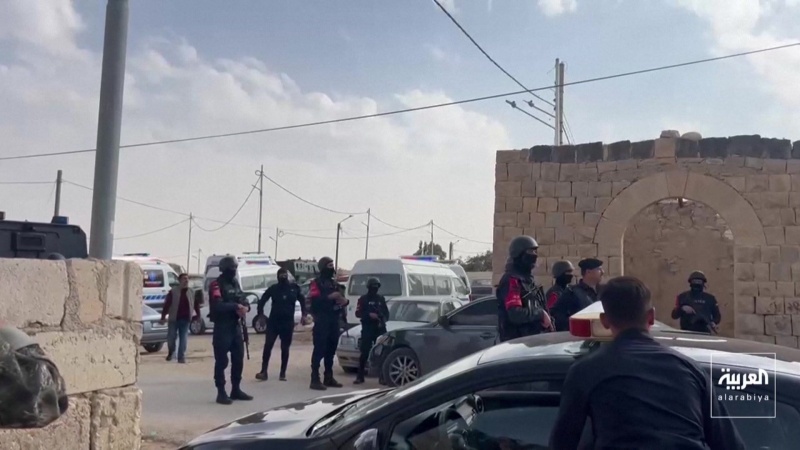
According to aljazeera.com, World Cup co-host Mexico is also under the spotlight due to concerns for fan safety after a lone attacker opened fire on tourists near the country’s capital.
The accused opened fire on top of one of the Teotihuacan pyramids — a UNESCO World Heritage Site and one of Mexico’s most frequented tourist attractions — and killed one Canadian tourist and injured 13 others.
That incident raised questions about security protocols taken by Mexican President Claudia Sheinbaum’s government in the run-up to the global football tournament. Sheinbaum said Mexico will beef up security ahead of the World Cup.
“Our obligation as a government is to take the appropriate measures to ensure that a situation like this does not happen again. But clearly, we all know — Mexicans know — that this is something that had not previously taken place,” she said.
Back home, football fans interested in attending the World Cup face more difficult challenges. Because Nigeria did not qualify for the championship, Nigerians interested in attending the championship face an uphill task obtaining visas to enter the host countries.
Earlier, the U.S. administration said that anybody going to the World Cup must deposit a princely sum of $15,000, which would be refunded to the fan on his return from the championship. The Trump administration later clarified that the policy exempts football fans from 50 countries, provided they are travelling to the U.S. for the World Cup with valid match tickets.
The bond requirement, introduced last year, was intended to reduce visa overstays, according to a State Department notice.
Players and coaches for the tournament were already exempt from the bond requirement, but ordinary fans with confirmed tickets for the World Cup had not been included until recently.
According to the U.S. State Department, it was intended to curb visa overstays or cases “where screening and vetting information is considered deficient”. The bond would be refunded at the end of the visitor’s stay.
Late last year, the US government also announced that tourists from dozens of countries could be required to provide a five-year social media history as a condition of entry – another immigration policy that could affect visitors coming to the US for the World Cup.
Rights groups have warned travellers that such policies could lead to denied entry, arrest risks, expanded travel restrictions, social media screening, racial profiling and increased surveillance.
Counting cost of Super Eagles’ absence at another FIFA World Cup
The 2026 World Cup will kick off on June 11 without the star-studded Super Eagles, despite Africa parading ten teams. It is Nigeria’s second miss in a row.
For many football fans across the globe, including Nigerians, the World Cup represents a lot, both for countries and individual players. Apart from the global exposure that comes with participating in the FIFA World Cup, the tournament provides a platform for players to showcase their talent to top European clubs, thereby increasing their chances of earning lucrative transfers or sponsorship deals.
For an average football fan, being part of the FIFA World Cup party plays a significant role. Apart from national pride, such a voyage creates a chance of making new friends.
Beyond the emotional and sporting impact, there are significant economic consequences of missing the World Cup, as sponsorships, advertisements, and merchandising, which normally thrive when Nigeria participates in the World Cup, disappear.
At Brazil 2014 and Russia 2018 World Cup, the Super Eagles, their travelling fans and members of the Supporters Club enjoyed the goodwill from breweries, telecom giants and other sports brands, which invested heavily in marketing campaigns around the team’s success. Now, they have to bear the brunt of Nigeria’s failure to qualify.
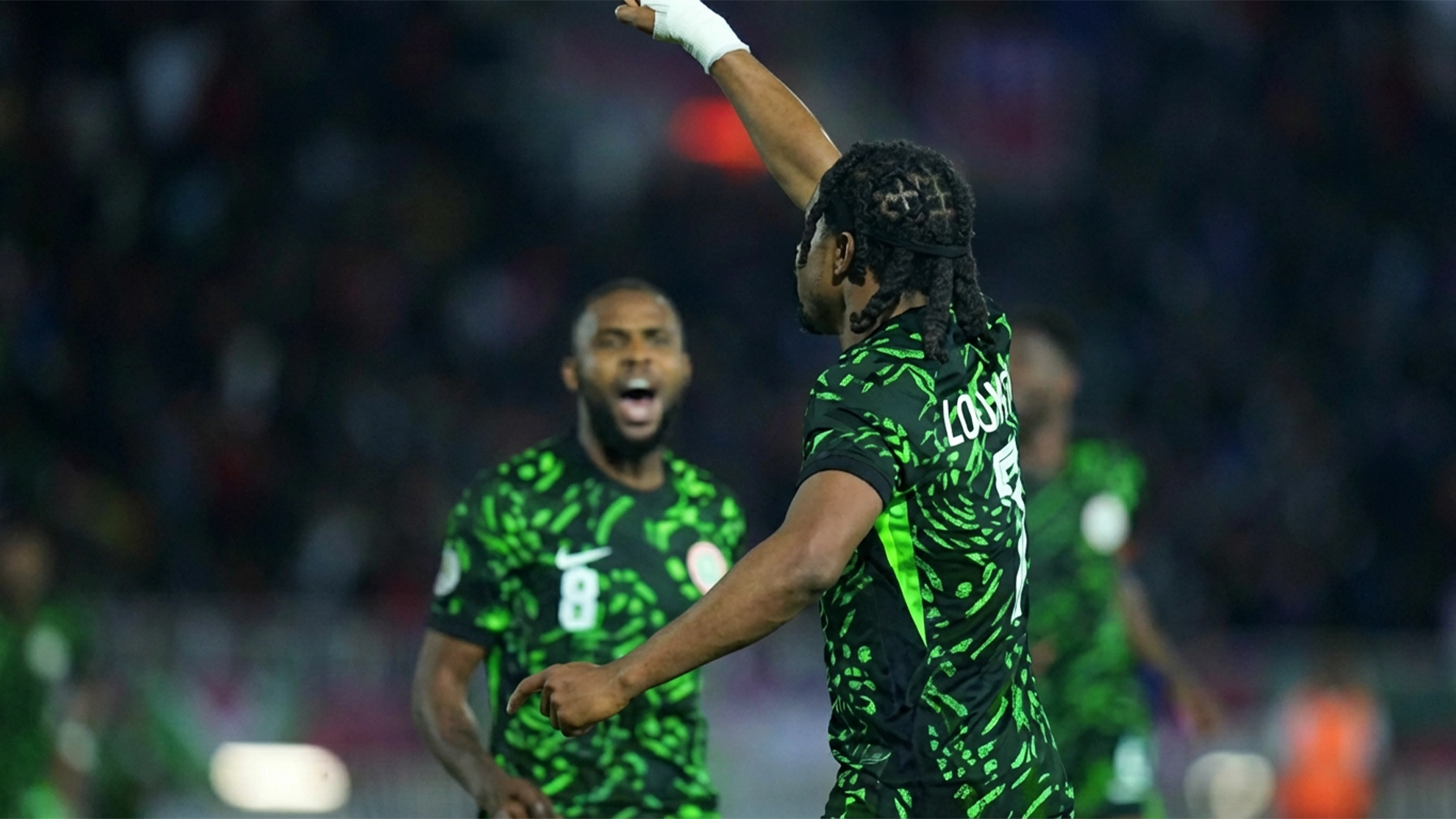
More worrisome is the fact that established stars like Victor Osimhen, Ademola Lookman, Alex Iwobi, among others, would also miss a chance to enhance their global reputation and increase their market value.
Among players in the present generation of Super Eagles players, only three, Wilfred Ndidi, Francis Uzoho and Alex Iwobi have featured at the FIFA World Cup. The implication is that stars such as Osimhen, Lookman, Ola Aina, Samuel Chukwueze and Calvin Bassey, among others, may never get the opportunity to play at the World Cup.
The World Cup comes up every four years, and by the time the championship comes around in 2030, these stars may have passed their prime and no longer be playing at that level of the game.
There is also the financial implication of missing the championship, as Nigeria has lost the opportunity to earn the largesse available to participating nations.
Each qualified nation will receive at least $9 million in prize money, in addition to $1.5 million for preparation costs.
In practical terms, Nigeria’s failure to qualify for the 2026 World Cup immediately shut the door on a guaranteed $10.5 million (about N15.5 billion) that would have flowed directly to the Nigeria Football Federation’s (NFF) account, which represents nearly 87 per cent of the federation’s projected yearly budget, crippling potential investments in grassroots football, youth tournaments, and domestic league infrastructure.
Historically, the Super Eagles have shown that they are not just a team that makes up the numbers at the World Cup. Nigeria reached the Round of 16 at USA ‘94, France ‘98 and Brazil 2014, and many would have backed them to progress beyond the group stage again in this expanded tournament.
FIFA’s breakdown shows that teams finishing between 9th place and 16th place, effectively the Round of 16, will earn $15 million, excluding the $1.5 million preparation grant. That means Nigeria could realistically have earned at least $16.5 million by matching its previous best runs.
That figure alone is significantly higher than the guaranteed minimum and represents funds now completely out of reach.
Apart from players and technical crew members, the usual long list of NFF and National Sports Commission (NSC) delegates, senators, House of Representatives and even those from the Presidency, who were waiting for direct estacode and other forms of indirect commercial value, have been shut out.
Again, many Nigerian fans and supporters club members, who were warming up to use the opportunity of the World Cup to “relocate” either to Canada or the U.S., are gnashing their teeth at home, cursing those responsible for Super Eagles’ failure to make the championship.
Many, including United States-based former Super Eagles midfielder and Flying Eagles Vice Captain (1983), Paul Okoku, describe Nigeria’s absence at the 2026 World Cup as a national football tragedy.
“It is not just a national football tragedy but a major setback for the players, the fans, and the country,” Okoku said.
Another former Super Eagles’ star, Edema Fuludu, who was part of the Super Eagles squad to the USA ’94 World Cup, said that failure to make the World Cup has cost Nigeria on all fronts. “First and foremost, our star players who would have used the opportunity to showcase their talents at the global scene to boost their market value have lost out. Again, the players who are at their prime, like Osimhen and Lookman, may not have another opportunity because age would have caught up with them.
“The media will be reporting the World Cup with less enthusiasm because our darling team is missing. Which organisation would want to sponsor the media or people from Nigeria to the Mundial? Advertisement companies in Nigeria are also losing out; the companies that want to sell their products to the world via this opportunity have also lost out,” Fuludu said. (Guardian)