ADAD
ADADUpdating your news feed...

NEWS EXPRESS is Nigeria’s leading online newspaper. Published by Africa’s international award-winning journalist, Mr. Isaac Umunna, NEWS EXPRESS is Nigeria’s first truly professional online daily newspaper. It is published from Lagos, Nigeria’s economic and media hub, and has a provision for occasional special print editions. Thanks to our vast network of sources and dedicated team of professional journalists and contributors spread across Nigeria and overseas, NEWS EXPRESS has become synonymous with newsbreaks and exclusive stories from around the world.













Loading banners
Loading banners...

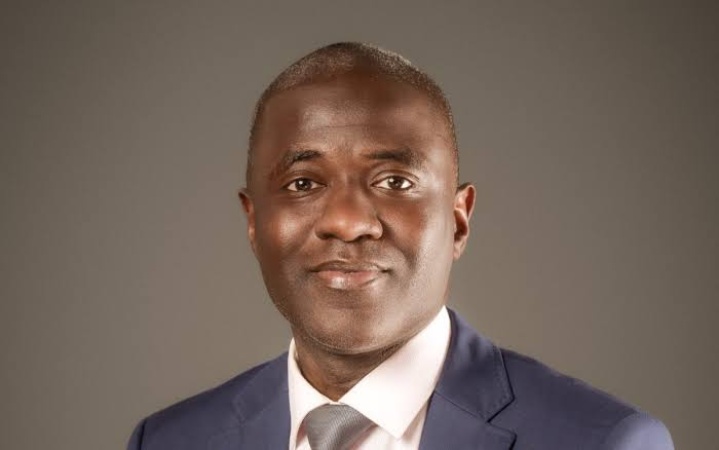
NCC Executive Vice Chairman, Dr Aminu Maida
Road construction, excavation and other civil works caused more than 5,000 fibre-optic cable cuts across Nigeria in the first six months of 2026, the Nigerian Communications Commission (NCC) has disclosed.
The commission said the incidents were largely linked to poor coordination between construction companies, government agencies and telecommunications operators before excavation work commenced, warning that continued damage to fibre infrastructure could undermine the country’s digital economy.
The Executive Vice Chairman of the NCC, Dr Aminu Maida, disclosed this yesterday in Abuja at a Stakeholders’ Workshop on the Protection of Fibre Optic Cables during road construction, rehabilitation and other civil works.
Maida said the scale of the damage reflected the need for a shift from reacting to fibre cuts after they occur to preventing them through proper planning and information sharing.
He noted that roads and fibre networks were both critical infrastructure for national development, stressing that the expansion of one should not come at the expense of the other.
According to him, fibre infrastructure has become a lifeline for banking, government services, education, healthcare, commerce, security and emergency communications, meaning that damage to a cable could have consequences far beyond the immediate cost to a telecommunications operator.
He recalled that fibre cuts in February 2024 caused an almost network-wide disruption for one telecommunications operator, leaving millions unable to make calls, send messages or access the internet for several hours.
The disruption, he said, subsequently placed pressure on other networks as affected subscribers migrated to them, illustrating how damage to a single network could trigger wider consequences for the economy and citizens.
The NCC chief said the Federal Government had taken steps to address the recurring problem through the Standing Committee on the Protection of Fibre Optic Cables, inaugurated by the Permanent Secretaries of the Federal Ministry of Works and the Federal Ministry of Communications, Innovation and Digital Economy.
He said the committee was mandated to establish practical coordination mechanisms before, during and after road construction and other civil works.
According to him, the workshop was designed to ensure that construction companies, engineers, contractors and site supervisors understood the risks associated with working around fibre infrastructure, which has been designated as Critical National Information Infrastructure.
The NCC boss urged telecommunications operators to provide accurate information on cable routes, contractors to verify infrastructure locations before excavation, and government agencies to facilitate timely information sharing.
Also speaking, the Permanent Secretary, Federal Ministry of Communications, Innovation and Digital Economy, Nadungu Gagare, represented by the Director of Telecoms and Postal Services, Stanley Musa, described the protection of fibre infrastructure as a shared national responsibility.
Gagare said the government’s efforts to expand broadband infrastructure risked being undermined by recurring fibre cuts, which disrupt essential services, increase operational costs and could discourage investment in the digital sector.
In his remarks, the Director, Critical National Assets and Infrastructure Protection at the Office of the National Security Adviser, Air Vice Marshal Effiom Enebong Ewa, said every damaged fibre cable represented more than a technical fault, given its impact on governance, economic productivity, public services and the lives of Nigerians.
The workshop brought together government ministries and agencies, telecommunications operators, construction companies, contractors, security agencies and other stakeholders to examine the causes of fibre cuts and develop preventive measures. (The Guardian)