ADAD
ADADUpdating your news feed...

NEWS EXPRESS is Nigeria’s leading online newspaper. Published by Africa’s international award-winning journalist, Mr. Isaac Umunna, NEWS EXPRESS is Nigeria’s first truly professional online daily newspaper. It is published from Lagos, Nigeria’s economic and media hub, and has a provision for occasional special print editions. Thanks to our vast network of sources and dedicated team of professional journalists and contributors spread across Nigeria and overseas, NEWS EXPRESS has become synonymous with newsbreaks and exclusive stories from around the world.

















Loading banners
Loading banners...

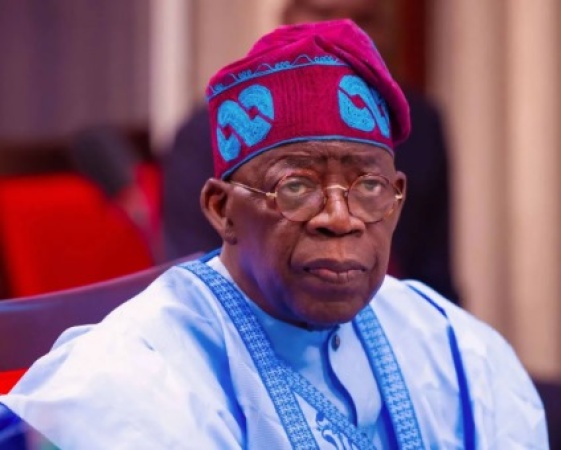
President Tinubu
President Bola Tinubu on Wednesday told over 5,000 public servants and international delegates at the International Civil Service Conference 2026 in Abuja that government plans will fail without a professional, disciplined and digitally enabled Civil Service to implement them.
Represented at the opening ceremony by Secretary to the Government of the Federation, George Akume, Tinubu described the gathering as a milestone in Nigeria’s drive to make its public service a vehicle for national transformation. He used the platform to both review the past year’s reforms and issue fresh directives to sustain momentum.
“No policy, however sound, can succeed without a capable, disciplined and high‑performing Civil Service to implement it,” the President told the conference. “You are the engine room of national transformation. Today, that engine is becoming faster, smarter, more accountable and more responsive to the needs of our people.”
Tinubu said the conference theme — “Reforms, Resilience and Results” — reflected a shift from planning to measurable execution, adding that in the past 11 months the public service has moved beyond “plans and policy declarations” to demonstrable outcomes. He pointed to the introduction of digital workflows in 38 Ministries and Extra‑Ministerial Departments as evidence of that change.
“When we spoke of digitalisation in 2025, some may have considered it an ambition for the distant future. Today, with 38 Ministries and Extra‑Ministerial Departments operating on a secure, paperless and end‑to‑end electronic workflow system, we are sending a clear message: Nigeria is building a public service that enables progress,” the President said.
The President also highlighted a personnel audit and skills‑gap analysis he authorised at last year’s conference, saying it is nearing completion and will ensure “the right people are placed In the right roles, equipped with the digital skills and professional discipline required for 21st‑century governance.”
“We are no longer relying on assumptions about our capacity; we are measuring it. We are identifying gaps, strengthening competencies and ensuring that the right people are placed in the right roles,” he said.
President Tinubu used the event to reinforce his Renewed Hope Agenda and to call for deeper digital adoption across government. “Accordingly, all Ministries and Extra‑Ministerial Departments are hereby directed to sustain and deepen their digitalised work processes. Agencies are also directed to adopt digitalisation across their internal operations and service delivery systems,” he declared, adding that “the era of manual inefficiency must give way to a culture of speed, transparency, data‑driven decision‑making and citizen‑centred service.”
He cited Project BRIDGE (Building Resilient Digital Infrastructure for Growth) as a national priority and invited investors and partners to join Nigeria’s digital infrastructure push, saying it is a “critical foundation for jobs, business growth, innovation, public service efficiency and expanded connectivity.”
The President praised Head of the Civil Service of the Federation, Mrs. Didi Walson‑Jack, for driving the Federal Civil Service Strategy and Implementation Plan 2021–2025. “I wish to specially commend the Head of the Civil Service of the Federation, Mrs. Didi Esther Walson‑Jack, for her exemplary leadership,” he said, noting the integration of tools such as the “Service‑Wise GPT” as an example of visionary leadership matched with disciplined execution.
Nigeria’s public service, Tinubu said, is positioning the country “as an emerging benchmark for public service reform on the Continent and beyond,” and he thanked international partners for technical support and collaboration.
The President challenged delegates to use the conference as a “results laboratory,” posing hard questions about making reforms irreversible, strengthening accountability, and ensuring technology improves service delivery rather than just internal processes.
“How do we make reform irreversible? How do we strengthen accountability? How do we ensure that technology improves service delivery and not merely internal processes? How do we build institutions that endure beyond personalities and political cycles?” he asked.
He concluded by urging institutionalised resilience so that “the progress of today becomes the standard of tomorrow,” and declared the conference open.
Head of the Civil Service of the Federation, Walson-Jack, in her opening remarks said Nigeria’s public service has recorded real gains under the ongoing reform drive, insisting that the International Civil Service Conference 2026 was designed to move beyond speeches to concrete outcomes.
She the theme was carefully chosen because “no institution survives by doing tomorrow exactly what it did yesterday.” She said resilience was necessary because “the world does not cause its disruptions,” while results matter because “citizens everywhere are done waiting for potential. They want delivery.”
She disclosed that all 38 federal ministries and extra-ministerial departments had digitalised their work processes before the December 31 deadline, adding that the Service-Wise GPT platform had recorded “over 50,000 conversations,” which she described as evidence that technology is solving real problems in the civil service.
The HoSF said Nigeria was also deepening discussions on responsible artificial intelligence, stressing that “AI must expand human capacity, not replace human government,” and that it must serve citizens “especially the most vulnerable, not simply those already well served.” She credited President Tinubu for setting “a clear tone for performance, accountability, and results,” and said the civil service was working “faster, thinking bigger, working smarter, and delivering better” because of his support.
Walson-Jack said the conference had been structured around eight stages — “aspire, innovate, activate, accelerate, accomplish, rejuvenate, transform, and impact” — to reflect the journey from vision to lasting reform.
She added that the deal room would ensure the conference ends with “signatures, not just speeches,” while urging delegates to participate fully, saying: “We have not invited you here to observe Nigeria. We have invited you to participate in a global conversation.”
Deputy Secretary‑General of the United Nations, Amina Mohammed, joined to place Nigeria’s reform drive in the wider context of the 2030 Agenda and global demands on public institutions. “Across the world people are looking to public institutions for delivery, dignity and hope, for ensuring access to education, water and sanitation, health care and justice, to fostering opportunities and enabling people and communities to flourish,” she told delegates in her good will message delivered virtually.
Mohammed framed strong civil service institutions as the backbone of the SDGs, saying: “This is also the promise at the heart of SDG 16: peace, justice, and inclusive societies grounded in effective, accountable, and inclusive institutions. SDG 16 is not only one goal among many, it is the foundation on which progress across the entire 2030 agenda depends.” She warned that the world’s progress is at risk: “The SDGs are off track, fiscal pressures are growing, conflicts, climate shocks, and inequalities are straining communities, and in many places trust in institutions is being tested.”
The Deputy Secretary‑General urged a renewed compact between citizens and public servants built on integrity, professionalism, innovation and inclusion. “This moment calls for a renewed public service compact rooted in integrity, professionalism, innovation, and inclusion; it calls for institutions that listen, learn, and deliver,” she said, adding that governments must build “stronger digital infrastructure and data systems that support sound policy analysis, improve service delivery, strengthen accountability, and bring government closer to the people.”
Mohammed made a direct call for participation and leadership from groups often sidelined: “It calls for the full participation and leadership of women and young people, not as beneficiaries alone, but as decision makers, innovators, co‑creators, and partners in shaping the future.” She challenged delegates to be bold in seeking how the civil service can rebuild trust and accelerate results: “As you meet in Abuja, I encourage you to be bold to ask, how the civil service can rebuild trust, deliver faster and fairer, bring government closer to people, and become a true engine for SDG acceleration.”
Paying tribute to public servants, she said: “At a time when public institutions are under pressure, I pay tribute to all those who serve with dedication and integrity every day. Your work matters for peace, for justice, for dignity and for the future we owe the next generation.”
British High Commissioner to Nigeria, Richard Montgomery, said the United Kingdom is deepening its partnership with Nigeria because of the reforms, economic progress and resilience under the Renewed Hope agenda, while urging public servants to stay focused on delivery and results.
Montgomery said the civil service was more important than ever in a world defined by uncertainty, geopolitical tensions and fast-moving technological change.
He said: “We meet at a time of very significant global uncertainty, conflict in the Sahel, in Ukraine, the Iran crisis, and all the spillover effects, technology, artificial intelligence,” adding that “new technologies bring new risks” even as they create new possibilities.
He praised Nigeria’s reform efforts, noting that the UK had “sought to step up our partnership because of the reforms, economic and more broadly, under the Renewed Hope Initiative,” and recalled the 2024 strategic partnership and President Tinubu’s state visit to the UK, where both countries agreed to “over one and a half billion new investment dollars worth of investment in agriculture, in infrastructure in Nigeria.”
Montgomery added that “these diplomatic partnerships, they have to be based on delivery and results,” while stressing that civil service reforms “take time” and require “sustained attention” and the energy of reformers like the Head of the Civil Service, whom he praised for fostering peer-to-peer cooperation between the two countries. (Daily Sun)