ADAD
ADAD
Updating your news feed...
NEWS EXPRESS is Nigeria’s leading online newspaper. Published by Africa’s international award-winning journalist, Mr. Isaac Umunna, NEWS EXPRESS is Nigeria’s first truly professional online daily newspaper. It is published from Lagos, Nigeria’s economic and media hub, and has a provision for occasional special print editions. Thanks to our vast network of sources and dedicated team of professional journalists and contributors spread across Nigeria and overseas, NEWS EXPRESS has become synonymous with newsbreaks and exclusive stories from around the world.







Loading banners
Loading banners...

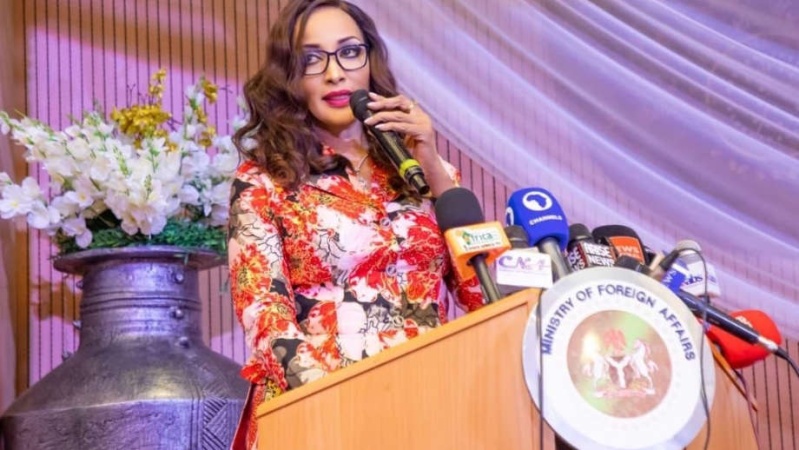
Foreign Affairs Minister Bianca Odumegwu-Ojukwu
By CHIAZO OGBOLU
Lagos State Government has intensified efforts to improve safety and enforcement along the Lekki corridor.
Officials met residents and stakeholders to address growing concerns over traffic violations and public safety.
The meeting was held virtually on Saturday with representatives from government, lawmakers and community leaders.
Participants reviewed enforcement gaps, infrastructure concerns and road-user behaviour within the rapidly expanding Lekki axis.
The session focused on improving compliance, reducing accidents and protecting public assets across the corridor.
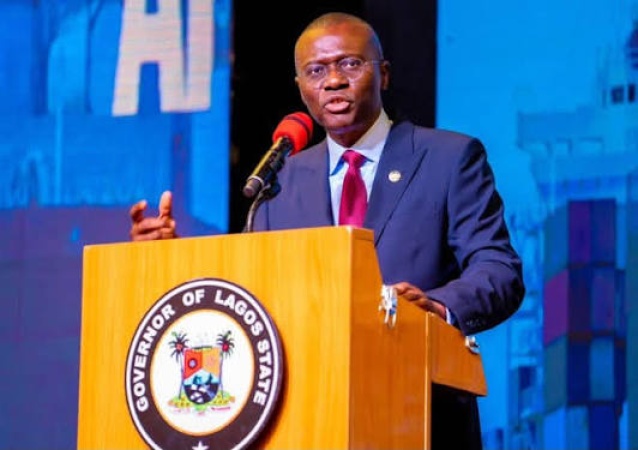
Commissioner for Transportation, Mr Oluwaseun Osiyemi, assured residents of stronger collaboration with security agencies.
He said motorists concealing registration plates would face tougher enforcement and possible arrest.
Osiyemi disclosed that discussions had already begun with police authorities in the area.
He said the newly posted police leadership would support enforcement operations.
“Concealing number plates creates security concerns and weakens accountability on our roads.
“Safety is not negotiable, and every resident deserves adequate protection,” Osiyemi said.
He said the state remained committed to restoring order on major traffic corridors.
According to him, enforcement would be intelligence-driven and supported by technology.
Osiyemi also announced progress on the proposed Green Line rail project. He described the rail initiative as critical to Lekki’s transportation future.
“The Green Line will change mobility patterns and reduce pressure on roads,” he said, adding that work on complementary transport systems was advancing.
Osiyemi said water transportation would soon become operational within the district.
“Within the next forty-five days, water taxis will begin operations in Lekki. This will provide residents with safer and faster transport alternatives,” he said.
He urged motorists and residents to support traffic reforms through responsible conduct.
“Road users must obey signs, respect traffic officers and avoid reckless driving,” he said.
He condemned speeding and one-way driving along smooth sections of the corridor. “These behaviours endanger lives and cannot be accepted,” he added.
Osiyemi revealed plans to install surveillance cameras across key locations.
He said the cameras would support monitoring, enforcement and evidence gathering.
According to him, similar systems had improved compliance in other parts of Lagos.
On traffic control, he said LASTMA had expanded operations in Lekki. He noted that the agency’s night patrol teams were already active.
“Night enforcement has improved monitoring and response in the corridor,” he said.
He, however, identified accommodation as a challenge for deployed officers.
“Most officers do not live within this axis. We are considering temporary cabins but need residents’ cooperation,” Osiyemi said.
Lagos Assembly Majority Leader, Mr Noheem Adams, urged stronger speed-limit enforcement. He said accidents on the corridor had become deeply concerning.
“Hit-and-run incidents and other crashes are becoming too frequent. We need more visible signage and stricter compliance,” Adams said.
LERSA Chairman, Mr Femi Oke, presented residents’ concerns during the meeting.
He urged the government to close loopholes surrounding concealed registration plates.
Oke also called for stronger vehicle safety checks across the corridor. “There should be twenty-four-hour roadworthiness checks and speed monitoring,” he said.
He stressed the need for better regulation of heavy-duty vehicles. “A truck assessment centre will ensure only compliant vehicles enter,” Oke said.
He also raised concerns about limited pedestrian infrastructure. “Pedestrian bridges are inadequate, and bus-stop infrastructure remains insufficient,” he said.
Oke further criticised the corridor’s emergency response capacity. He said public awareness of safety reporting tools remained low.
“The whistleblower app exists, but many residents know little about it,” he said. Oke pledged the association’s continued support for enforcement agencies.
He said residents were ready to assist LASTMA and the Federal Road Safety Corps. “We are willing to provide support materials, including reflective jackets,” Oke said. (NAN)
•Lagos Commissioner for Transportation, Oluwaseun Osiyemi
Nigeria begins evacuation of citizens amid rising xenophobic attacks
The Nigerian government has begun emergency evacuation support for its citizens in South Africa following a surge in anti-foreigner protests that have disrupted businesses, triggered panic across migrant communities, and left at least two Nigerians dead in separate incidents.
The Nigerian Consulate, working with the Nigerian Citizens Association in South Africa (NICASA), has announced a free repatriation flight for Nigerians willing to return home permanently, as fear and uncertainty deepen in major urban centres.
Frank Onyekwelu, NICASA President, confirmed that the process is already underway, with many Nigerians indicating interest in leaving.
“The Nigerian Consulate in conjunction with NICASA has offered a free repatriation flight to any Nigerian who wishes to leave South Africa permanently, and the process is ongoing,” he said, noting that several affected individuals have already registered.
He acknowledged that many Nigerians have been forced to shut down their shops and businesses, adding that there is currently no structured relief system for those impacted beyond the evacuation arrangement.
The unrest has spread across key cities including Johannesburg, Pretoria, Durban, East London, and parts of KwaZulu-Natal, where protests have degenerated into harassment, looting, and destruction of foreign-owned businesses.
Nigerians living in these areas described a climate of fear, saying they have been forced indoors as mobs target foreign nationals, particularly small business owners.
The Nigerians in Diaspora Commission has advised Nigerians to temporarily shut down their businesses to minimise exposure to violence and economic losses.
The Nigerian Consulate General in Johannesburg confirmed that two Nigerians, Amaramiro Emmanuel and Ekpenyong Andrew, died in separate incidents linked to security encounters.
According to Ninikanwa Okey-Uche, Consul-General , Emmanuel reportedly died from injuries sustained after an alleged assault by personnel of the South African National Defence Force on April 20.
Andrew, meanwhile, was apprehended in Pretoria following an altercation with the Tshwane Metro Police on April 19, and his body was later found at a mortuary in the city.
The demonstrations have been linked to local movements such as Operation Dudula, the March and March Movement, and other community-based groups advocating for stricter immigration controls.
Protesters accuse migrants from countries including Nigeria, Ghana, Zimbabwe, Mozambique, and Somalia of contributing to unemployment and crime, and have demanded the deportation of undocumented foreigners.
Viral videos circulating online show groups of protesters armed with sticks marching through streets, chanting anti-foreigner slogans and confronting traders.
In one such encounter, a Nigerian trader was ordered to leave the country with his family despite pleading that he had lived and worked in South Africa for years.
Nigerian traders say they have borne the brunt of the attacks, with shops, supermarkets, and market stalls looted or destroyed.
Yemisi Adewale, a restaurant operator in Johannesburg, , recounted narrowly escaping an attack at a market in Braamfontein.
“They are specifically targeting shops owned by Nigerians and Ghanaians. Once your shop is open, they attack, loot your goods, and assault you,” she said, describing the violence as organised looting disguised as protest.
Another trader, who requested anonymity, said hundreds of attackers armed with sticks had stormed markets, beating foreigners and forcing a complete shutdown of business activities.
“We are living in fear. No one dares open their shop anymore,” she said.
While many accounts describe widespread fear, some diaspora leaders say the unrest is localised.
ABC Okokoh, President of Ohanaeze Ndigbo in South Africa, said the violence is concentrated in informal settlements, where small-scale traders operate.
“It is not the whole of South Africa that is affected. Some areas are calm, but those in informal settlements are the worst hit,” he said, adding that political interests may be fuelling tensions.
Similarly, Olusola Agbeniyi, President of the Association of Yorubas in Diaspora in South Africa, maintained that there have been no protest-related fatalities, attributing reported deaths to separate incidents.
The South African Police Service has condemned the intimidation of foreign nationals, stating that such actions violate the country’s constitutional values of dignity, equality, and human rights.
Authorities say investigations are ongoing, including into the fatal shooting of an Ethiopian national in downtown Johannesburg captured on CCTV.
Nigeria’s Ministry of Foreign Affairs is engaging South African authorities over the crisis.
According to Abdur-Rahman Balogun of the Nigerians in Diaspora Commission, the matter has been escalated to the ministerial level, with Bianca Odumegwu-Ojukwu leading diplomatic efforts. (BusinessDay)