ADAD
ADAD
Updating your news feed...
NEWS EXPRESS is Nigeria’s leading online newspaper. Published by Africa’s international award-winning journalist, Mr. Isaac Umunna, NEWS EXPRESS is Nigeria’s first truly professional online daily newspaper. It is published from Lagos, Nigeria’s economic and media hub, and has a provision for occasional special print editions. Thanks to our vast network of sources and dedicated team of professional journalists and contributors spread across Nigeria and overseas, NEWS EXPRESS has become synonymous with newsbreaks and exclusive stories from around the world.










Loading banners
Loading banners...

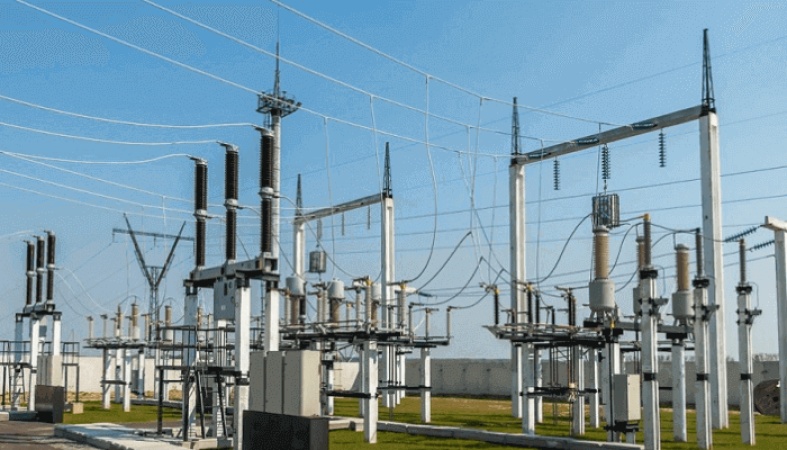
At least 11 more top companies in Nigeria have abandoned the national grid to generate their own power, as the electricity crisis in Africa’s most populous nation continues to bite into production costs and inflate energy bills, new regulatory data shows.
Recent data from the Nigerian Electricity Regulatory Commission (NERC) reveals that the decision to pivot into private captive generation spans players across different sectors, finance, steel, manufacturing, processing, and engineering, reflecting a deepening energy emergency for some of Nigeria’s biggest employers of labour.
The firms are Wihi International Limited, Federal Inland Revenue Service (FIRS), Yongxing Steel Company Limited, Accugas Limited, Abuja Steel Mill Nigeria Limited, T&D West Africa Limited, Vinylon Footwear Industry Limited, Nigerian Spanish Engineering Limited, Standard Plastic Industry Nigeria Limited, Watson’s Bakery Nigeria Limited, and Superior Eva Footwear Nigeria Limited.
The firms obtained their captive generation permits, issued to entities that intend to own and maintain power plants exclusively for their own consumption, with no sale of electricity generated to any third party, in the fourth quarter of 2025, generating a combined capacity of 130.19 megawatts (MW).
Adetayo Adegbemle, executive director of PowerUp Nigeria, told BusinessDay that many of the grid collapses can be linked to these large consumers leaving the system, which weakens demand stability.
“I have said repeatedly that if we truly want a stable and affordable grid, a major priority should be bringing these companies back,” Adegbemle said.
A government agency leads
Perhaps the most striking entry on the list is the Nigeria Revenue Service, formerly known as the Federal Inland Revenue Service, the government agency responsible for collecting taxes on behalf of the Nigerian state.
That a federal institution has sought its own captive generation permit, rated at 6.08 MW at its CBD, FCT-Abuja premises, underscores just how far confidence in the national grid has collapsed, even within the corridors of government itself.
“When you see a tax authority plugging itself off the grid, that tells you everything,” said one energy consultant who advises multinational firms operating in West Africa and who asked not to be named because of client confidentiality. “It is no longer a private sector problem. It is a national productivity problem.”
Steel giants dominate capacity
The two largest permits issued in Q4 2025 went to heavy industrial players. Abuja Steel Mill Nigeria Limited secured a 50 MW plant along the Abuja-Kaduna Expressway, while Yongxing Steel Company Limited, a Chinese-owned steel manufacturer, registered a 45 MW facility in Benin City, Edo State. Together, those two companies alone account for more than 72 percent of the total captive capacity registered in the fourth quarter of 2025.
Steel production is one of the most energy-intensive industrial activities, and operators say the grid’s chronic instability makes it practically impossible to maintain the consistent power supply that steel furnaces and rolling mills require.
“You cannot run a steel plant on hope,” said a Lagos-based industrial consultant with direct knowledge of Chinese-owned manufacturing operations in southern Nigeria. “Every time the grid trips, you are looking at damaged equipment, delayed orders, and costs that kill your margins. The captive route is not a luxury, it is survival.”
A crisis across sectors
Beyond steel, the Q4 permits paint a picture of an economy-wide energy emergency. Footwear manufacturers Vinylon Footwear Industry Limited in Jigawa State and Superior Eva Footwear Nigeria Limited in Kano each secured permits, for 6 MW and 5 MW respectively, pointing to the pressure grid instability is placing on Nigeria’s nascent manufacturing belt in the northwest.
advertisement
Watson’s Bakery Nigeria Limited, a food producer operating along Hadejia Road in Kano, obtained a 2.26 MW permit, a reminder that even consumer-facing businesses producing everyday goods are being forced to absorb the capital cost of energy self-sufficiency. Standard Plastic Industry Nigeria Limited registered 7 MW in Bompai, Kano, while Nigerian Spanish Engineering Limited secured 6 MW at Sharada Industrial Estate.
Accugas Limited, an Akwa Ibom-based gas processing firm, added 4.20 MW of captive capacity, and T&D West Africa Limited, a technical services company in Abuja, registered 1.25 MW.
Nigeria’s electricity sector has long been one of the country’s most persistent structural failures. Despite successive rounds of reform, including the privatisation of distribution and generation companies under the Electric Power Sector Reform Act of 2005, per capita electricity consumption remains among the lowest in sub-Saharan Africa.
Grid-connected generation capacity routinely falls below 5,000 MW for a country of more than 220 million people, against an estimated demand that analysts put north of 30,000 MW.
The captive generation market has expanded quietly but sharply in recent years, with multinationals, industrial firms, and increasingly mid-sized Nigerian businesses routing around the grid entirely. Industry watchers say the Q4 2025 data is consistent with a longer-term trend that shows no sign of reversing.
“Every permit you see in that NERC register represents a company that has given up waiting,” said a power sector analyst at a Lagos investment bank. “They have done the numbers. The cost of the generator, the gas supply agreement, the maintenance contract, it all pencils out better than depending on a grid that cannot guarantee eight hours of supply on a good day.” (Business Day)