Updating your news feed...

NEWS EXPRESS is Nigeria’s leading online newspaper. Published by Africa’s international award-winning journalist, Mr. Isaac Umunna, NEWS EXPRESS is Nigeria’s first truly professional online daily newspaper. It is published from Lagos, Nigeria’s economic and media hub, and has a provision for occasional special print editions. Thanks to our vast network of sources and dedicated team of professional journalists and contributors spread across Nigeria and overseas, NEWS EXPRESS has become synonymous with newsbreaks and exclusive stories from around the world.





















Loading banners
Loading banners...

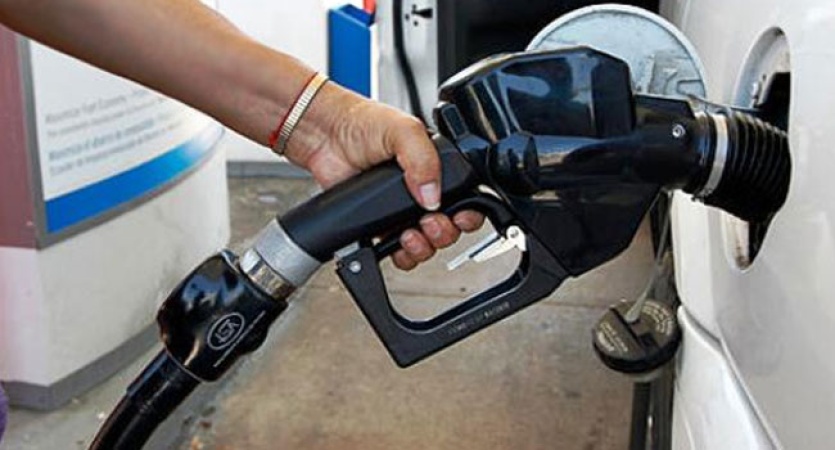
The Federal Government has ruled out any return of petrol subsidy in Nigeria, despite the recent surge in global oil prices driven by escalating tensions in the Middle East.
Minister of Finance and Coordinating Minister of the Economy, Wale Edun, stated this during a media briefing of the G-24 on the sidelines of the launch of the April 2026 Global Financial Stability Report by the International Monetary Fund (IMF).
Daily Trust reports that there have been growing calls from some sections of Nigerians for the reintroduction of fuel subsidy amid the rising cost of living across the country.
The demand has intensified following renewed tensions in the Middle East, which pushed global oil prices above $100 per barrel and triggered a sharp increase in fuel prices at home, with a corresponding rise in the cost of goods and commodities.
Experts have, however, urged the Federal Government to intervene in the situation, warning that the ongoing geopolitical tensions show no immediate signs of abating and could further worsen inflationary pressures.
However, Edun said the Federal Government’s 2023 reforms under President Bola Ahmed Tinubu, including the removal of petrol subsidy and liberalisation of the foreign exchange market, remained necessary policy decisions that had received strong backing from international financial institutions.
“As you know, in the case of Nigeria, that moved very rapidly under the President who came in 2023 to remove subsidies on petroleum products, and to also remove subsidies that were related to the foreign exchange markets,” Edun said.
He added that although the reforms were beginning to show positive results, they had been affected by external shocks beyond the country’s control.
“And so those gains, which were moving at pace, have now been negatively affected by an external shock, which had nothing to do with Nigeria or developing countries as a whole,” he said.
Edun warned against any reversal of the policy direction, stressing that returning to broad-based subsidies would undermine economic stability.
“Having made so much progress, it is important that we don’t return to generalised subsidies, a sort of relapse into policies that have not proven successful in the past,” he added.
He said the priority now was to protect vulnerable citizens through targeted interventions rather than reversing ongoing reforms.
According to him, while oil-producing countries like Nigeria may benefit from higher revenues due to rising crude prices, the impact of the global energy crisis remains mixed.
“For the oil-producing countries, like Ecuador and Nigeria, you may say there is the transmission of higher oil prices into higher revenues.
“But I must say it’s also not a one-way street… higher costs feed through from gas prices to fertiliser to food prices and so forth. So it is on both sides that this current energy crisis is affecting countries”, he said.
Edun added that governments must rely on fiscal buffers built over time to absorb shocks, while ensuring that relief measures remain “targeted and temporary,” especially for the poor and most vulnerable.
Meanwhile, the Chairman of the Nigeria Revenue Service (NRS), Zacch Adedeji, warned that at a benchmark oil price of $120 per barrel, Nigeria’s subsidy bill could have risen to between N38 trillion and N52 trillion annually.
He said such a scenario would have consumed about 56 to 76 percent of the proposed N68 trillion 2026 national budget.
This, he noted, underscored the fiscal burden that informed the decision to fully remove the subsidy. (Daily Trust)