 ADAD
ADAD
Updating your news feed...
NEWS EXPRESS is Nigeria’s leading online newspaper. Published by Africa’s international award-winning journalist, Mr. Isaac Umunna, NEWS EXPRESS is Nigeria’s first truly professional online daily newspaper. It is published from Lagos, Nigeria’s economic and media hub, and has a provision for occasional special print editions. Thanks to our vast network of sources and dedicated team of professional journalists and contributors spread across Nigeria and overseas, NEWS EXPRESS has become synonymous with newsbreaks and exclusive stories from around the world.
















.webp)


.webp)






Loading banners
Loading banners...

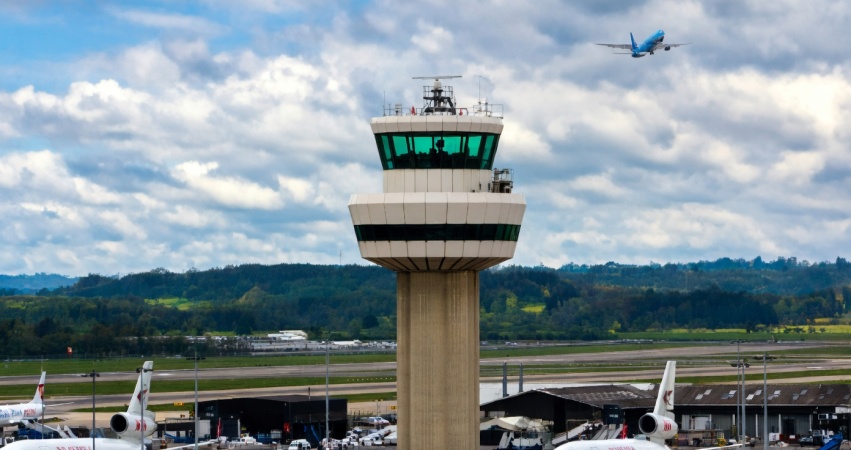
Air Traffic Control Tower
Nigeria’s aviation sector is edging toward disruption as the Nigerian Air Traffic Controllers’ Association (NATCA) signals it may slow flight movements nationwide to cope with rising fatigue, failing systems and worsening welfare conditions among its members.
In a firm statement jointly signed by its President, Edino Ilemona Amos and General Secretary Umar Fahad, the association warned that air traffic controllers are being stretched beyond safe limits and alluded to serious concerns about the reliability of the country’s airspace management.
NATCA insisted its alarm is based on operational realities, not sentiment.
Controllers, it said, are working under “sustained operational deficiencies, inadequate working tools, unresolved welfare issues, and severe psychological strain”, conditions it described as incompatible with a job that demands total concentration and split-second decision-making.
A major trigger, the association noted, is the continued use of outdated communication, navigation and surveillance (CNS) infrastructure.
According to NATCA, critical systems remain unreliable, forcing controllers to improvise around technical gaps that should not exist in a modern aviation environment.
It cautioned that “no airspace can be truly safe when the people responsible for managing it are compelled to operate beyond the safe limits of their available systems,” warning that infrastructure decay is directly increasing operational risk.
The association also flagged a worrying shortage of structured training and manpower development. With aviation evolving rapidly, NATCA said the absence of consistent retraining and long-term workforce planning is leaving the system exposed.
It warned that without urgent investment, Nigeria risks a shortage of adequately trained controllers, even as flight traffic continues to grow, an imbalance that could weaken safety margins.
Working conditions, the association added, are equally troubling. Some control towers, it said, fall short of basic safety standards. It pointed to the recent fire incident at the Murtala Muhammed International Airport in Lagos, where controllers reportedly escaped under dangerous conditions before returning to duty soon after.
NATCA said the incident highlights the hidden dangers controllers face daily, often without adequate protection or recovery time.
Beyond operational risks, the association described a deepening welfare crisis. Many experienced controllers, it revealed, have remained on Grade Level 16 for up to 13 years, a situation it called “deeply demoralising” in a profession that demands long-term commitment and discipline.
Delayed promotions, it warned, are eroding morale and sending the wrong signal to professionals responsible for safeguarding lives.
The association also criticised the failure to review professional and aeromedical allowances, which have remained unchanged since 2012 despite rising economic pressures. It stressed that these are not luxury benefits but essential support needed to maintain certification, health standards, and operational readiness.
Further compounding the issue are inconsistencies in the payment of post-licence rating allowances. NATCA said controllers are not being properly remunerated in line with approved structures, creating financial strain and uncertainty.
Despite repeated efforts to resolve the discrepancies, the association said the issue remains unresolved, undermining trust and deepening frustration within the ranks.
In addition, claims for legitimate duty-related expenses have remained unpaid for months, forcing controllers to personally absorb operational costs, an unsustainable situation in the current economic climate.
To ease manpower pressure, NATCA proposed re-engaging retired controllers at slightly lower grade levels, subject to medical fitness. This, it said, would help retain critical experience, strengthen mentoring, and reduce the burden on younger personnel.
Given the long and rigorous training required to produce qualified controllers, the association described the proposal as a practical step toward maintaining operational stability.
NATCA also raised concerns over structural imbalances within the system, noting that senior controllers are increasingly working under junior officers in other departments. This, it said, has “deepened frustration, damaged dignity, and weakened confidence” across the profession.
The association warned that morale has dropped sharply and is now part of a wider welfare crisis that could impact overall system performance.
While acknowledging efforts by aviation authorities, NATCA called for urgent and decisive intervention to address infrastructure decay, welfare challenges, and manpower gaps.
“These issues are not only about staff welfare; they are about the safety of passengers, airlines, airport users, and the entire aviation ecosystem,” the statement said.
With the threat of a nationwide flight slowdown looming, stakeholders are now under pressure to act quickly, as the consequences of inaction could extend far beyond delays to the core of aviation safety in Nigeria. (The Sun)



