 ADAD
ADAD
Updating your news feed...
NEWS EXPRESS is Nigeria’s leading online newspaper. Published by Africa’s international award-winning journalist, Mr. Isaac Umunna, NEWS EXPRESS is Nigeria’s first truly professional online daily newspaper. It is published from Lagos, Nigeria’s economic and media hub, and has a provision for occasional special print editions. Thanks to our vast network of sources and dedicated team of professional journalists and contributors spread across Nigeria and overseas, NEWS EXPRESS has become synonymous with newsbreaks and exclusive stories from around the world.









.webp)

.webp)

Loading banners
Loading banners...

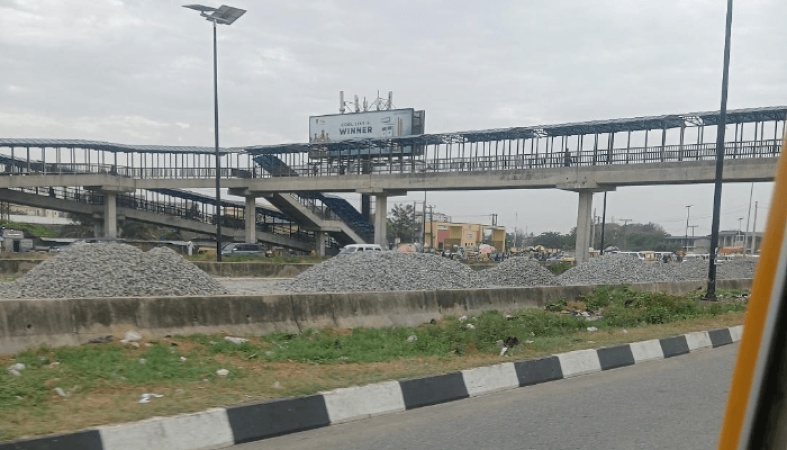
A new face of homeownership is emerging in Lagos’s suburban communities as the clan of the homeless who find homes in odd places continues to grow, with some now taking up residence on bridges.
This is a reflection of the broader accommodation challenges in Lagos that have pushed many tenants from middle-income to low-income settlements. People now living on the bridge means the under-bridge accommodation is not readily available or affordable in a good location.
Over the years, many residents of this sprawling city have lived under the bridges that dot its many parts. The under-bridge tenants are found around many of these bridges, especially in busy places like Ojuelegba, Ijora, Ojota, Orile, among others.
Unlike under-bridge tenants, the community of on-the-bridge tenants is chiefly found on pedestrian bridges built to ease crossing over highways and busy city roads. Such tenants are hardly found in city centres, but abound in the ungoverned areas of the state.
One of the highways with a large concentration of these odd tenants is the Lagos-Badagry Expressway, an approximately 79-kilometer-long highway connecting Lagos, Nigeria, with Seme border.
Lagos State government, which has been reconstructing the expressway since 2009, has built major connecting bridges, including pedestrian bridges, one of which is situated at Abule Ado—a rural community with sizeable commercial and bus-stop activities.
This facility, with overhead roofing, harbours a good number of on-the-bridge tenants. Their one-room ‘apartments’ have very simple building components comprising a few sticks supporting waterproof and tarpaulin materials that serve as roof and walls.
The under-bridge tenants are more modest with their building materials—a few swathes of apparently disused materials, including clothes, with supporting sticks, or just mosquito nets.
All day long, able-bodied Nigerians are seen milling around these ‘homes’, gisting, smoking, drinking, sleeping, and waking up, seemingly detached from the hustle and bustle around them that defines Lagos city life.
The plight of these tenants, whether they are under or on the bridge, underscores broader issues of urban poverty, inequality, and inadequate housing infrastructure in a city that prides itself as the centre of excellence.
Lagos is not new to odd residences. Many of its residents live in unimaginable places, including refuse dumps, from where they eke out a living. Along the same Lagos-Badagry Expressway, Between Festc First Gate and Agboju, there is a colony of young Nigerians who live in makeshift houses on refuse dumps.
Further down that axis, many people have built ‘houses’ on road medians, living, eating, trading, defecating, and making merry on the road. For these people, everywhere is home as majority of them came from other parts of the country, where they have no intention to return to.
For these tenants, under the bridge, on the bridge, or on the road median, life is a daily struggle. Many of them have been forced into this makeshift existence due to economic hardship, lack of affordable housing, or displacement from their original homes.
This kind of residency comes with a lot of challenges. The tenants lack access to basic amenities such as clean water, sanitation, and healthcare, exacerbating health risks and vulnerabilities. Furthermore, there is palpable fear of losing these homes anytime as authorities periodically clear out these makeshift settlements in efforts to maintain urban order.
In May 2024, the Lagos State government uncovered an illegal settlement of 86 partitioned rooms constructed under the Dolphin Estate Bridge in Ikoyi. Tenants living in these makeshift structures, which ranged from 10×10 to 12×10 feet, reportedly paid an annual rent of N250,000.
The rooms were constructed with wood and other materials without proper toilet facilities, leading occupants to use nylon bags for waste disposal into the nearby lagoon.
These kinds of structures pose a huge challenge to society as some occupants use them for illicit activities. In the case of Dolphin Bridge ‘homes’, a brothel was reportedly operating in the location.
The structures also blocked water drainage channels, causing water to pool on the bridge during rain. Additionally, fuel was stored improperly for generators, which was a huge risk.
Life under or on the bridge should be a major source of worry for the managers of Lagos as an emerging megacity. As the city continues to evolve and grow, the housing needs of all its residents must be taken into account. (Business Day)



