Updating your news feed...

NEWS EXPRESS is Nigeria’s leading online newspaper. Published by Africa’s international award-winning journalist, Mr. Isaac Umunna, NEWS EXPRESS is Nigeria’s first truly professional online daily newspaper. It is published from Lagos, Nigeria’s economic and media hub, and has a provision for occasional special print editions. Thanks to our vast network of sources and dedicated team of professional journalists and contributors spread across Nigeria and overseas, NEWS EXPRESS has become synonymous with newsbreaks and exclusive stories from around the world.




















Loading banners
Loading banners...

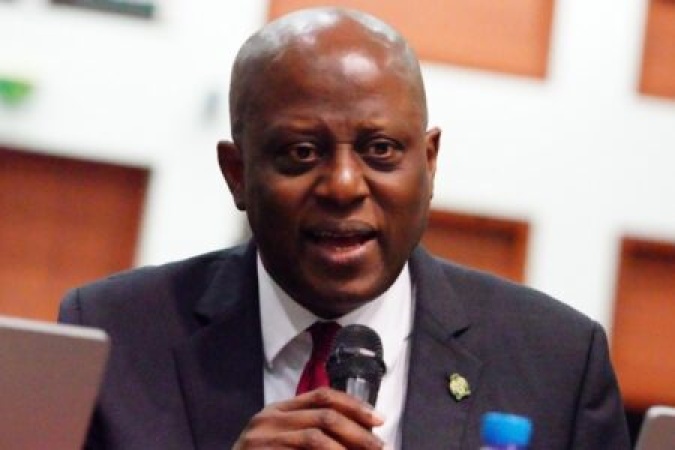
CBN Governor Cardoso
FRESH details have emerged on the next phase of regulatory actions by the Central Bank of Nigeria (CBN), as it quietly tightens oversight of the country’s newly recapitalised banking sector in a move aimed at averting a repeat of past financial crises.
Industry sources confirm that the apex bank is shifting focus from capital accumulation to risk discipline, following the conclusion of Nigeria’s most ambitious banking recapitalisation exercise since the 2005 banking consolidation.
Data shows that 33 Nigerian banks collectively raised about $2.95 billion (N4.65 trillion) in fresh capital, significantly boosting balance sheets across the sector. However, insiders say the CBN is less concerned with the size of the funds raised and more with how prudently they will be deployed.
“The accumulation phase is over; discipline is next,” a senior banking executive told the Nigerian Tribune, pointing to ongoing regulatory reforms designed to strengthen credit governance and curb excessive risk-taking.
At the heart of the CBN’s strategy is a comprehensive redesign of its credit-risk framework. The initiative is intended to prevent a recurrence of the post-2005 scenario, when increased liquidity fueled aggressive lending, weak credit controls, and ultimately sector-wide distress that required emergency intervention.
CBN Governor Olayemi Cardoso underscored this shift, stating that while recapitalisation has enhanced the resilience of Nigerian banks, stricter oversight is essential to sustain stability.
“As recapitalisation progresses, we are redesigning the credit-risk framework to enforce stronger governance, greater transparency, and firmer accountability across the sector,” Cardoso said, adding that the regulator is determined to break the cycle of boom-and-bust lending patterns.
Investigations reveal that regulators are particularly wary of banks channelling newly raised capital into high-risk credit exposures or diverting funds offshore—especially among institutions with international licences—potentially starving the domestic economy of much-needed financing.
Although some lenders, including Union Bank of Nigeria and Polaris Bank, missed the March 31 recapitalisation deadline, they remain operational under close regulatory supervision as they work to meet compliance requirements.
To deepen oversight, the CBN is upgrading its Credit Risk Management System—already web-enabled—to integrate directly with banks’ internal systems, allowing real-time access to borrower data and improving transparency across the financial system.
The regulator is also advancing its transition to the Basel III standards, with a focus on improving capital quality, strengthening liquidity buffers, and addressing emerging risks such as cyber threats and credit concentration.
Analysts say these measures come at a critical time, as Nigeria pursues an ambitious plan to grow its economy to $1 trillion by 2030. While stronger banks are seen as essential to achieving this target, economists warn that macroeconomic headwinds—including inflation, currency volatility, and foreign exchange constraints—continue to pose significant challenges.
A recent assessment by Deloitte supports the recapitalisation push, noting that previous capital buffers had been eroded by economic pressures. The firm concluded that higher capital thresholds would better position Nigerian banks to absorb shocks and finance large-scale economic activities.
For the CBN, however, the lesson from history is clear: raising capital is only half the battle. Ensuring that it is deployed responsibly may determine whether the current reform delivers lasting stability—or sows the seeds of the next financial crisis. (Nigerian Tribune)