ADAD
ADAD
Updating your news feed...
NEWS EXPRESS is Nigeria’s leading online newspaper. Published by Africa’s international award-winning journalist, Mr. Isaac Umunna, NEWS EXPRESS is Nigeria’s first truly professional online daily newspaper. It is published from Lagos, Nigeria’s economic and media hub, and has a provision for occasional special print editions. Thanks to our vast network of sources and dedicated team of professional journalists and contributors spread across Nigeria and overseas, NEWS EXPRESS has become synonymous with newsbreaks and exclusive stories from around the world.
















Loading banners
Loading banners...

The World Bank warned on Tuesday that Nigeria faces a deepening child development crisis, with approximately 110 out of every 1,000 children dying before the age of five, even as recent economic reforms begin to stabilise key macroeconomic indicators.
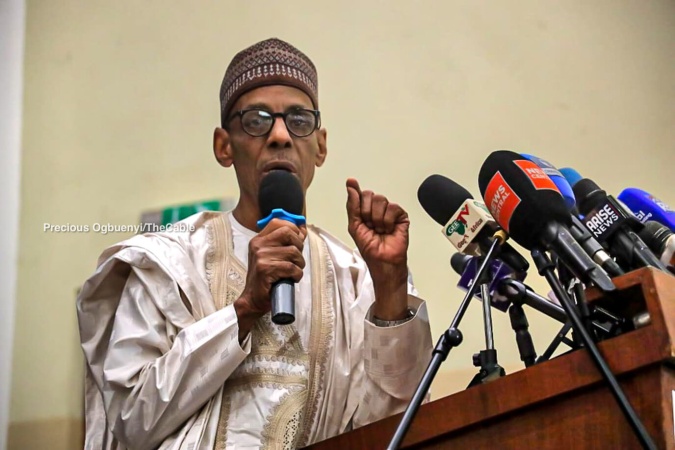
Speaking in Abuja at the launch of the April 2026 Nigeria Development Update (NDU), Mathew Verghis, World Bank country director for Nigeria, said reforms implemented since mid-2023 are starting to yield results. He noted that moderating inflation, improving external balances, and a surge in non-oil revenues point to a gradually strengthening economic foundation.
Inflation remains primary threat to welfare
However, Verghis cautioned that inflation remains high and represents the most immediate threat to household welfare, stressing that lowering prices is critical to restoring purchasing power. “We suggested in the last update that reducing high inflation is probably the single fastest way to allow people to feel the benefits of reforms,” Verghis said, noting that even at around 15%, price pressures continue to erode incomes significantly.
The bank’s latest outlook is complicated by rising global uncertainty, particularly the fallout from conflict in the Middle East, which has driven up energy and shipping costs. While Nigeria stands to benefit from higher oil prices as a net exporter, those gains are constrained by forward sales commitments, while higher fuel and logistics costs are already feeding into domestic inflation.
Petrol prices have risen sharply, by up to 50% in recent months, and diesel costs have nearly doubled, adding pressure to food and transport. Against this backdrop, the report stresses that macroeconomic stabilisation alone will not translate into improved welfare without faster, job-rich growth.
Structural reforms—including easing trade barriers on essential goods and scaling targeted cash transfers—are required to complement monetary and fiscal tightening. Verghis identified energy sector reform as the most urgent priority for unlocking growth, warning that gains in off-grid solar will fall short without fixing the country’s on-grid electricity system.
”Without that, Nigeria’s ambition of building a $1 trillion economy could remain out of reach,” Verghis stressed. He also pointed to the need for stronger fiscal governance and deeper coordination across Nigeria’s decentralised system, with state governments expected to play a larger role in delivering critical infrastructure.
Creating fiscal space through realistic budgeting, lowering the cost of governance, and improving efficiency will be central to financing development. The World Bank chief noted that the report’s core message involves shifting beyond short-term macroeconomic fixes to long-term human capital.
The crisis of early childhood development
Verghis argued that Nigeria’s growth trajectory will ultimately depend on investments made in early childhood. “This edition’s spotlight is on early childhood development,” Verghis said. “The evidence suggests that if Nigeria is to achieve high-income status and a more equal society, the most important investment to make will be in early childhood.”
He highlighted that approximately 110 out of every 1,000 Nigerian children die before the age of five, roughly 40% are stunted, and more than half are not developmentally on track before entering school. These outcomes reflect gaps in access to nutrition, healthcare, water, sanitation, and early learning.
The burden of these developmental gaps falls disproportionately on poorer households and northern regions. “These numbers, for a country like Nigeria’s aspirations, should be treated as a crisis,” Verghis said.
The World Bank argues that early childhood development should be treated as a central pillar of economic policy rather than social spending, citing estimated annual returns of 7% to 13% through higher productivity, improved earnings, and lower long-term health costs. (BusinessDay)