 ADAD
ADAD
Updating your news feed...
NEWS EXPRESS is Nigeria’s leading online newspaper. Published by Africa’s international award-winning journalist, Mr. Isaac Umunna, NEWS EXPRESS is Nigeria’s first truly professional online daily newspaper. It is published from Lagos, Nigeria’s economic and media hub, and has a provision for occasional special print editions. Thanks to our vast network of sources and dedicated team of professional journalists and contributors spread across Nigeria and overseas, NEWS EXPRESS has become synonymous with newsbreaks and exclusive stories from around the world.








Loading banners
Loading banners...

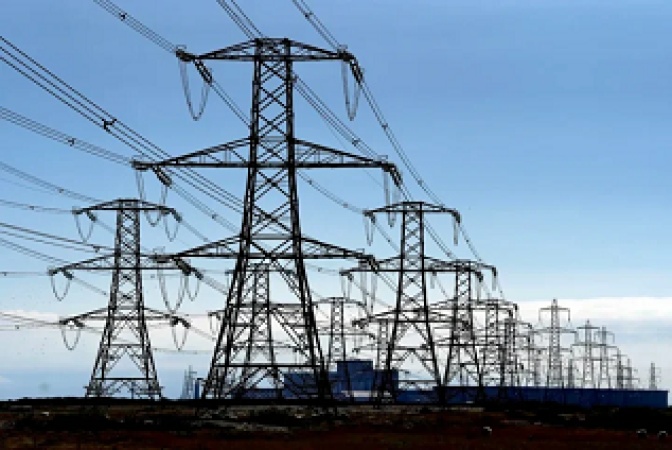
National grid
The Federal Government has approved a plan to settle longstanding debts owed across Nigeria’s power sector, in what officials described as a critical step toward stabilising the country’s fragile electricity value chain.
The announcement, conveyed in a statement by the Special Adviser to the President on Information and Strategy, Bayo Onanuga, followed what authorities called a “final review” of legacy liabilities that have plagued the sector for more than a decade.
According to the President’s Special Adviser on Energy, Olu Arowolo-Verheijen, the proposed settlement is expected to unlock improvements across the electricity value chain—boosting power generation, enhancing reliability, attracting fresh investment, and ultimately creating jobs.
“This programme is not just about settling legacy debts,” the adviser said. “It is about restoring confidence across the power sector—ensuring gas suppliers are paid, power plants remain operational, and the system begins to function more efficiently.”
WHAT IS LEGACY DEBT?
The term “legacy debt” broadly refers to the Federal Government’s financial obligations to power generation companies (GenCos) within the Nigerian Electricity Supply Industry (NESI), spanning from 2015 to March 2025.
These liabilities largely stem from unpaid subsidies used to cushion electricity tariffs for consumers after the sector’s privatisation. The Nigerian Bulk Electricity Trading (NBET) Plc acted as the intermediary through which the government absorbed part of the cost to keep electricity affordable.
What is now termed “legacy debt” is, therefore, not a single liability but a build-up of years of underpayments embedded within the Nigerian Electricity Supply Industry (NESI).
How the Debt Crisis Evolved
Nigeria’s electricity sector has grappled with a persistent liquidity crisis since its privatisation in 2013. At the heart of the problem is a structural imbalance: the cost of generating and delivering electricity consistently exceeds the revenue collected from consumers.
Electricity tariffs have remained largely non-cost-reflective, while distribution companies struggle with inefficiencies in metering, billing, and revenue collection. This mismatch has created chronic funding gaps.
To cushion consumers, the government—through the Nigerian Bulk Electricity Trading (NBET) Plc—absorbed part of the cost via subsidies and payment assurances. Over time, these unpaid obligations accumulated and cascaded across the value chain, leaving generation companies and gas suppliers significantly underpaid.
Breaking Down the Debt
Industry stakeholders stressed that the debt comprises a complex bundle of contractual liabilities rather than simple unpaid invoices.
These include payments for electricity generated and supplied, capacity charges for power made available but not utilised, and “deemed capacity” costs tied to contractual commitments.
There are also foreign exchange differentials driven by naira volatility, interest on overdue payments—often benchmarked at the Nigerian Interbank Offered Rate (NIBOR) plus four percentage points—and gas supply costs, including outstanding VAT obligations.
Operational inefficiencies have further inflated costs. Power plants incur heavy expenses due to frequent start-stop cycles caused by grid instability, while additional burdens arise from providing ancillary services such as spinning reserves and black start capabilities—often without clear compensation frameworks.
Generators are also required to operate under Free Governor Mode of Operation (FGMO), which places added mechanical strain on equipment without corresponding financial recognition.
Taken together, these elements underscore the depth and complexity of the liabilities the government seeks to resolve.
Dispute Looms Over Verified Debt
However, GenCos disputed the government’s figures. While the Federal Government has verified N3.3 trillion, operators insist total outstanding obligations stand closer to N4 trillion. This includes about N2 trillion in accumulated debt over the years, alongside an additional N2 trillion in unpaid subsidies for 2024 alone.
Crucially, about 75 per cent of the debt is reportedly owed to gas suppliers—whose product is indispensable for thermal power generation. Mounting arrears have already led some suppliers to scale back deliveries, further constraining electricity output nationwide.
The discrepancy between the government’s verified N3.3 trillion and the N4 trillion claimed by GenCos is already raising tensions within the industry.
Executive Secretary of the Association of Power Generation Companies (APGC), Dr Joy Ogaji, criticised the verification process as unilateral, noting that GenCos were not involved in the exercise.
“We are not aware of any such verification outside the last reconciliation concluded in March 2025,” she said, urging the government to publish details of the process and parties involved.
Ogaji also questioned whether the approved sum would be paid in cash or through financial instruments such as bonds, and demanded clarity on timelines.
“That is, if the announcement is cash-backed and not merely a political pronouncement. We have not seen any money,” she added.
She further argued that the term “legacy debt” has been loosely applied, noting that liabilities extend beyond the commonly referenced 2015–2024 period.
Rising Costs and Tariff Pressures
Kunle Olubiyo, President of the Nigeria Consumer Protection Network, said the earlier N501 billion bond has yet to significantly impact the sector due to stringent disbursement conditions that GenCos must meet.
He warned that the current scale of repayment is too limited to incentivise gas suppliers to increase supply to power plants.
Olubiyo also highlighted emerging cost pressures, including recent adjustments in gas pricing. The Nigerian Upstream Petroleum Regulatory Commission (NUPRC) and the Nigerian Midstream and Downstream Petroleum Regulatory Authority (NMDPRA) have revised the domestic base price of gas upward.
Under the new regime, the price of natural gas for power generation has risen to $2.18 per million British thermal units (MMBtu), up from $2.13 in 2025—a 2.35 per cent increase.
He cautioned that these rising input costs could trigger further electricity tariff hikes, compounding the burden on consumers.
“Payment of debts and tariff increases are not silver bullets,” Olubiyo said. “They will not resolve the structural distortions in the electricity market. We have been going in circles while avoiding the fundamental issues.”
He called for a comprehensive overhaul of procurement processes in the sector, alongside the installation of accurate metering systems to improve transparency in generation data.
Will This Improve Power Supply?
The Federal Government maintains that settling the debts will stabilise the sector and improve electricity supply. Improved cash flow could enable generation companies to maintain plants, secure consistent gas supply, and reduce outages.
However, structural constraints remain. Transmission infrastructure continues to limit the amount of power that can be evacuated, while inefficiencies in the distribution segment—particularly in metering and revenue collection—persist.
As a result, any improvements in electricity supply are likely to be gradual and contingent on broader reforms beyond debt settlement.
Lingering Questions
While the government’s approval signals a willingness to confront the sector’s liquidity crisis, key questions remain unanswered.
Will the N3.3 trillion commitment translate into actual cash flows for service providers? Can partial repayments restore confidence among investors and gas suppliers? And will the intervention be sufficient to resolve the structural inefficiencies that have long undermined Nigeria’s power sector?
Until concrete disbursements are made and deeper reforms implemented, the crisis may persist—despite renewed promises of change. (Daily Trust)



