 ADAD
ADAD
Updating your news feed...
NEWS EXPRESS is Nigeria’s leading online newspaper. Published by Africa’s international award-winning journalist, Mr. Isaac Umunna, NEWS EXPRESS is Nigeria’s first truly professional online daily newspaper. It is published from Lagos, Nigeria’s economic and media hub, and has a provision for occasional special print editions. Thanks to our vast network of sources and dedicated team of professional journalists and contributors spread across Nigeria and overseas, NEWS EXPRESS has become synonymous with newsbreaks and exclusive stories from around the world.



Loading banners
Loading banners...

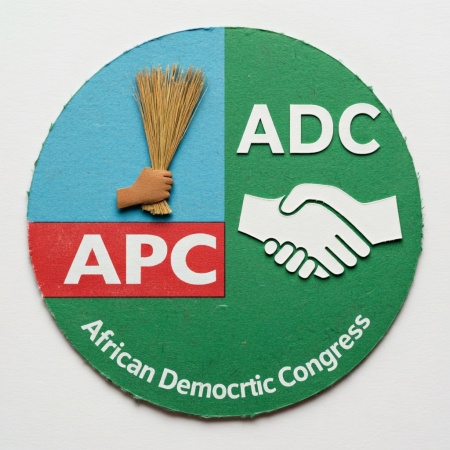
In the past weeks, the ruling All Progressives Congress (APC) has been celebrating its dominance across the states – 31 state governors in its kitty, a National Assembly that gives no trouble, and an opposition too busy suing itself to cause real trouble.
But recently, something has quietly, and rather dramatically, shifted. In the space of one week, the two most significant opposition movements in the country sent unmistakable signals that the 2027 election will not be the coronation many leaders in the ruling party have been planning.
The African Democratic Congress (ADC) welcomed Rabiu Kwankwaso, and with him the most formidable gathering of opposition firepower this country has seen since the coalition that ended Goodluck Jonathan’s presidency in 2015. Then the Peoples Democratic Party (PDP), written off so many times, held a national convention that, for all its imperfections, proved the party is still breathing.
A declaration of war
Just as the opposition began to smell blood, the plot thickened in ways that benefit neither side cleanly. When Senator Kwankwaso collected his ADC membership card at Gidan Kwankwasiyya in Kano, surrounded by David Mark, Rauf Aregbesola, Peter Obi, Aminu Tambuwal, Rotimi Amaechi, John Odigie-Oyegun, and Dino Melaye, political pundits did not see it as another routine defection. For them, it was a declaration of war, made with full understanding of its consequences and full calculation of its opportunities.
Three men, Atiku Abubakar, Peter Obi, and now Kwankwaso, who between them won the overwhelming majority of opposition votes in the 2023 presidential election are now under the roof of the same party. Add Amaechi from the South-South, Aregbesola from the South West, David Mark, Aminu Tambuwal and Odigie-Oyegun, and the result is the most geographically diverse, experientially deep opposition coalition Nigeria has assembled in a decade.
The Kwankwasiyya Movement is a grassroots machine rooted in Kano, Nigeria’s most populous state and the North’s most coveted electoral prize. Whoever carries Kano carries enormous leverage in any Northern negotiation. Atiku captured the mood when he declared: “When men of conviction come together, power trembles.”
PDP convention: Unity on the surface, cracks beneath
For the PDP, after months of courtroom battles, factional paralysis, duelling national chairmen, and internal warfare that would destroy lesser organisations, the party gathered approximately 2,500 delegates at its 10th Elective National Convention and emerged with a new leadership structure: Abdulrahman Mohammed as National Chairman and Samuel Anyanwu as National Secretary.
FCT Minister, Nyesom Wike, former Senate President Bukola Saraki, Ahmed Makarfi, Sule Lamido, Samuel Ortom, Hassan Dankwambo, and Okezie Ikpeazu all registered their presence at what many described as a make-or-mar gathering. For many, the convention projected unity. But up close, the cracks are visible.
Governors Seyi Makinde of Oyo and Bala Mohammed of Bauchi stayed away, as did members of the Adolphus Wabara-led Board of Trustees and stakeholders aligned with the Kabiru Turaki-led National Working Committee. Their absence highlighted the lingering divisions which, though muted during the convention, remain part of the PDP’s internal landscape.
The Wike question still hangs over the entire exercise like a thick cloud. A serving minister in Tinubu’s cabinet, publicly aligned with the President’s policy agenda, who simultaneously presents himself as the architect of the PDP’s revival is a contradiction that nobody at the convention seemed eager to address. Saraki wisely urged the new executives not to abandon reconciliation. The Turaki faction has already threatened the courts. But many have asserted that a party that ends a convention heading back to litigation has not solved its problems; it has merely postponed them.
Bala Mohammed: Wanted by all, committed to none
Perhaps no subplot captures the confusion and complexity of Nigeria’s current political realignment more vividly than the Bala Mohammed saga. The Bauchi State Governor and PDP Governors’ Forum Chairman spent the last week making the rounds of virtually every political platform available to him and being turned away or kept waiting at each door. Mohammed declared that all reconciliation efforts within the PDP had collapsed, and that the APC had made it clear he was not welcome.
“We have found ourselves in a very serious situation. I have done everything possible to ensure reconciliation, but it has not worked. We set up committees at both the national and state levels to explore all options, including the APC, but sadly, we discovered that we are not wanted there,” he said. When he received an ADC delegation led by former SGF Babachir Lawal at Government House Bauchi, Mohammed appeared to signal his preferred destination, describing the ADC as a party with the potential to challenge the APC in 2027. He told supporters he was willing to move the entire PDP structure in Bauchi from federal to local government level across to the ADC.
Then came a dramatic twist. Barely 24 hours after Mohammed signalled his intention to join the ADC, APC National Chairman Professor Nentawe Yilwatda arrived in Bauchi, accompanied by Kano Governor Abba Yusuf. The meeting at Government House lasted approximately two hours behind closed doors. The ADC wasted no time mocking the development: “The hustle is real. A few hours after Governor Bala Mohammed indicated his plan to join the ADC, the APC dispatched its National Chairman and governors to Bauchi to beg him.”
But the ironical twist here is not lost, according to some analysts. A governor the APC had publicly said it did not want suddenly became the subject of an urgent high-level rescue mission the moment he looked elsewhere. Mohammed himself acknowledged the contradiction: “If the APC opens up and formally invites us, we will consider it. But for now, the preference is to move to another opposition platform.” As of press time, Mohammed had still not made a final decision. He has become the fabled man in political no-man’s-land, wanted by everyone and committed to no one. What his situation reveals, according to pundits, is something important: Mohammed’s drama has exposed just how rattled the APC is by opposition momentum.
INEC’s bombshell: The ADC frozen
While the country was yet to recover from the political stalemate, the Independent National Electoral Commission (INEC) released its own bombshell. Just as the ADC was basking in the glow of Kwankwaso’s arrival and the prospect of Mohammed’s defection, the electoral umpire delivered a blow that stopped the party’s celebrations cold.
INEC announced that it was striking the names of Senator Mark and Ogbeni Aregbesola from its portal as National Chairman and National Secretary of the ADC respectively, following a review of a Court of Appeal judgment delivered on March 12, 2026. In plain terms: INEC no longer officially recognises the men who recruited Kwankwaso, hosted the Kano ceremony, invited Bala Mohammed to defect, and presented themselves to the world as the ADC’s leadership. INEC said it would also refrain from engaging with both the Mark faction and the rival Nafiu Bala Gombe faction, and would not monitor any meetings, congresses, or conventions held by either group pending the determination of the substantive suit before the Federal High Court in Abuja.
Effectively, INEC has frozen the ADC, the very party that Atiku, Obi, Kwankwaso, and a growing list of opposition figures have staked their 2027 ambitions on. The crisis traces back to a dispute over who should have assumed leadership after the resignation of the Ralph Okey Nwosu-led executive in July 2025. Gombe, who was the vice national chairman, denied ever resigning and argued he ought to have automatically assumed the chairmanship. He subsequently filed a suit seeking to restrain Mark’s group from parading themselves as the party’s leadership.
Political observers are worried that this development could impact the ADC’s ability to conduct official activities, participate in future elections, or effect candidate substitutions until the Federal High Court resolves the matter. For a party building a presidential coalition with eight months to an election, this is not a minor procedural inconvenience. It is a constitutional emergency. The ADC can argue that the underlying court dispute predates Kwankwaso’s arrival and the current coalition’s formation, and that the Federal High Court will ultimately resolve matters in their favour. But in Nigerian politics, court cases have a way of lingering past critical deadlines, and the 2027 election timetable waits for no faction.
Unease in APC
APC governors and party officials have spent the last week issuing statements about the ADC and PDP with an energy that a genuinely unbothered ruling party would not expend. Nasarawa Governor Abdullahi Sule pointed out that controlling 31 states means you don’t fear a party with zero state control. The Jigawa APC chairman dismissed the ADC as a club of “selfish individuals and power mongers” who will scatter once they discover there is only one presidential ticket. Lagos APC went personal, suggesting Kwankwaso’s move is simply his perennial hunt for a presidential or vice-presidential slot.
These are not entirely wrong observations. But the decision to dispatch the APC national chairman personally to Bauchi to prevent Bala Mohammed’s defection tells a different story from the one the party is telling publicly. The ADC national publicity secretary, Bolaji Abdulahi put the counter-argument directly: “Why is a party controlling 31 governors and 90 per cent of the National Assembly still panicking? In any free and fair election in Nigeria today, there’s no way APC will win. Nigerians are tired of them.”
Competing statements
The ADC leadership warned that INEC’s withdrawal of recognition from the Senator Mark-led National Working Committee, if allowed to stand, would make President Tinubu the sole presidential candidate in the 2027 polls.
In a chat with Saturday Sun, ADC National Publicity Secretary, Abdullahi, stated: “When we were saying some months ago that there is an agenda to foist President Tinubu on Nigeria as a sole candidate, some people thought we were just being alarmist. But you can see it clearly now. The condition that has been created, using INEC, is a situation that, if allowed to stand, will effectively make President Tinubu the sole candidate for 2027. Our congresses were supposed to start on the 9th of April to end on the 14th. If we are not able to conduct those congresses and hold our national convention, it means we will not be able to proceed with the process of filing our executive and nominating candidates for 2027. We also have Ekiti and Osun elections coming. This action has a direct impact on those.
“We are not going to allow them. We are not going to give up. What they did was wrong and it is not going to stand. What you are seeing is just a manifestation of the fear that they have. We wonder why they are afraid. If they have all the governors on their side, why are they still afraid?”
Abdullahi also challenged other stakeholders: “The fight for democracy in this country is never made by politicians alone. It was the work of civil society groups and the media. The question is whether the media just want to content itself with reporting stories, or take a position and understand its role as a protector of democracy in Nigeria.” The APC, on the other hand, threw its full weight behind INEC’s decision. In a statement, APC National Publicity Secretary Felix Morka described the ADC as “an assembly of Nigeria’s most confused and desperate politicians.”
“The ADC is a party that never was. By design, it was a kamikaze contraption with a self-destructive detonator. It had to unravel and now unravels fast. When its factional leadership under David Mark and Rauf Aregbesola parachuted into the party like thoughtless and planless commandos and hijacked it in violent violation of its constitutional stipulations, the ADC set its own date with destiny. INEC’s decision to de-recognise the factional Mark-led executives in compliance with the court judgment is valid in law, justified in fact, and consistent with electoral policy and democratic practice. It is the consequence of the party’s reckless and desperate misadventure,” Morka said.
The long game: Ego, unity, and the 2027 test
Opposition momentum in Nigeria has a history of burning bright and collapsing spectacularly, usually around the question of who gets the presidential ticket. The ADC’s central vulnerability is identical to every opposition coalition Nigeria has assembled: ego management at the summit. Atiku has wanted the presidency for two decades. Obi believes he was robbed in 2023.
Kwankwaso did not join a new party to play second fiddle. Amaechi needs political rehabilitation. The challenge facing the ADC leadership is how to persuade these men, each a political brand in his own right, each with a loyal constituency, to stand down for the collective good.
What the ADC has going for it is that 2027 may represent exactly the kind of existential moment that overrides personal calculation. Atiku is running out of electoral cycles. Obi needs institutional infrastructure that Labour Party could never provide. Kwankwaso needs a platform bigger than Kano. The shared interest in defeating Tinubu may be the glue that holds what personal ambition would otherwise dissolve.
But that glue must now also hold against a leadership crisis that INEC has officially recognised as unresolved. The irony is pointed: on the same week the ADC welcomed its biggest catch, the party’s legal and constitutional foundations were declared by the electoral body itself to be in dispute.
The underlying conditions
The conditions feeding opposition momentum are real and measurable. Fuel prices have devastated household budgets. Food inflation has made eating a luxury for millions. Insecurity stretches from the North West through the Middle Belt to parts of the South East and South-West. A reform programme whose long-term benefits, however genuine, have arrived with short-term pain that ordinary Nigerians are absorbing daily, without anaesthetic.
The opposition is not yet a government-in-waiting. It is a coalition of rivals finding common cause in shared adversity, one that is, at this very moment, simultaneously growing and fighting itself in court. It could still implode spectacularly before INEC opens the voter registration window.
But for now, it is alive. It is louder than it was six months ago. And the INEC bombshell, far from killing it, has only added urgency to the coalition’s need to resolve its internal disputes quickly, or risk handing the APC a much-needed reprieve. (The Sun)



