 ADAD
ADAD
Updating your news feed...
NEWS EXPRESS is Nigeria’s leading online newspaper. Published by Africa’s international award-winning journalist, Mr. Isaac Umunna, NEWS EXPRESS is Nigeria’s first truly professional online daily newspaper. It is published from Lagos, Nigeria’s economic and media hub, and has a provision for occasional special print editions. Thanks to our vast network of sources and dedicated team of professional journalists and contributors spread across Nigeria and overseas, NEWS EXPRESS has become synonymous with newsbreaks and exclusive stories from around the world.


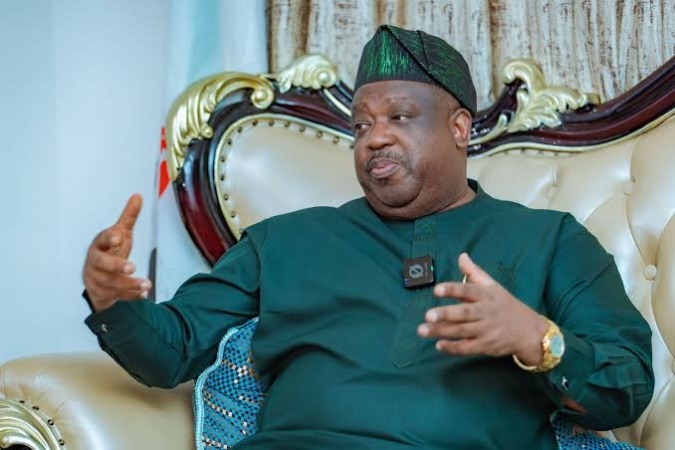
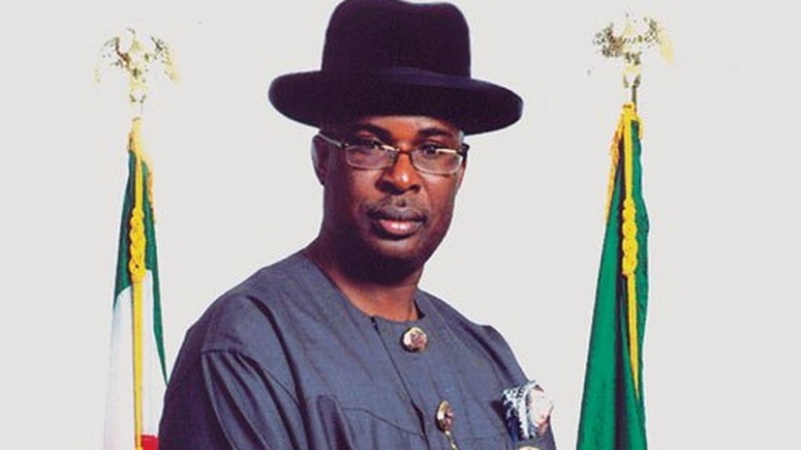
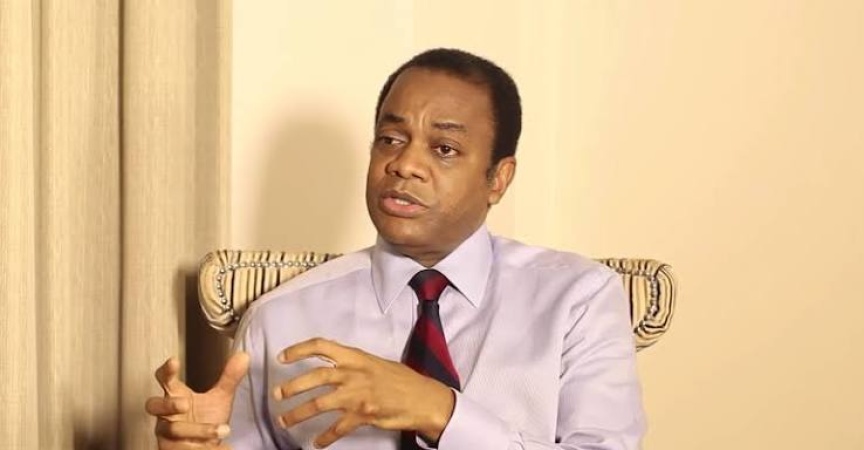


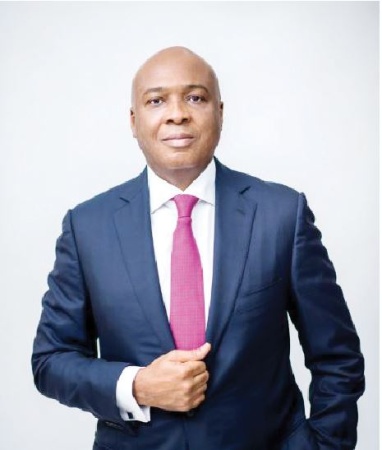
Bukola Saraki
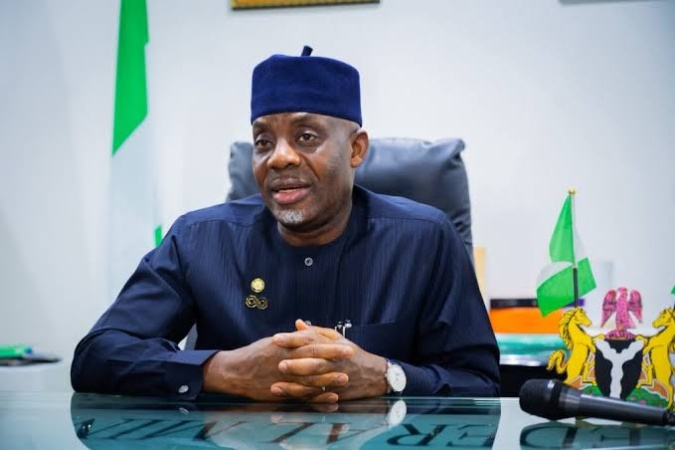
In this special interview with ABDULRAHMAN ZAKARIYAU, former Senate President and former Kwara State Governor, Dr Bukola Saraki, describes the Peoples Democratic Party as a strong platform that can be further reinforced through genuine reconciliation
The governors backed the National Working Committee led by Tanimu Turaki, SAN, and said they are willing to go on with the reconciliation with the Minister of Federal Capital Territory, Nyesom Wike’s camp. Can we get your comment on this?
I am happy to hear about that development. It’s never too late. This has always been my position. As you know, for a while, I headed a reconciliation committee, and all the efforts we made were to try to bring the two parties together and make them understand that the party needs to be united. We need to put the interests of our members ahead of our own personal interests. In this party, no matter all the noise you hear, certainly at the top, we need to put the interests of our members ahead of our own personal interests.
If you go to the grassroots across the 36 states, PDP is still very strong and acceptable. For a lot of people, it’s even more like a religion when you talk about PDP. I can speak in my own state about how strong our party is there, and I’m sure it is the same across the country.
In a large party, there will be differences and interests. But at the end of the day, we should galvanise those interests and not let them mar the interests of the party at large. The number one priority for everybody is that PDP must be on the ballot for the 2027 elections. Everything else is secondary.
That is why some of us have been treading carefully to ensure that we don’t worsen the situation. That is also one of the reasons I have not given too many interviews; I don’t want to be criticised by one group or another because that doesn’t help someone trying to bring people together.
Yes, mistakes have been made, but it is not my role to point fingers. My role is to provide solutions. Before the last convention, I gave my view strongly. I said this would not help us. I suggested a middle ground—rather than holding conventions, we should have had a caretaker arrangement to avoid court cases. Now that has happened; it is in the past.
I am happy to see that the other group is now beginning to understand that there should be reconciliation.
Now, what is reconciliation? It must be one that ensures that, irrespective of the outcome, PDP is on the ballot for all our members across the country who want to contest elections. History will not be kind to us if, by continuing litigation, we deprive our members of that opportunity. We must agree that our differences should not jeopardise that objective. We must give and take—it is not impossible. The number of people disagreeing has reduced significantly. At one time, we had about 12 people disagreeing; now it is down to two or three.
My appeal to those remaining is that we should not allow ego or pride to stand in the way. Being a statesman means making sacrifices, not because you cannot fight, but because you are acting in the greater interest of the people. Let us not just talk about reconciliation; let us actualise it. PDP should agree not to go into further litigation and to accommodate each other. That process can continue even as we ensure that conventions and primaries are legitimate and valid.
It is a good development. I commend those who have taken that position.
But so far, have you received any invitations from both factions? I mean, have they reached out to you to mediate since you facilitated the process?
At the moment, I am not working formally as a committee, but based on the responsibility given to me by some party leaders, they have reached out to me. I was in Saudi Arabia, and since I returned, I have been speaking to all parties to facilitate meetings. Some meetings were held yesterday, and others will be held this evening.
I am trying as much as possible to narrow the gap, and I will continue to do so up to the convention and even after, to ensure that we do not drag the party into unnecessary crises.
These are political issues that should be resolved politically. The courts have never been the right solution, and litigation will jeopardise the chances of our members.
The only reason some people are leaving the party is fear, fear that PDP may not be a viable platform to contest elections. It is not because the party is unpopular. People want assurance that if they contest on the PDP, they will be on the ballot. That reassurance must come from us as party leaders, and the only way to achieve that is through reconciliation and ending litigation. Once we do that, confidence will return, and people will see PDP as a strong platform again.
Many people believe that the PDP is so divided and probably weak that fielding a candidate in 2027 may not make any difference. What is your response to that?
I disagree with that. If you say that fielding candidates at the House of Assembly level across the 36 states will be weak, I don’t agree. If you say gubernatorial candidates will be weak, I don’t agree. The same applies to the House of Representatives and the Senate.
The only area where we may have had a setback due to the crisis is at the presidential level. But in politics, a lot can change over time.
The reason PDP appears inactive is the uncertainty caused by litigation. Six months ago, before the crisis escalated, there was significant interest from potential candidates.
Serious presidential aspirants want certainty about the platform. Once we resolve this crisis, confidence will return, and interest will increase again.
At the state level, many aspirants are already indicating that they prefer to run on the PDP platform—especially if the convention is credible and recognised by INEC. But time is not on our side. We must act quickly.
What is your take on the Ibadan 2025 PDP convention and that of Abuja 2026?
There was a convention in Ibadan, and some of us knew from the beginning it would not hold. However, we were assured that INEC would be present.
To demonstrate my neutrality, I advised our delegates to attend. I told them clearly: if INEC is not present, do not participate. When they got there, INEC was not present, so they did not participate. That shows sincerity of purpose. Now the court has nullified that convention.
The Abuja convention, from what we have seen, INEC participation is expected. It is backed by law.
If INEC is present, then we are good to go. As a PDP member, you should support any process that keeps the party viable. We cannot allow internal disagreements to destroy the party.
At the end of the day, the priority is to ensure PDP remains a platform for members to contest elections.
How do you assess some governors who defected despite benefiting from the party?
That is unfortunate. However, given my role in reconciliation, I prefer not to criticise them publicly. It is not because I agree with their actions, but because criticism is better addressed privately if the goal is reconciliation.
That said, we should have anticipated such developments and ensured the party did not reach a point where people felt they could not contest elections.
What we are seeing is unusual, and it reflects deeper issues, particularly the weakness of institutions such as political parties, the judiciary, and even the National Assembly.
If we want to strengthen democracy, we must strengthen these institutions.
What has been happening in the Kwara PDP?
We do not have factions in the Kwara PDP. The party is very strong and united. The concern of our members is what is happening at the national level, not within the state.
In Kwara, PDP remains highly acceptable. People have compared past governance with the present and can see the difference clearly.
Despite being out of the office for 15 years, the level of support remains strong. Security, however, has become a major issue in the state—something we never experienced before. This is not politics; it is reality. People are concerned, and that alone is a major factor influencing political sentiment.
How do you assess the policies of the Federal Government, especially with current economic challenges?
As an opposition party, it is our responsibility to point out where the government is not doing well. We must address the cost of living, job creation, investment, and security.
There are areas where the government has done well, such as stabilising foreign exchange, which can encourage investment. But there are also areas where improvement is needed, especially in ensuring that people feel the impact of policies.
The challenge is that the opposition has not been as effective as it should be in highlighting these issues.
Do you think President Tinubu has an edge going into 2027?
Yes, as an incumbent, he has an edge.
However, the election is still far away, and a lot can change. Many Nigerians are still dissatisfied with their living conditions. Elections are ultimately decided by voters, not politicians. So, it is too early to predict the outcome.
How do you see the new electoral guidelines?
One of my regrets is that during my time in the Senate, we passed electronic transmission of results, but it did not make it into law due to differences with the House of Representatives. Credible elections are fundamental to democracy. If election results do not reflect the will of the people, it undermines accountability and governance.
We must strengthen the electoral process and reduce reliance on litigation. Too many elections are decided in court rather than at the ballot box, and that is not healthy for democracy.
Until we address these issues, our electoral system will not fully reflect the will of the people. (The PUNCH)




