
Updating your news feed...
NEWS EXPRESS is Nigeria’s leading online newspaper. Published by Africa’s international award-winning journalist, Mr. Isaac Umunna, NEWS EXPRESS is Nigeria’s first truly professional online daily newspaper. It is published from Lagos, Nigeria’s economic and media hub, and has a provision for occasional special print editions. Thanks to our vast network of sources and dedicated team of professional journalists and contributors spread across Nigeria and overseas, NEWS EXPRESS has become synonymous with newsbreaks and exclusive stories from around the world.









Loading banners
Loading banners...
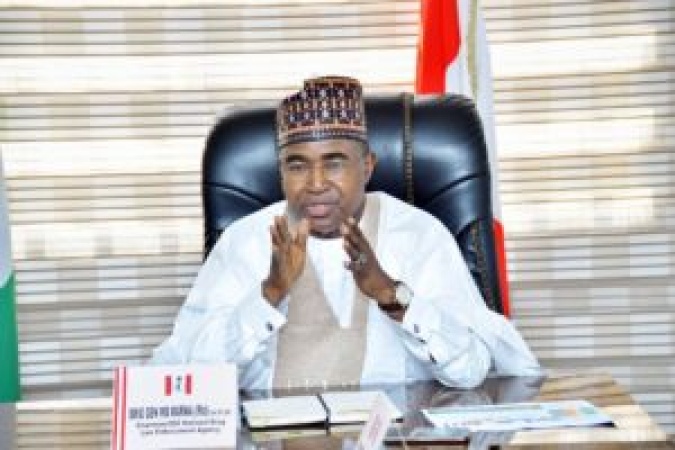
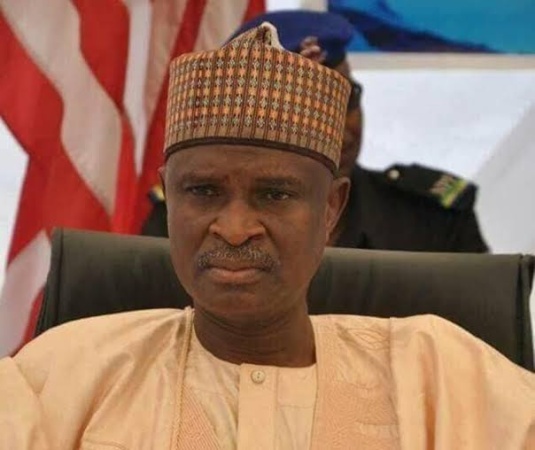
NDLEA Chairman, retired Brig-Gen Marwa
By IBIRONKE ARIYO
The Chairman, National Drug Law Enforcement Agency (NDLEA), retired Brig.-Gen. Buba Marwa has described drug abuse and trafficking as a growing public health and national security crisis.
Marwa said this at the inauguration of the United Nations Office on Drugs and Crime (UNODC) Country Programme for Nigeria 2026–2030, on Friday in Abuja.
He therefore called for urgent, coordinated action to address the threat.
Represented by his Chief of Staff, Lt.-Col. Murtala Aminu, the NDLEA chairman said the evolving nature of drug problems in Nigeria, marked by increasing complexity and scale, demanded a shift in strategy and stronger collaboration among stakeholders.
According to him, drug trafficking is not only linked to violent crime, but also fuels money laundering and undermines national security.
“The drug challenge in Nigeria is no longer a static threat; it is expanding and becoming more complex.”
Marwa noted that the UNODC partnership with Nigeria had played a critical role in strengthening national efforts to combat illicit drug trafficking and transnational organised crime.
He described the newly inaugurated programme as a timely roadmap and clear statement of intent to tackle emerging threats more effectively.
The NDLEA boss said the agency had over the past five years, repositioned itself strategically to respond to the challenge.
He said this included intensifying enforcement operations and dismantling trafficking networks through intelligence-driven approaches.
He also noted that enforcement alone was not sufficient, emphasising the need for a balanced and humane response.
“We have strengthened enforcement, but we have also expanded our focus on prevention, counselling and rehabilitation,” he said.
Marwa further explained that the agency’s approach now integrated compassion for drug-dependent individuals, reflecting a transition from a purely punitive system to a restorative and human-centred model.
He said the UNODC Country Programme aligned with Nigeria’s priorities, particularly in promoting data-driven interventions, gender-sensitive approaches and institutional integrity within the justice system.
He added that recognising the unique vulnerabilities and roles of women in the drug landscape was critical to achieving meaningful progress.
Looking toward 2030, Marwa said success should be measured by the number of lives saved and communities strengthened, rather than the volume of drug seized.
He called for a whole-of-society approach involving law enforcement agencies, healthcare providers, educators and communities.
“No single agency can tackle this challenge alone,” he said, urging sustained collaboration.
He commended the UNODC for developing what he described as an ambitious and necessary programme, reaffirming NDLEA’s commitment to working closely with partners to achieve its objectives.
The News Agency of Nigeria (NAN) reports that the UNODC Country Programme for Nigeria 2026–2030 aims to strengthen national capacity to address drug-related crimes, enhance public health responses and improve justice delivery through strategic partnerships. (NAN)