
Updating your news feed...
NEWS EXPRESS is Nigeria’s leading online newspaper. Published by Africa’s international award-winning journalist, Mr. Isaac Umunna, NEWS EXPRESS is Nigeria’s first truly professional online daily newspaper. It is published from Lagos, Nigeria’s economic and media hub, and has a provision for occasional special print editions. Thanks to our vast network of sources and dedicated team of professional journalists and contributors spread across Nigeria and overseas, NEWS EXPRESS has become synonymous with newsbreaks and exclusive stories from around the world.














Loading banners
Loading banners...

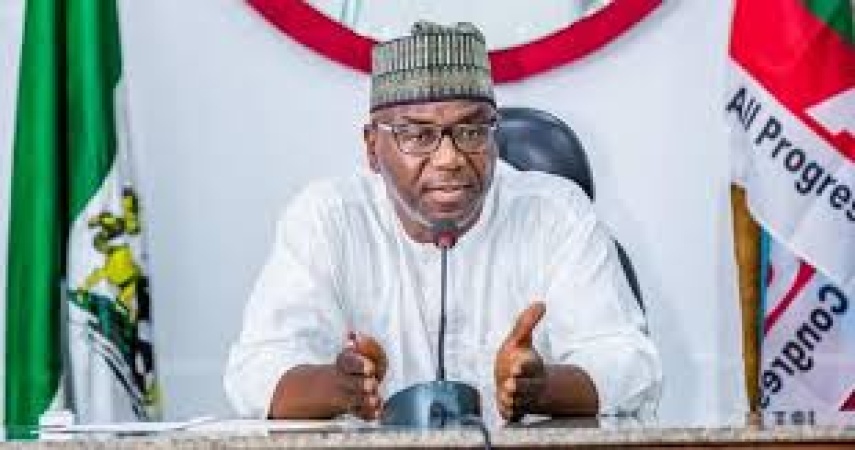
Kwara State Gov AbdulRahman AbdulRazaq
In Warah Community, barely a few kilometres from the Ilorin West Local Government Secretariat in Kwara State, the school day was already in progress when Arewa PUNCH arrived at about 12:39 pm on that swelting weekday.
The cacophony of teachers’ voices echoed across the compound. Students responded in unison. Lessons were ongoing. But beneath that rhythm of normalcy, a closer look revealed a deeper, unsettling reality: one that speaks to neglect, resilience, and a system struggling to hold itself together.
A visit by our correspondent to Warah Community Junior Secondary School revealed that while teaching was in progress, it was taking place inside crumbling classrooms, under makeshift shelters, and within an unfenced environment that exposed both the students and facilities to risk.
The unprotected nature of the school was immediately evident as our correspondent walked closer o the school premises.
It was observed that there is no fence around the school; no gate, no defined perimeter, and no form of access control. Residents were seen moving freely across the premises even as classes were ongoing, using the school compound as a passageway.
Residents around the school’s neighbourhood readily lamented that the lack of fencing raises serious safety and security concerns, as it leaves both students and school property vulnerable to intrusion and disruption.
A community member who spoke on the condition of anonymity underscored this concern. “Anybody can walk into the school at any time. There is no restriction,” he said.
The resident explained that the absence of boundaries has long been a concern for the community, particularly as it affects discipline and the general learning environment.
Inside the classrooms, the physical condition of the buildings presents another layer of challenge.
It was observed that several classrooms are in a state of disrepair. Some ceilings have completely collapsed, while others hang precariously, exposing wooden beams that have deteriorated over time.
Walls are marked by peeling paints that have suffered different adverse weather conditions, just as broken windows allow dust and wind to enter freely.
Despite these conditions, teachers continued their lessons, raising their voices when necessary to maintain order and attention.
The situation reflects not just infrastructural decay but the determination of both teachers and students to keep learning going in such difficult circumstances.
Outside the damaged buildings, other classes were being conducted under improvised structures.
Students gathered beneath wooden frames covered with tarpaulin and old roofing sheets. While some sat on benches, many others sat directly on the bare floor, writing on their laps.
These structures, according to community members, were constructed through collective effort as a temporary response to the shortage of classrooms.
Alhaji Isiaka Warah, a resident and member of the school’s education committee who has been actively involved in efforts to improve the situation, provided insight into the community’s repeated attempts to seek intervention.
“I am part of the school’s management committee that meets regularly with the principal. We have written several letters to the appropriate authorities, but there has been no response so far,” he said.
He explained that the growing student population has overwhelmed the available infrastructure, leaving the school management with limited options.
“Some students are currently taking lessons under makeshift structures built by the community. Even with that, some of them still sit on the bare floor because the existing classrooms and furniture are no longer sufficient.”
The school currently serves hundreds of students, a number that far exceeds its capacity.
Our correspondent sighted overcrowded classrooms, where students share limited seating space, while others remain outside under temporary shelters.
Another community source who requested anonymity due to the sensitive nature of the issue described the situation as deeply troubling.
“All our efforts as a community to improve the school have not yielded any positive response. The buildings are in a deplorable condition, and the number of students far exceeds the available classrooms.
“At least 300 students are either sitting on the bare floor or receiving lessons under makeshift structures. The rainy season is also a major concern.
“We have written to the State Ministry of Education, the Ilorin West Local Government, and members of the House of Assembly. They all acknowledged receipt of our letters, but we have not heard anything from them since.
“The government needs to support our efforts. These children are our future.”
The source also drew attention to the poor state of sanitation facilities in the school.
“The school has only one toilet, and it is barely functional. We are just managing it when students need to use it.”
The comments reflect a growing sense of frustration among residents who feel their concerns have not received adequate attention.
As the visit progressed, discussions repeatedly returned to one looming threat; the rainy season.
Alhaji Isiaka Warah emphasised the urgency of the situation, noting that the school has no contingency plan for rainfall.
“As we approach the rainy season, there is no alternative space where we can move the students if it starts to rain. This is a serious concern because it means that learning will be interrupted frequently.”
The challenges facing the school are mirrored in the wider community.
A visit by our correspondent to Warah-Oja revealed that the main access road to the community is in poor condition.
Although recently graded, the road remains untarred. It generates heavy dust during the dry season and becomes almost impassable during rainfall.
Mr. Kazeem, a resident who spoke with Arewa PUNCH, acknowledged the government’s effort but noted its limitations.
“We appreciate the government for grading the road, but the intervention is only temporary. If the road is left unattended, it will deteriorate further, especially during the rainy season.”
Alhaji Isiaka Warah also highlighted the economic impact of the road’s condition on residents.
“Movement of vehicles in and out of the community has become very difficult. Commercial drivers now charge double the usual fare before agreeing to come into the area because of the poor state of the road.”
A community funding its own survival
In the absence of sustained government intervention, residents have taken it upon themselves to improve their environment.
Alhaji Abdulraheem Wasiu, the community secretary, provided detailed insight into these efforts.
“The road has been in a deplorable condition for a very long time. I am 35 years old, and I have lived here all my life; that tells you how long this problem has existed.
“Members of the community have made significant sacrifices. We have 13 zones, and each has contributed not less than N500,000. So far, we have spent over N7 million on road repairs and drainage construction.”
He explained that despite these contributions, the community lacks the resources to carry out a permanent solution.
“We have always faced difficulties using the road during the rainy season. Vehicles often get stuck, and commercial drivers avoid the area.
“We are appealing to the government to intervene before the next rainy season.”
Absence of electricity
Electricity supply in the community remains inconsistent and unreliable.
Wasiu explained that the community has experienced prolonged outages despite efforts to engage relevant authorities.
“We have written to the appropriate regulatory bodies, including the offices at Baboko, Challenge, and Asadam, which oversee this area. However, there has been no improvement.
“We have not had electricity for the past three months. At night, everywhere is completely dark.”
He also lamposted the inadequacy of existing infrastructure.
“We need more transformers. The three we currently have serve multiple communities, and when power is restored, it usually lasts less than 30 minutes. Some areas do not even receive enough current.”
Lack of access to potable water
The electricity challenge has significantly affected access to water.
Wasiu noted that many residents who have personal boreholes can not power them due to the lack of power.
“We are facing serious challenges accessing water. Even those who have boreholes can not use them because there is no electricity to power them.”
Sulaiman Mukaila, another resident, expanded on the situation, describing the daily struggle faced by community members.
“We do not have any solar-powered boreholes in this community. The ones we have depend on electricity, and currently, only one is functional.
“Without electricity, there is automatically no water.”
He described how this has affected daily life, particularly for women.
“Our women are forced to queue at the only working borehole, often late into the night. Sometimes, this leads to conflicts.
“Even during this fasting period, they go to the market during the day and still have to queue at night to fetch water.”
Even government hospitals are without enough doctors
Healthcare services in the community present another layer of concern.
Mukaila explained that the primary healthcare centre, built during the administration of Abubakar Bukola Saraki and later renovated, lacks adequate medical personnel.
“Even the primary healthcare centre in this community does not have enough doctors. Although there are some staff members, they are not sufficient, and this poses a serious risk to residents.”
He added that the situation has forced residents to rely on private hospitals.
“We expected that the presence of a government hospital would reduce the pressure on private hospitals, but that has not happened.
“The facility is not reliable, so we still depend on private hospitals for proper care.”
As lessons continued during the visit, the contrast between determination and deprivation remained evident.
Students stayed attentive. Teachers carried on. Learning persisted.
But the voices of residents painted a broader picture; one of repeated appeals, community effort, and unmet expectations.
They have called on Governor AbdulRahman AbdulRazaq; the Ilorin West LG Chairman, AbdulRahman Shehu Babatunde Ladan, and other stakeholders to intervene urgently.
Their demands are clear: more classrooms, adequate furniture, fencing for the school, rehabilitation of the road, improved electricity supply, access to potable water, and sufficient healthcare personnel.
For now, in Warah Community, education continues: but under conditions that underscore the urgent need for attention and action.
The government released billions for education
An analysis of budget documents shows that education has consistently received one of the largest shares of the state’s annual spending.
In 2024 alone, Kwara State allocated N47.76 billion to education, representing about 16 per century of the total N296.46 billion budget.
For 2025, education allocation rose to approximately N51.53 billion, according to budget analysis reports, although this represented a lower percentage share of the total budget.
While full official breakdowns for 2023 education allocation remain less clearly published, budget trends and sectoral patterns indicate that tens of billions were also committed to the sector that year, continuing a multi-year spending trajectory.
Cumulatively, this places education spending in Kwara State at well over N100 billion between 2023 and 2025.
Yet, on the ground in Ilorin West, reality tells a different story.
Government silent
Meanwhile, efforts to get the Kwara State Government to react to the development proved abortive.
Calls and text messages sent to the Chairman of Ilorin West LGA, Hon. Shehu Abdulrahman Babatunde Ladan, and the State Commissioner for Education and Human Capital Development, Dr. Lawal Olohungbebe was not answered as of press time. (The PUNCH)