Updating your news feed...

NEWS EXPRESS is Nigeria’s leading online newspaper. Published by Africa’s international award-winning journalist, Mr. Isaac Umunna, NEWS EXPRESS is Nigeria’s first truly professional online daily newspaper. It is published from Lagos, Nigeria’s economic and media hub, and has a provision for occasional special print editions. Thanks to our vast network of sources and dedicated team of professional journalists and contributors spread across Nigeria and overseas, NEWS EXPRESS has become synonymous with newsbreaks and exclusive stories from around the world.

















Loading banners
Loading banners...

National Grid
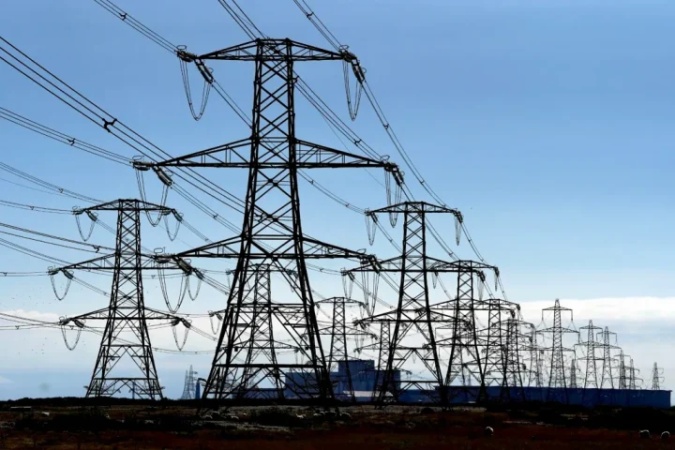
Poor electricity supply costs Nigeria an estimated N40 trillion every year, the Nigerian Independent System Operator has warned, describing unreliable power as one of the country’s most damaging economic constraints.
The figure, equivalent to $29 billion at the current exchange rate, reflects losses borne across the entire economy. Businesses, manufacturers, and households collectively spend billions each year running private generators simply to stay operational.
“A stable national grid unlocks economic growth, industrial productivity, and job creation,” NISO said in its latest industry report.
The gap between generation and delivery
The scale of the crisis is starkly illustrated by one number. Nigeria generates approximately 45,000 to 50,000 megawatts of electricity daily, yet only about 5,000 megawatts — roughly 10 per cent — actually reaches the national grid. The rest is lost to structural bottlenecks across the value chain, including transmission constraints, distribution network failures, and gas supply disruptions.
The situation has worsened considerably in recent months. As of 25th March 2026, just 2,908 megawatts was allocated to the country’s 11 distribution companies — a figure that falls well below the already inadequate 4,000-megawatt threshold that has defined this year’s supply crisis. Distribution companies have repeatedly apologised to customers, attributing the shortfall to reduced generation caused by gas constraints.
The Minister of Power, Adebayo Adelabu, acknowledged the depth of the problem on Tuesday. Only two of Nigeria’s 32 power plants currently hold firm gas supply contracts, he said, while the remainder depend on irregular supplies on a best-effort basis. “Even the best turbines cannot operate without raw materials,” he said, citing global gas shortages linked to the Middle East crisis, unpaid debts to gas suppliers, and pipeline repairs as compounding factors.
Progress amid the dysfunction
Despite the dysfunction, NISO pointed to measurable gains in infrastructure over the past year. Between 2024 and 2025, 82 new power transformers were commissioned, adding over 8,500 megavolt-amperes of transformer capacity. More than 30 transmission projects were completed, bringing the grid’s wheeling capacity to approximately 8,700 megawatts. The grid also recorded an all-time peak generation of 5,802 megawatts in March 2025 and went 421 consecutive days without collapse between 2022 and 2023.
Additionally, a $1.16 billion grid digitalisation programme has reached 69 per cent completion, with over 3,000 kilometres of fibre optic network deployed and more than 100 substations equipped with monitoring technology.
Yet the board chairman of NISO, Adesegun Akin-Olugbade, was blunt about what it would take to close the gap. “Electricity is, after all, a 19th-century technology,” he said, “and we do not need rocket scientists to fix these problems.” (BusinessDay)