Updating your news feed...
NEWS EXPRESS is Nigeria’s leading online newspaper. Published by Africa’s international award-winning journalist, Mr. Isaac Umunna, NEWS EXPRESS is Nigeria’s first truly professional online daily newspaper. It is published from Lagos, Nigeria’s economic and media hub, and has a provision for occasional special print editions. Thanks to our vast network of sources and dedicated team of professional journalists and contributors spread across Nigeria and overseas, NEWS EXPRESS has become synonymous with newsbreaks and exclusive stories from around the world.






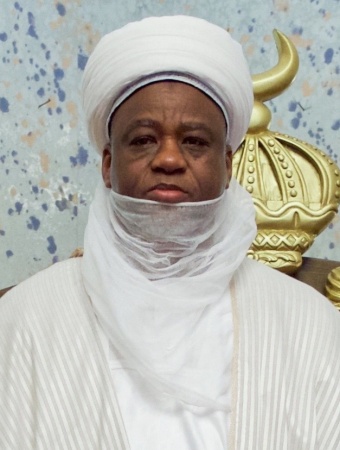
Sultan of Sokoto
Divergent observance of Eid al-Fitr has emerged in Kano State, as some Islamic clerics and followers of the Qadiriyya sect held prayers on Saturday, on dates different from the one announced by the Sultan of Sokoto.
While the majority of Muslims in the state observed Eid prayers on Friday in line with the directive of Alhaji Sa’ad Abubakar III, followers of the Qadiriyya sect conducted their prayers on Saturday in the Makwarari area of Kano city.
The prayer was led by Sheikh Khalifa Sheikh Sammani Yusuf Makwarari, who said the group did not adhere to the Sultan’s declaration.
Earlier, on Thursday, a prominent Islamic scholar, Sheikh Musa Lukuwa, led a section of his followers in observing Eid prayers at his Mabera mosque, also diverging from the officially declared date.
The Sultan of Sokoto, who doubles as President-General of the Nigerian Supreme Council for Islamic Affairs (NSCIA), had announced that the Shawwal crescent was not sighted on Tuesday, declaring Wednesday as the 30th of Ramadan and Friday as the day for Eid celebrations nationwide.
However, Lukuwa justified his decision by citing confirmed moon sightings in neighbouring Niger Republic, arguing that its proximity—about 100 kilometres away—made such reports credible.
“If we accept reports from cities like Kano or even Lagos, there is no reason to reject confirmed sightings from a neighbouring country,” he stated.
Despite the deviation, the cleric maintained that his actions were guided by religious obligation rather than a challenge to the Sultan’s authority.
He noted that while he and his followers often align with the Sultanate, they must act on verified sightings in accordance with Islamic teachings.
He also referenced historical practices prior to the centralisation of moon sighting under the Sultanate, particularly during the era of Abubakar Mahmoud Gumi.
Reports indicated that Lukuwa informed his followers of the moon sighting around midnight, directing them to assemble for prayers the following morning.
The development highlights recurring differences in moon sighting interpretations, which occasionally lead to variations in Eid observance among clerics and Muslim communities, particularly in northern Nigeria, despite efforts to maintain unity through centralised announcements. (TRIBUNE)