Updating your news feed...
NEWS EXPRESS is Nigeria’s leading online newspaper. Published by Africa’s international award-winning journalist, Mr. Isaac Umunna, NEWS EXPRESS is Nigeria’s first truly professional online daily newspaper. It is published from Lagos, Nigeria’s economic and media hub, and has a provision for occasional special print editions. Thanks to our vast network of sources and dedicated team of professional journalists and contributors spread across Nigeria and overseas, NEWS EXPRESS has become synonymous with newsbreaks and exclusive stories from around the world.















Loading banners
Loading banners...

The Nigerian Institute of Public Relations (NIPR) has said credibility concerns undermined the recent Al Jazeera interview granted by the Special Adviser to President Bola Tinubu on Media and Policy Communication, Daniel Bwala, stressing the need for professionalism and ethical conduct in public communication.
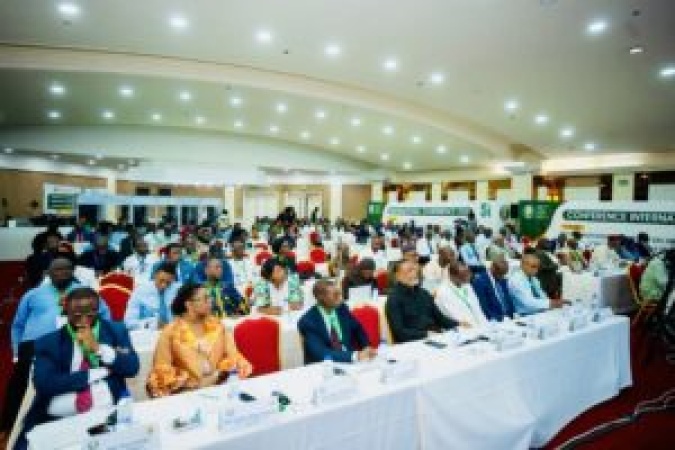
Speaking in Abuja on Thursday at the institute’s first quarter induction ceremony, NIPR National President, Dr Ike Neliaku, said the body deliberately refrained from issuing an immediate reaction, opting instead for a more measured and evidence-based assessment.
Bwala had faced widespread criticism following his appearance on Al Jazeera’s Head to Head programme, where he was questioned extensively on Nigeria’s security situation and his past remarks about the President.
Clips from the interview, went viral on social media, particularly on X, with many users describing his performance as underwhelming.
The controversy deepened when the programme’s host confronted Bwala with previous statements in which he had criticised Tinubu before defecting to the ruling All Progressives Congress, playing video clips to challenge his denials.
He was also pressed on insecurity in Nigeria, with references to reports by international organisations, while critics argued that he struggled to provide data-backed responses.
Despite the backlash, Bwala has maintained that he stands by his comments and will continue to defend the Tinubu administration on any global platform.
Neliaku disclosed that the institute came under pressure from stakeholders across the country to comment on the interview shortly after it aired, but chose restraint in line with its professional standards.
He explained that the institute’s interventions must be anchored on research rather than sentiment.
He said: “When that Daniel Bwala interview broke, so many highly placed people called me from different parts of this country because they were very concerned. They asked me if NIPR is not going to say anything about it?
“But I told each of them, and if they are listening to me, they will confirm it, that the NIPR is not a civil society organisation nor a union. It is an institute.”
“What that means is that whatever we are doing must be scientific. It must not be based on emotion because in our clime, emotion rules logic. Once you do something, you are first of all judged from the perception of emotion instead of how it makes sense or how it doesn’t make sense.
“So we refrain from every statement whatsoever until we subject it to a scientific study.”
According to him, the institute’s eventual position was informed by a report by GASKI NG Accountability Series titled “Silence the Noise: The Bwala Reputation Audit,” which evaluated the interview using classical persuasion principles.
He noted that credibility (ethos) emerged as the weakest element in Bwala’s communication, warning that a strong message could be weakened by a perceived lack of trust in the messenger.
“The messenger could be as good as the message. But if the message is strong and the messenger is weak, the messenger will corrupt the message. Credibility goes before content. It is who you are that speaks even before you begin,” he said.
While acknowledging that Bwala’s argument (logos) showed relative strength, Neliaku maintained that it was insufficient to drive persuasion.
“In terms of argument, he made his case. But when the facts are weak, even strong logic can easily be punctured. The performance was engaging, but the impact was limited,” he stated.
He further stressed that visibility in the media space does not automatically translate to influence.
“In today’s media environment, visibility is not victory. Eloquence without credibility is a fragile asset. If you make a mistake, admit it immediately,” he advised.
Also speaking, Special Adviser to the Kogi State Governor on Media, Ismaila Isah, urged practitioners to uphold professionalism and ethical standards in their engagements, warning against conduct that could undermine public trust.
“You must not disparage employers or colleagues in the course of your work. As PR practitioners, we must exemplify the highest standards because that is what our ethics demand,” he said. (Guardian)