Updating your news feed...

NEWS EXPRESS is Nigeria’s leading online newspaper. Published by Africa’s international award-winning journalist, Mr. Isaac Umunna, NEWS EXPRESS is Nigeria’s first truly professional online daily newspaper. It is published from Lagos, Nigeria’s economic and media hub, and has a provision for occasional special print editions. Thanks to our vast network of sources and dedicated team of professional journalists and contributors spread across Nigeria and overseas, NEWS EXPRESS has become synonymous with newsbreaks and exclusive stories from around the world.













.webp)


Loading banners
Loading banners...

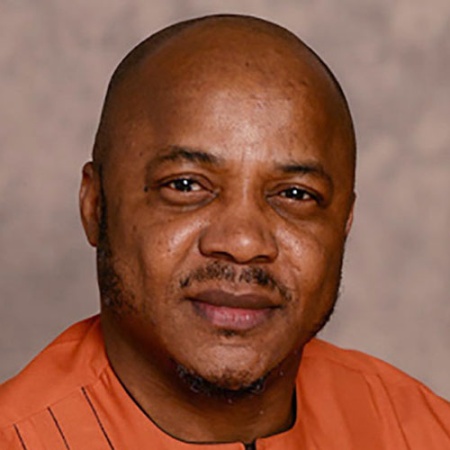
: Dr Vitus Ozoke
By VITUS OZOKE, PhD
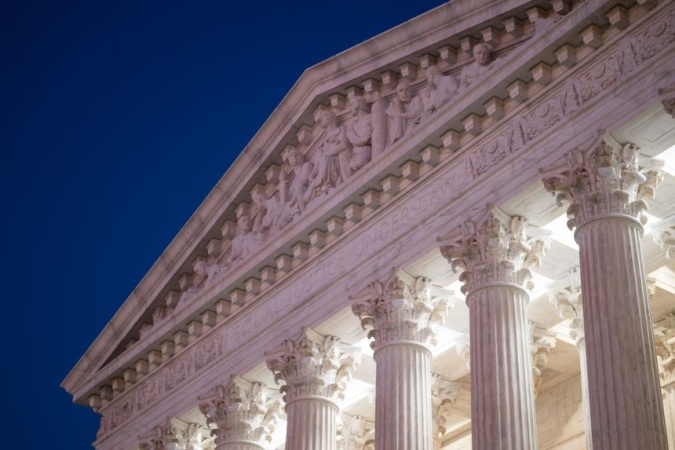
When Justice Muhammad Umar of the Federal High Court of Nigeria, sitting in Abuja, reportedly ordered a lawyer to kneel in his courtroom, he did more than lose his temper – he exposed a deeper, more troubling pathology within Nigeria's legal and political culture. The fact that Barrister Abubakar Marshall refused to comply only highlights the contrast: one man clinging to an exaggerated sense of authority, the other quietly asserting that dignity isn't subject to judicial whim.
But there is a sobering question to ask: What could possibly lead a judge to believe he has the power to demand such humiliating, feudal submission from a legal practitioner? This is not an isolated lapse. It is the logical outcome of a system that has, for too long, confused respect with subservience and authority with divinity.
In Nigerian courtrooms, judges are addressed as "My Lord," "Your Lordship," and in lower courts, "Your Worship." These are not harmless formalities. Words shape culture, and culture shapes conduct. When a judge is constantly addressed in quasi-divine language, when every entrant into the courtroom must bow – lawyers, litigants, witnesses alike – is it really surprising that some begin to internalize the illusion that they are more than public servants?
What starts as ritual ends as delusion. The courtroom becomes less a forum for justice and more a stage for hierarchy. The judge is elevated, literally and symbolically, while everyone else is diminished. In such an environment, the leap from being bowed to, to demanding that someone kneel, is not as large as we might like to believe. It is the natural progression of unchecked cultural conditioning.
But let's call this what it is. It is blatant judicial sacrilege. Nigeria is, by all accounts, a deeply religious nation – at least in performative outward expression. Churches and mosques overflow. Public officials quote scripture with practiced ease. Yet, in the very same society, grown men and women are required – by institutional tradition – to bow before other human beings simply because they occupy public office. This is not just contradictory. It is hypocritical.
Many religious traditions explicitly forbid bowing, kneeling, or offering gestures of reverence to anyone but God. Yet in Nigeria, the spectacle is routine: lawyers bowing to judges, citizens bowing to magistrates, legislators being addressed with exaggerated reverence.
So, this feudalistic madness is not just in the judiciary – it is a culture that infects the legislature as well. From the Nigerian Senate to the House of Representatives, from state assemblies to local councils, the same performative hierarchy persists. Titles swell. Deference deepens. Accountability shrinks.
Nothing is perhaps more jarring – more grotesque – than watching citizens bow to political functionaries whose records are, at best, questionable. The same officials who preside over dysfunction and are mired in proven and provable allegations of corruption or incompetence are elevated through ritual into figures of exaggerated honor. It is a national theater of misplaced reverence.
And in that theater, Justice Muhammad Umar's reported outburst is not an anomaly – it is a symptom. A symptom of a culture that has failed to distinguish between respect and worship. A culture that has elevated public office into something approaching divinity, while hollowing out the ethical responsibility that should accompany it.
Judges are not lords. Magistrates are not objects of worship. Legislators are not monarchs. They are public servants – paid by the people, accountable to the constitution, bound by law. The moment they forget that, the system begins to rot from within.
This is why this incident matters. It presents a rare and urgent opportunity to confront a long-standing cultural problem that many have normalized, even defended. The question is no longer whether a judge overstepped. The question is whether Nigeria is ready to dismantle the outdated, feudal rituals that make such overreach conceivable in the first place.
Should lawyers continue to bow in court? Should citizens continue to perform gestures of submission before politicians or appointed officials? Should titles that elevate individuals above their constitutional roles remain unquestioned? Or has the time come to end this charade?
Respect for institutions does not require humiliation of individuals. Authority does not require ritualized submission. And justice – true justice – cannot thrive in an environment where dignity is negotiable.
Justice Muhammad Umar's reported demand may have been resisted in that moment, but the culture that made it possible still stands. And until that culture is dismantled, the next command to kneel is only a matter of time.
•Dr. Vitus Ozoke is a lawyer, human rights activist, and public affairs analyst based in the United States. He writes on politics, governance, and the moral costs of leadership failure in Africa.