ADAD
ADADUpdating your news feed...

NEWS EXPRESS is Nigeria’s leading online newspaper. Published by Africa’s international award-winning journalist, Mr. Isaac Umunna, NEWS EXPRESS is Nigeria’s first truly professional online daily newspaper. It is published from Lagos, Nigeria’s economic and media hub, and has a provision for occasional special print editions. Thanks to our vast network of sources and dedicated team of professional journalists and contributors spread across Nigeria and overseas, NEWS EXPRESS has become synonymous with newsbreaks and exclusive stories from around the world.












Loading banners
Loading banners...

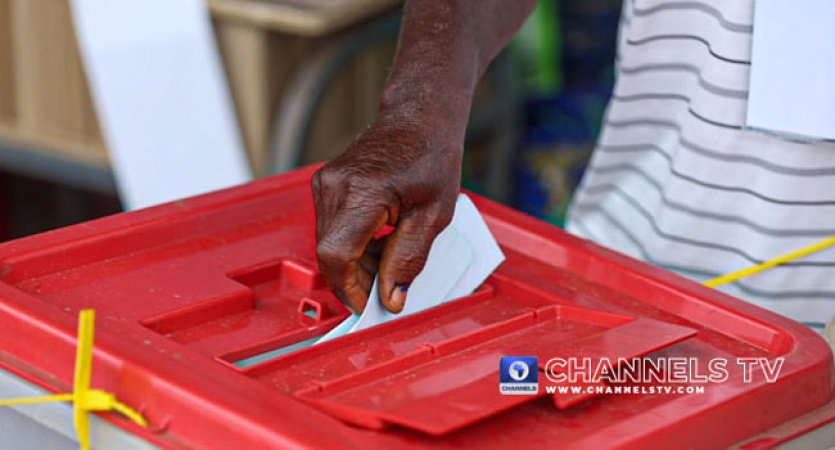
Nigeria’s democracy is facing a “trust quotient” at an all-time low following the controversial signing of the Electoral Act, 2022 (Repeal and Re-Enactment) Bill 2026 into law. With voter turnout in the recent FCT polls plummeting below 10 per cent and the EFCC seizing ₦17 million in “vote-buying cash” from a single vehicle, reform advocates warn that the new law has successfully emboldened the political class while silencing the people.
Speaking on Channels TV’s Sunday Politics, a former lawmaker, Usman Bugaje, and Yiaga Africa’s Samson Itodo provided a searing autopsy of a legislative framework they claim has officially “legitimised” rigging ahead of 2027.
Host Seun Okinbaloye didn’t let the technicalities slide, pushing the guests with hard-hitting questions that exposed the gap between Senate rhetoric and reality on the ground:
On Legislative Intent: “The Senate leader says they did the right thing; they consulted civil society, INEC, and everyone. He calls the 2026 Act ‘major reforms.’ Do you simply refuse to see the progress?”
On Infrastructure Excuses: “If the argument is that we don’t have the infrastructure for mandatory real-time transmission, is that not a valid technical constraint?”
On the FCT ‘Litmus Test’: “For a first outing under the new law, wasn’t the transparency of INEC disclosing its own 45 per cent opening-time failure a sign of improvement?”
The core of the controversy lies in how a vote travels from a polling unit to the final result sheet. While the 2026 Act acknowledges electronic transmission, it introduces a “proviso” that ensures the manual Form EC8A remains the primary legal authority.
“The primary instrument of election manipulation is the Form EC8A,” explained Samson Itodo, Executive Director of Yiaga Africa. “If you place legal primacy on the manual form, the electronically transmitted results become a nullity the moment the paper trail is falsified.”
“By placing primacy on the manual form, the National Assembly has ensured that even if a digital result shows a win, a falsified piece of paper can legally override it,” he added.
A significant digital gap in the story is the narrowing window for election preparation. The 2026 Act effectively halves the time INEC has to secure its budget, creating a “starvation risk” for the commission.
The interviews highlighted several legislative shifts that critics argue weaken the Independent National Electoral Commission (INEC). Most notably, the timeline for releasing election funding has been halved.
Provision
Electoral Act 2022
Electoral Act 2026
Digital Risk Factor
INEC Funding
12 Months Lead
6 Months Lead
High: Risk of “starving” the commission
Transmission
Ambiguous/Discretionary
Mandatory but conditional
Critical: Manual forms may override digital
Result Review
Broad Powers
Requires INEC Report
Severe: Complicit officers won’t report themselves
The recent Federal Capital Territory (FCT) elections served as a preview of the 2027 general elections. Despite a heavy security presence, the “Trust Quotient” resulted in fewer voters at polling stations.
Metric
Recorded Figure
Polling Units open by 08:30
45%
Estimated Voter Turnout
<10%
Security Personnel Deployed
29,000+
EFCC Cash Seizures
17 million Naira
Itodo noted that despite the massive security deployment, violence persisted.
“We saw the deployment of thugs to disrupt collation in Gwagwalada and Kuje. It makes us question the effectiveness of the inter-agency committee on election security,” he said.
Increases Spending Limits
The Act has significantly raised the “entry fee” with higher spending ceilings for candidates in politics by increasing campaign spending limits. This move, critics say, officially turns Nigerian elections into a “plutocracy” which further tilts the scales in favour of wealthy incumbents.
Office
Spending Limit (NGN)
President
10 Billion
Governor
3 Billion
Senate
500 Million
House of Representatives
250 Million
Sunday Politics concluded with a stern warning regarding “executive overreach.”
Itodo cited the presence of high-ranking government officials moving between polling units as a registered-voter-only zone, describing it as an interference that creates “suspicion and tension.”
But Bugaje was more blunt, suggesting that the current political class is “obsessed with power” and warned that if the electoral process continues to be perceived as a sham, the “whole democracy itself could crash.”