ADAD
ADADUpdating your news feed...

NEWS EXPRESS is Nigeria’s leading online newspaper. Published by Africa’s international award-winning journalist, Mr. Isaac Umunna, NEWS EXPRESS is Nigeria’s first truly professional online daily newspaper. It is published from Lagos, Nigeria’s economic and media hub, and has a provision for occasional special print editions. Thanks to our vast network of sources and dedicated team of professional journalists and contributors spread across Nigeria and overseas, NEWS EXPRESS has become synonymous with newsbreaks and exclusive stories from around the world.




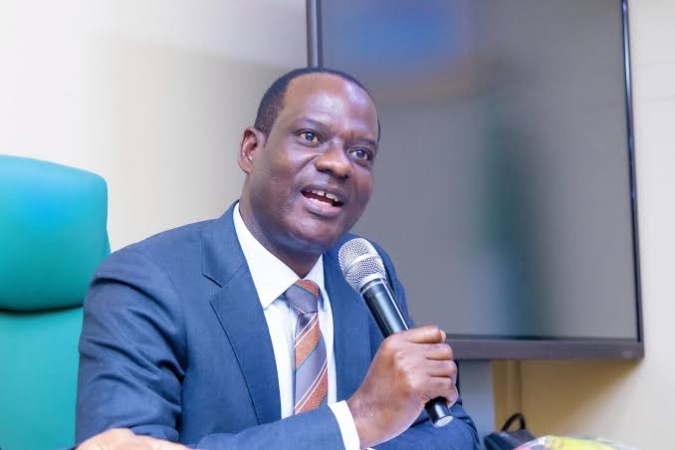




















Ex-Postmaster General of Nigeria, Bismark Adegbuyi
The Electoral Act 2026 amendment has taken a new turn as a former Postmaster General of Nigeria, Bismark Adegbuyi, unveiled a locally developed technology he said could safeguard election results and strengthen public confidence ahead of the 2027 general elections.
Adegbuyi, who is Chairman, Founder and Chief Executive Officer of Grandview Digital Private Infrastructure for Public Service (G-DPIPS), wrote an open letter to the Nigerian voting public that while concerns over Clause 60 of the amended law are legitimate, technology offers a practical solution to protect the integrity of polling-unit outcomes.
Nigeria has been gripped by intense debate since President Bola Tinubu signed the Electoral Act amendment, with Clause 60 allowing electronic transmission of results to remain optional while permitting manual collation where connectivity challenges exist.
The provision has triggered widespread concern among voters, civil society groups and opposition parties who fear manual processes could weaken transparency.
Addressing the issue in a statement yesterday, Adegbuyi said: “Public anxiety about this provision is understandable. Nigerians want assurance that results recorded at polling units remain authentic throughout the collation process.”
He added that resolving the credibility question does not necessarily require political confrontation.
“The solution to this concern need not be political confrontation; it can be technical reinforcement,” he stated.
Adegbuyi explained that the technology, known as CRYLID (Cryptographic Real You Location Identity Device) was designed to secure election results at the point they are generated, regardless of internet availability.
According to him, the system “cryptographically authenticates polling-unit results at the moment they are recorded,” binding the figures to a digital signature, timestamp and geographic location.
“This process occurs locally and does not depend on internet availability. Once connectivity returns, the authenticated record can synchronise with central systems,” he wrote.
He stressed that the innovation addresses what he described as the real challenge in Nigeria’s elections.
“The real concern is not whether electronic transmission should be mandatory. The issue is whether polling-unit results can be independently verified even when connectivity fails,” he said.
He further noted that securing results at source would make any alteration during collation detectable and subject to verification.
“The integrity of results is secured at source, reducing the risk associated with later stages of collation,” he wrote.
Adegbuyi said the technology would complement existing electoral procedures rather than replace them, while preserving the legality of manual fallback systems under Clause 60.
“Manual fall-back procedures remain lawful and operationally useful, while the authenticity of polling-unit outcomes remains independently verifiable,” he wrote, adding that any discrepancies would become auditable through objective technical evidence.
He called on the Independent National Electoral Commission (INEC), the Presidency, National Assembly and civil society organisations to consider technical engagement on the innovation ahead of the next general elections.
“Electoral credibility should be a shared national objective beyond partisan lines,” he wrote.
He emphasised that strengthening transparency is essential to sustaining democracy.
“Technology cannot replace the will of the people but it can help ensure that the will expressed at the polling unit remains intact throughout the process,” he stated.
Adegbuyi, inventor of CRYLID and former Postmaster General of Nigeria from 2016 to 2019, said the system forms part of a broader digital governance initiative known as ADDRESS NIGERIA, aimed at improving transparency and accountability in public systems.
His intervention came as Nigeria continues efforts to rebuild public trust in its electoral process following years of disputes over election credibility, placing technology at the centre of the nation’s democratic future. (The Sun)