Updating your news feed...

NEWS EXPRESS is Nigeria’s leading online newspaper. Published by Africa’s international award-winning journalist, Mr. Isaac Umunna, NEWS EXPRESS is Nigeria’s first truly professional online daily newspaper. It is published from Lagos, Nigeria’s economic and media hub, and has a provision for occasional special print editions. Thanks to our vast network of sources and dedicated team of professional journalists and contributors spread across Nigeria and overseas, NEWS EXPRESS has become synonymous with newsbreaks and exclusive stories from around the world.











Loading banners
Loading banners...

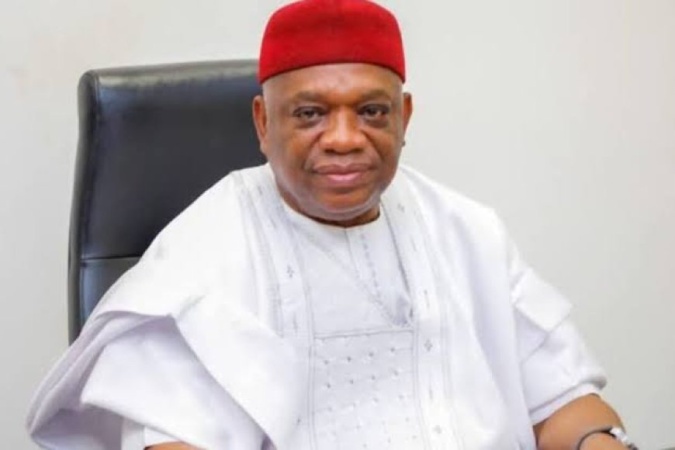
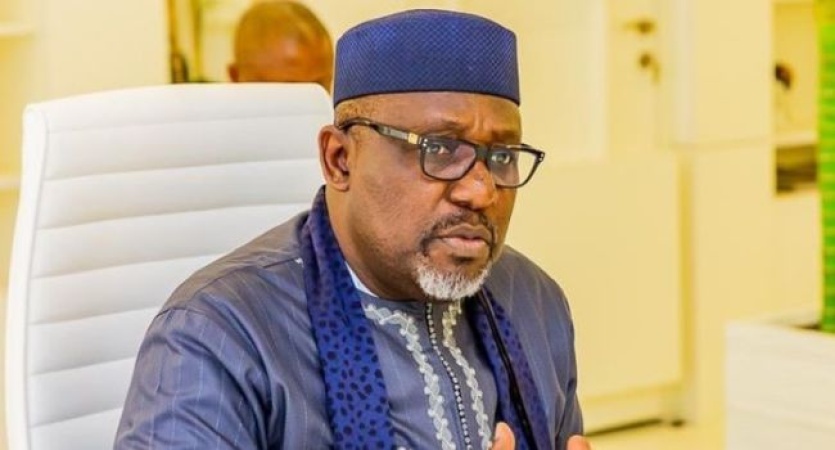
Senator Orji Uzor Kalu
By ODIMEGWU ONWUMERE
Nigeria’s telecommunications sector is often advertised as a success story of liberalisation and private investment. In official speeches and glossy reports, broadband is presented as the backbone of Nigeria’s digital future. Yet, the lived reality of millions of Nigerians tells a very different story.
When Senator Orji Uzor Kalu allegedly stated during the debate on electronic transmission of election results that “there is no network coverage in my village,” he was widely mocked. Critics argued that a man who had been a two-term governor, two-term senator, former House of Representatives member, and presidential candidate had no excuse for lacking internet access in his hometown. Some even turned his statement into a personal insult, claiming his “shame” embarrassed them.
However, when examined against verifiable data, personal experiences, and industry admissions, Kalu’s statement was not only reasonable, it was accurate. Nigeria’s telecommunications system, whether in cities or rural areas, is a glorified failed project that consistently excludes millions.
On January 16, 2026, Vanguard published an article titled “Silent signals: How poor broadband leaves many Nigerians digitally disconnected.” The report cited figures from the Nigerian Communications Commission (NCC) showing that urban broadband penetration stands at about 57 percent, while rural coverage lags at just 23 percent. This alone destroys the argument that poor connectivity is a rare or exaggerated complaint. Nearly three out of four rural Nigerians are underserved or completely disconnected. In that context, claiming that a village in Abia State lacks reliable network coverage is not an excuse; it is the statistical norm.
The critics of Kalu focus on his political résumé while ignoring a basic truth: political office does not magically summon fibre-optic cables, stable base stations, or affordable broadband into rural communities. Telecommunications infrastructure in Nigeria is not built based on who comes from where, but on profitability, terrain, security, and government policy failures. The mockery directed at Kalu reveals more about elite denial than about his honesty.
The human cost of this failure is not theoretical. It is deeply personal and often frightening. According to data, Mrs. Doris Okafor’s experience illustrates this reality with painful clarity. When her son, Onyedikachukwu, left home to process his admission at Nnamdi Azikiwe University, Awka, she expected routine communication. Instead, she was plunged into two days of fear because calls and messages would not go through. WhatsApp calls rang endlessly before disconnecting. Her anxiety grew with every hour of silence.
When her son finally called, the reason was shocking but familiar: “Mummy, the network here is very poor.” This was not a remote village. He was staying in Ifite, Awka—barely ten minutes by bike from the university. In a country that has digitised admissions, registration, and tuition payments, a student became unreachable simply because broadband failed. This is not inconvenience; it is systemic dysfunction.
Across Nigeria, poor connectivity actively excludes people from education, work, banking, healthcare, and government services. Calls drop mid-conversation. Mobile data slows to a crawl or disappears entirely. What many urban elites dismiss as “network issues” are, for millions, invisible barriers to survival.
Even Lagos, often described as Nigeria’s digital capital, is riddled with connectivity black spots. Professionals report that areas such as Ijanikin in Ojo, Oko-Afo in Badagry, Igbogbo in Ikorodu, and riverine communities like Petekun in Olorunda LCDA suffer persistent network failures. For people whose jobs depend on being online, productivity is determined not by skill or effort, but by geography. That is not a functional digital economy.
For small business owners, the consequences are immediate and brutal. According to reports, Mrs. Annah Nso, who runs a POS and digital payments business in Aba, explained that her livelihood collapses whenever she travels to her village in Isuochi, Umunneochi LGA. During a three-day burial trip, she could not complete basic transactions. Customers kept calling, but she had no network. In a cashless economy, unreliable broadband directly translates to lost income and stalled local commerce.
Families are also cut off from banking and emergency communication. In Lusada, along the Agbara axis of Ogun State, residents struggle to buy data, make transfers, or complete online payments. In Enugu, poor network once forced a woman to physically travel to confirm that a sick church member in Umuagwa was alive because no one could reach her by phone. Poor connectivity does not just frustrate; it deepens fear and emotional distress.
Nigeria’s entire Digital Public Infrastructure—NIN enrolment, online government portals, fintech platforms, cashless payments, cloud services, and artificial intelligence tools—depends completely on broadband. When connectivity fails, these systems do not slow down; they collapse. Digital identity verification stops. Online admissions and pension services become inaccessible. POS terminals fail. Wallets freeze. Remote work becomes impossible. Without reliable broadband, digital governance becomes an urban privilege rather than a national service.
In the report, policy promises have consistently failed to match reality. The National Broadband Plan (2020–2025) targeted minimum speeds of 25 Mbps in urban areas, 10 Mbps in rural areas, and 70 percent penetration across 90 percent of the population. As of late 2025, broadband penetration stood at just over 50 percent, far below target. Abuja itself, the nation’s capital, suffers from frequent outages, slow speeds, and dropped calls. If the seat of power cannot guarantee stable connectivity, rural communities have little chance.
Industry bodies have openly admitted that the problem is structural. ALTON and ATCON cite vandalism, sabotage, inadequate fibre deployment, high right-of-way fees, and poor last-mile connectivity. The source said that the GSMA reported in September 2025 that around 130 million Nigerians remain offline, even in areas technically covered by mobile broadband. Coverage, clearly, does not equal usability.
Against this overwhelming evidence, mocking Orji Uzor Kalu for stating that his village lacks network coverage is intellectually dishonest. His critics confuse political status with infrastructural reality. Telecommunications in Nigeria is not failing because people like Kalu did not try hard enough in their hometowns. It is failing because the system itself is broken.
Therefore, the question is not whether Kalu was a governor or senator. The question is whether Nigeria has built a telecoms system capable of supporting electronic voting, digital governance, and economic inclusion nationwide. The evidence says no. Kalu’s statement was not ignorance; it was an uncomfortable truth that exposed a national illusion.
•Onwumere writes from Rivers State.