Updating your news feed...
NEWS EXPRESS is Nigeria’s leading online newspaper. Published by Africa’s international award-winning journalist, Mr. Isaac Umunna, NEWS EXPRESS is Nigeria’s first truly professional online daily newspaper. It is published from Lagos, Nigeria’s economic and media hub, and has a provision for occasional special print editions. Thanks to our vast network of sources and dedicated team of professional journalists and contributors spread across Nigeria and overseas, NEWS EXPRESS has become synonymous with newsbreaks and exclusive stories from around the world.










Loading banners
Loading banners...

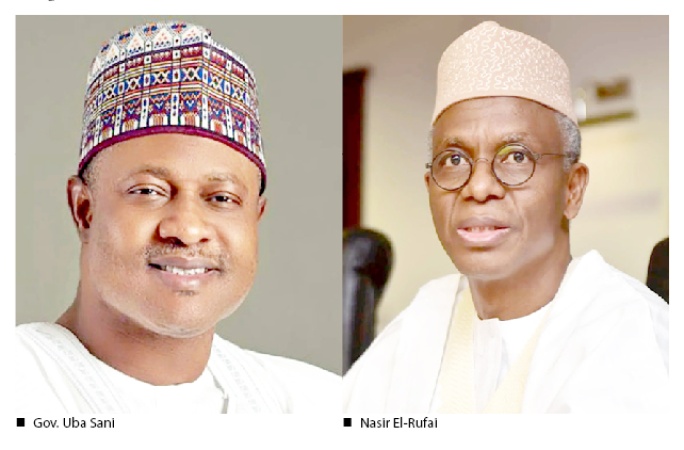
Although the 2027 general elections are still some distance away, political activities in Kaduna State suggest that many actors have already shifted into campaign mode, with defections, quiet consultations and strategic alliances steadily reshaping the state’s political terrain.
While official campaigns are yet to commence, political insiders say underground movements, discreet meetings and calculated realignments are already defining the contest ahead. Across party lines, ambition rather than ideology appears to be the dominant driver, with politicians positioning themselves for survival and relevance in what is expected to be a fiercely contested election cycle.
Key players across the major parties including the ruling All Progressives Congress (APC), the coalition-led African Democratic Congress (ADC) and a weakened Peoples Democratic Party (PDP) are recalibrating their strategies as Kaduna politics enters a fluid and uncertain phase.
One of the most striking features of Kaduna politics since the 2023 elections has been the steady rise in defections, cutting across elected officials and political heavyweights with eyes on 2027.
Political watchers say party loyalty has increasingly given way to calculations about which platform offers the best chance of electoral success. As one party insider put it, the dominant question in the political circles is no longer about ideology, but “which party gives me the best chance in 2027”.
This shift has been most evident within the PDP, once a dominant force in the state.
PDP’s post-2023 decline
The PDP entered the 2023 elections in Kaduna from a position of relative strength. The party won all three senatorial seats and 10 House of Representatives seats, while its presidential candidate, Atiku Abubakar, defeated President Bola Tinubu of the APC in the state, a result that underscored its grassroots reach despite the APC controlling the state government under former Governor Nasir El-Rufai. Even its governorship candidate, Isa Ashiru only lost the election with less than 11,000 votes to Governor Uba Sani of the APC.
However, that momentum has since dissipated. A prolonged leadership crisis at the national level has weakened the party’s internal cohesion, triggering uncertainty and defections at the state level.
Several PDP lawmakers at the state Assembly, House of Representatives and Senate have since defected, mostly to the APC, while others have aligned with the ADC. Among the notable figures who have crossed over to the APC are former governor Ramalan Yero, former Southern Kaduna senator Danjuma Laah, serving senator Sunday Marshall Katung, and former senator Shehu Sani.
Analysts say many of the defections are driven by senatorial ambitions ahead of 2027, as politicians seek platforms perceived to be more viable.
ADC capitalises on PDP misfortunes, APC cracks
While the APC has mostly benefited from PDP defections, it has also suffered significant losses of its own. Several prominent figures who served under the APC government between 2015 and 2023 have defected to the ADC, transforming the party into a serious opposition force in Kaduna.
Those who have joined the ADC include former governor Nasir El-Rufai, who played a key role in installing Governor Sani in 2023; former commissioners Jafaru Sani, Bashir Saidu, Hafsat Baba and Prof Muhammad Sani Bello, who served as Gov Sani’s campaign director-general, among others.
Most of them are former APC powerbrokers who feel sidelined under the current administration. They are now working to reposition the ADC as a credible alternative, with Governor Sani as their primary political target.
Political observers say the El-Rufai factor has given the ADC visibility and structure, raising its profile beyond that of a fringe party.
2027 governorship battle takes shape
With relations between El-Rufai and Governor Sani having broken down irretrievably, the 2027 governorship election is already shaping up as a personal and political contest.
El-Rufai and his allies have openly vowed to block Uba Sani’s second-term ambition. On the other hand, supporters of the governor argue that his inclusive approach to governance, particularly his outreach to Southern Kaduna, has earned him goodwill across key constituencies.
They point to the growing support from politicians who opposed him in 2023 as evidence that the governor is consolidating his base.
Another notable development is the return of politicians who were believed to have been marginalised during El-Rufai’s tenure. Figures such as Senator Shehu Sani, former SSG Lawal Yakawada, former House of Representatives member Sani Sha’aban and Senator Suleiman Hunkuyi have either returned to or re-engaged with the APC.
However, political analysts caution that their impact will depend on how the party manages expectations. There are indications that some were promised tickets, particularly senatorial slots, as part of negotiations. Failure to meet those expectations, analysts warn, could trigger another round of defections.
Multiple camps have reportedly emerged within the party, with some allies of Governor Uba Sani pressing him to endorse their ambitions. Analysts warn that unresolved rivalries could undermine the governor’s second-term bid if not carefully managed.
The ADC, meanwhile, is aggressively positioning itself as the main opposition party. Its strategy focuses on absorbing aggrieved APC members, exploiting the PDP’s weakness and mobilising young voters.
Meetings are said to be ongoing between ADC leaders and key PDP figures, including Senator Usman Adamu (Mr LA). The defection of Prof Muhammad Sani Bello from the APC to the ADC is widely seen as a signal that further high-profile exits may follow.
Former state Assembly member Ibrahim Samaila is also believed to have left the APC, while the ADC has set up committees across the state to register new members ahead of 2027.
Apart from this, the APC has in response intensified grassroots mobilisation, registering new members and courting defectors. The recent defection of House of Representatives member Hussaini Abdulkareem (Maikero) from the PDP to the APC is seen as part of this strategy.
The PDP state secretary, Saidu Adamu, has also defected, further weakening the opposition.
Governor Uba Sani has also met with APC stakeholders from Kaduna Zone Two, emphasising unity and discipline. Among those present were Senator Shehu Sani, former Speaker Yusuf Zailani and Aminu Zaria, all reportedly eyeing the Central Senatorial seat.
Re-alignments interest-driven – Politicians, analysts
Barrister Muhammad Ibrahim Zaria, an ADC chieftain, described the current realignments as interest-driven.
“Everyone is simply asking: where will my interest be protected?” he said, warning that personal ambition has overtaken collective goals within the opposition.
He cautioned that delayed primaries and unfulfilled promises could backfire on the APC, triggering fresh crises.
Similarly, APC chieftain Husaini Umar from Giwa LGA lamented what he described as abandonment of loyal party members.
“People were used for political services and then pushed aside,” he said, warning that many politicians in the area were already preparing to defect.
Retired military officer and political analyst, Major Yahaya Shinko (rtd), said the ongoing defections and rivalries would significantly shape the 2027 elections.
“These developments will force voters to assess the seriousness, credibility and preparedness of the parties and individuals,” he said, noting that alignments typically intensify as congresses and INEC timetables approach.
He added that while ideology plays a role, most defections are ultimately driven by personal interest, a reality voters are increasingly aware of. (Daily Trust)