ADAD
ADADUpdating your news feed...

NEWS EXPRESS is Nigeria’s leading online newspaper. Published by Africa’s international award-winning journalist, Mr. Isaac Umunna, NEWS EXPRESS is Nigeria’s first truly professional online daily newspaper. It is published from Lagos, Nigeria’s economic and media hub, and has a provision for occasional special print editions. Thanks to our vast network of sources and dedicated team of professional journalists and contributors spread across Nigeria and overseas, NEWS EXPRESS has become synonymous with newsbreaks and exclusive stories from around the world.















Loading banners
Loading banners...


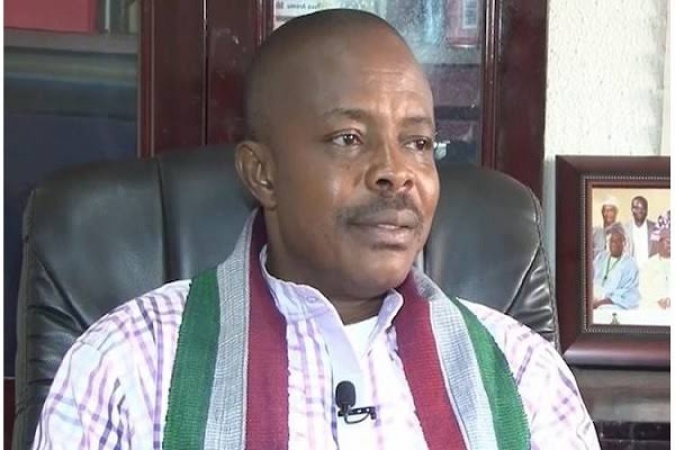
Minority Caucus Adhoc Committee Chairman Afam Ogene
What began as a technical dispute over tax reform has steadily exposed deeper political fault lines within Nigeria’s legislature, turning the controversy surrounding the gazetted tax laws into a test of institutional credibility, partisan trust and constitutional order.
Daily Sun gathered that following the House of Representatives’ Minority Caucus’ official confirmation that alterations occurred in the newly passed tax laws, the debate, investigations reveal, has shifted decisively from speculation to substantiated legislative concern, lending weight to fears that political undertones may have shaped the handling of one of the most consequential fiscal reforms in recent years.
The Minority Caucus Adhoc Committee, set up to investigate allegations of manipulation, disclosed in a preliminary report that its findings validated concerns earlier raised on the floor of the House by Hon. Abdussamad Dasuki. According to the committee, chaired by Afam Ogene, “the observations made by Hon. Dasuki were accurate,” confirming that discrepancies existed between the versions of the tax laws passed by the National Assembly and those later published.
This confirmation has escalated the controversy around the Nigeria Tax Administration Act, 2025, one of the core components of the Federal Government’s tax reform agenda. The committee reported that its investigation uncovered alterations in key provisions of the Act, noting that the discrepancies became evident through a detailed comparison of legislative documents.
More troubling, the panel revealed that three different versions of the Nigeria Tax Administration Act, 2025, were in circulation: the version passed by the National Assembly, an earlier copy published in the official gazette, and other documents obtained during the probe.
“These conflicting versions raise serious concerns about the integrity of the legislative process,” the committee stated, describing several of the inconsistencies as “contentious” when compared with the version approved by lawmakers.
It added that the discrepancies were clearly established through the Certified True Copies released by the House of Representatives, which differed from other versions in public circulation.
The Minority Caucus warned that the findings underscored the need for further scrutiny to determine how the alterations occurred and to protect the credibility of the N
The confirmation has given renewed momentum to a controversy that has been simmering since the tax reform laws were passed and signed into law.
But the House has since rejected the position of the Minority Caucus, as it declared that the committee was procedurally invalid and lacked the authority to conduct investigations or submit reports for legislative consideration.
In a statement by its spokesman, Akintunde Rotimi, it noted that only the plenary or the Speaker has the constitutional and procedural authority to constitute standing or ad-hoc committees to conduct investigations on behalf of the legislature, insisting that political caucuses, whether majority or minority, do not possess such powers, and any committee set up by them lacks institutional recognition.
“The setting up of such a committee is not recognised under the Standing Orders of the House.
“Neither the Majority nor Minority Caucus, nor any political caucus, has the authority to constitute investigative committees whose reports can be tabled before the House for legislative action,” the statement noted.
It further warned that reports emanating from such informal bodies had the potential to mislead the public and create unnecessary confusion, especially in a matter as sensitive as alleged alterations to laws already enacted and signed by the president.
The statement also noted that “While the House recognises the legitimate role of the Minority Caucus within parliamentary democracy and affirms its right to express dissenting opinions, engage in policy advocacy, and raise public concerns, it is necessary to clearly distinguish between political activities and the formal parliamentary processes of the House.”
Citing the Standing Orders of the House of Representatives (Eleventh Edition), the statement stressed that political caucuses do not possess investigative authority, oversight jurisdiction, or the power to summon individuals or demand official documents, adding that “any action taken by a caucus in this regard is therefore non-binding, informal, and without legal or institutional consequence.”
The House further explained that in December 2025, following the intervention of an opposition lawmaker at plenary, it constituted a bipartisan ad-hoc committee to examine allegations that multiple documents purporting to be official gazettes of the tax legislation were in circulation.
The House said the committee remains in force and is expected to submit its report to the plenary upon conclusion of its assignment.
It would be recalled that in June 2025, President Bola Ahmed Tinubu assented to a package of tax reform legislation, including the Nigeria Tax Act, the Nigeria Tax Administration Act, the Nigeria Revenue Service (Establishment) Act, and the Joint Revenue Board (Establishment) Act. The executive described the reforms as a landmark effort to simplify Nigeria’s tax system, boost revenue generation and reduce dependence on oil receipts, with implementation slated for January 1, 2026.
Even at the point of passage, however, the reforms attracted political resistance. Some lawmakers, particularly from opposition benches and parts of the North, warned that aspects of the bills could disproportionately affect vulnerable groups and subnational governments. Civil society organisations also raised concerns about transparency and consultation. Still, few anticipated that the most explosive challenge would come not from policy content but from the authenticity of the laws themselves.
That challenge surfaced publicly in December 2025 when Hon. Dasuki raised a point of privilege during plenary, alleging that the tax laws gazetted by the Federal Government were not the same as those passed by the National Assembly. “What was passed by this House is not what has been gazetted,” Dasuki told his colleagues. He insisted that after comparing the harmonised bills approved by both chambers with the published versions, he discovered substantive differences.
“I was here. I participated in the process. I voted,” he said. “What we are seeing now is not what we passed.” Dasuki described the situation as a constitutional issue, warning that any alteration of a bill after legislative approval undermines the authority of parliament.
His claims initially drew mixed reactions, with some lawmakers urging caution while others demanded immediate clarification. The House leadership responded by assuring members that the matter would be investigated, acknowledging that the allegation struck at the heart of legislative sovereignty.
The establishment of investigative panels followed, including the Minority Caucus Adhoc Committee whose findings have now shifted the narrative decisively. While a broader House probe remains ongoing, the minority report has become a critical reference point, especially as it confirms that discrepancies were not imagined or politically contrived.
As the controversy unfolded, the National Assembly took the rare step of issuing Certified True Copies of the tax laws as passed. These documents, certified by the Clerk of the National Assembly, were intended to establish a definitive legislative record. Instead, they reinforced concerns. The Minority Caucus committee noted that the CTCs differed from other versions in circulation, providing documentary evidence that alterations occurred at some point after passage.
Senior parliamentary sources have since emphasised that the National Assembly’s role ends with the transmission of enrolled bills for presidential assent. “Any document that differs from what was certified by the Clerk cannot be attributed to the legislature,” one official said, stressing that the integrity of parliament must be preserved.
The executive arm has consistently rejected suggestions of deliberate manipulation. The Presidential Fiscal Policy and Tax Reforms Committee, chaired by Taiwo Oyedele, argued that confusion arose from unauthorised or draft documents circulating in the public space. Oyedele maintained that “there has been no deliberate alteration of any law,” describing much of the backlash as politically motivated resistance to reform.
The presidency echoed this stance, insisting that the tax laws were validly passed, signed and gazetted, and that their implementation should not be derailed by what it described as misinformation. Officials also pointed to ongoing legislative reviews as evidence that institutional mechanisms were working.
Yet the Minority Caucus committee’s confirmation has complicated that defence, injecting a sharper political dimension into the debate. Opposition lawmakers argue that the findings demonstrate systemic lapses that cannot be explained away as clerical errors or fake documents. For them, the issue goes beyond taxation to questions of power, process and accountability.
Outside parliament, public reaction has remained intense. Civil society organisations have renewed calls for transparency, warning that implementing laws whose authenticity is disputed could erode public trust. They argue that “taxation rests on legitimacy,” and that Nigerians must be assured that laws governing their obligations are lawfully made.
Student groups, led by the National Association of Nigerian Students, have also kept up pressure, announcing protests and warning against what they described as “taxation without legislative clarity.”
“Young Nigerians cannot be burdened by laws whose origins are contested,” NANS leaders said.
Legal experts have weighed in with cautionary notes. While a Federal Capital Territory High Court dismissed a suit seeking to halt the implementation of the tax laws, Senior Advocate of Nigeria (SAN) Femi Falana warned that enforcement amid unresolved discrepancies could expose the laws to constitutional challenges. He argued that under Nigeria’s constitution, only the exact text passed by the legislature and assented to by the president can have legal force.
Constitutional scholars have echoed similar concerns. Professor Auwalu Yadudu argued that if it is established that the gazetted versions materially differ from what parliament approved, such laws could be rendered invalid.
“The integrity of the legislative process is fundamental,” he said, warning that any post-passage alteration strikes at the core of democratic governance.
Despite these concerns, tax authorities have continued steps toward implementation, relying on the gazetted laws as their operational framework. This has further heightened tensions, raising the prospect of enforcement actions based on provisions still under legislative dispute.
As of early 2026, the controversy remains unresolved. The Minority Caucus committee has confirmed alterations but stopped short of identifying how they occurred or who was responsible, calling instead for deeper scrutiny. Re-gazetting of the laws has been initiated, but critics argue that republication cannot substitute for accountability or, if necessary, fresh legislative passage.
For many observers, the episode has laid bare the political undercurrents shaping Nigeria’s tax reform debate. Beyond revenue targets and fiscal efficiency, the struggle over the gazetted tax laws has become a contest over institutional authority and democratic trust.
From Hon. Abdussamad Dasuki’s initial alarm to the Minority Caucus’ confirmation of alterations, the saga has tested the credibility of Nigeria’s law-making process. How it is resolved will not only determine the fate of the tax reforms but also signal whether political interests can override legislative clarity—or whether the National Assembly can reassert its role as the final custodian of the people’s laws. (The Sun)