Updating your news feed...
NEWS EXPRESS is Nigeria’s leading online newspaper. Published by Africa’s international award-winning journalist, Mr. Isaac Umunna, NEWS EXPRESS is Nigeria’s first truly professional online daily newspaper. It is published from Lagos, Nigeria’s economic and media hub, and has a provision for occasional special print editions. Thanks to our vast network of sources and dedicated team of professional journalists and contributors spread across Nigeria and overseas, NEWS EXPRESS has become synonymous with newsbreaks and exclusive stories from around the world.















Loading banners
Loading banners...

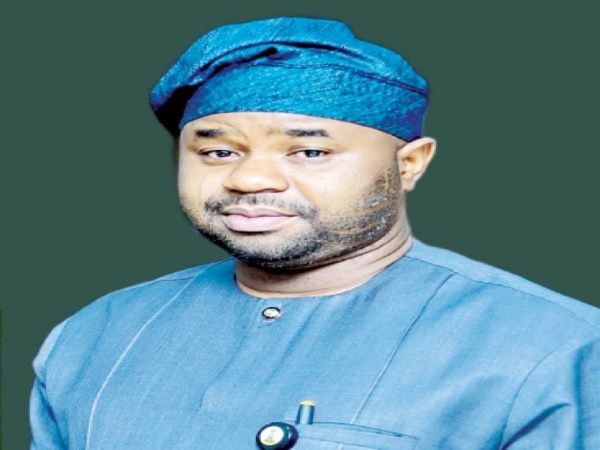
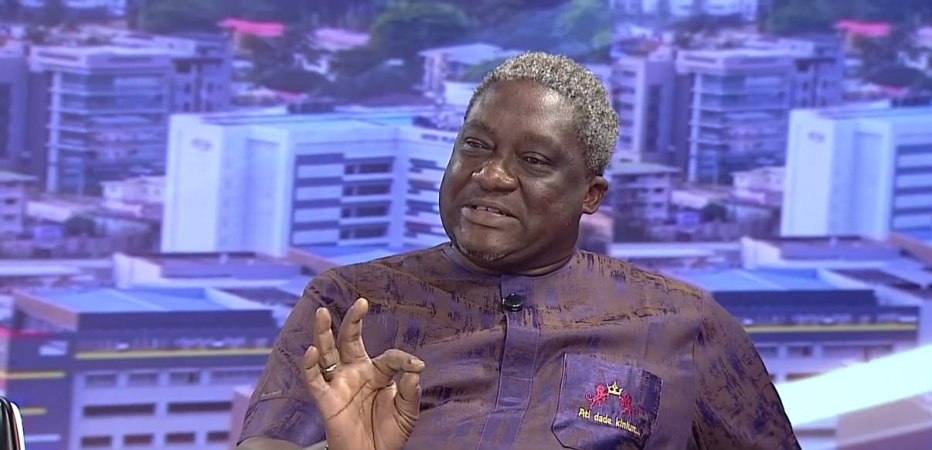
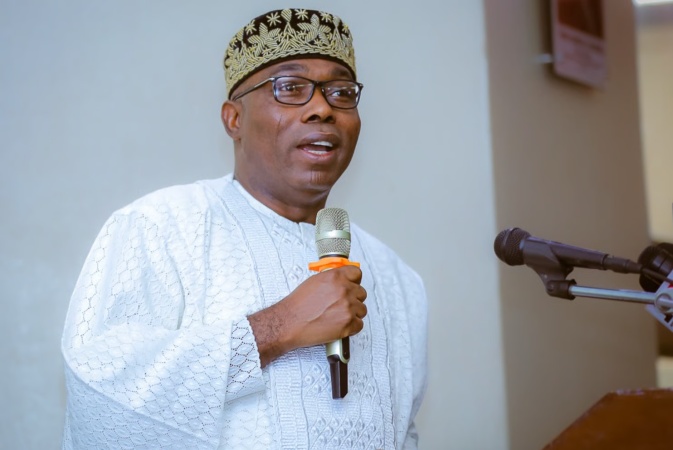
Zacch Adedeji, NRS chairman
The Chairman of the Nigeria Revenue Service (NRS), Dr Zacch Adedeji, has dismissed claims that the new tax laws place additional burden on poor Nigerians, insisting that the reforms are designed to protect low-income earners while simplifying tax administration and boosting economic growth.
Speaking during a live interview on TVC monitored in Lagos on Tuesday, Adedeji said: “There is no section of the law that taxes poor people. About 90 percent of the disposable income of the poor goes into food and transportation, and both are exempted from transactional taxes.”
According to him, the new tax framework, which commenced on January 1, 2026, is aimed at fairness, efficiency, and modernisation of Nigeria’s tax system.
On the commencement of the new tax laws
Adedeji explained that although President Bola Tinubu assented to the Tax Act and Tax Administration Act in June 2025, their implementation began on January 1, in line with provisions in the law and the National Tax Policy.
“The transition framework is clearly stated in the Act. While laws technically take effect after presidential assent, tax reforms usually allow time for businesses and institutions to adjust. Given the magnitude of these reforms, the President and the National Assembly agreed on January 1, 2026, as the commencement date,” he said.
He added that the last six months were dedicated to developing the operational framework, training staff, and setting up systems to ensure a smooth transition.
“So far, the transition has been smooth, apart from rumours and misinformation. The stability in the foreign exchange market, the inflows into the Nigerian Exchange, and the renewed confidence of investors show that the reforms are being positively received,” he noted.
On rumours and public fears
Adedeji urged Nigerians to rely on facts and data rather than speculation.
“Some people said that if you don’t declare your bank balance, your money will disappear. Today is January 13, and Nigerians can see clearly that nothing like that has happened. The purpose of the reform is to modernise tax collection and simplify compliance, not to intimidate citizens,” he said.
On Development Tax
Clarifying misconceptions around the newly introduced Development Tax, Adedeji stressed that it is not a new tax.
“It is a consolidation of existing earmarked taxes such as education tax, police trust fund levy, and others into a single item. This simplifies compliance and allows businesses to plan better,” he said.
He explained that funds from the Development Tax would support education, student loans, TETFund, security, and other development priorities.
Describing the reform as historic, Adedeji said it is Nigeria’s most comprehensive fiscal reform since independence.
“Some of our laws dated back to colonial times, including the Stamp Duties Act of 1939. No democratic government had attempted this scale of reform before now,” he stated.
The reforms, he said, harmonise over 62 scattered tax laws into a single legal framework, simplify tax collection, empower NRS with revenue intelligence capabilities, and promote the use of technology and digital systems.
“This is not just a change of name from FIRS to NRS. It is a total institutional and system upgrade,” he added.
On benefits to ordinary Nigerians
Adedeji said the reforms are designed to offer relief to ordinary citizens.
“For the common man, this law is a relief. Food and transportation are tax-free. Low-income earners will pay less tax. The new tax tables show a reduction in tax for the lower income brackets, and workers will start seeing the difference in their salaries from this month,” he explained.
He added that removing excessive burdens on businesses would stimulate growth, employment, and prosperity.
“When businesses prosper, they employ more people, and prosperity trickles down to all Nigerians. The President’s focus is to tax prosperity, not poverty,” he said.
On calls to suspend the law
Responding to calls for a six-month suspension of the tax laws, Adedeji said such a move is unconstitutional.
“In a democracy, a law cannot be suspended once it has been passed and assented to, except under extreme circumstances such as a state of emergency or a court order. We are not in a state of emergency,” he said.
He warned that suspending the law would mean there would be no legal basis to collect taxes.
“If we collect revenue without a law, we become armed robbers. And if we don’t collect taxes for six months, how does the country survive? No sustainable economy can function without revenue,” he added.
On KPMG’s criticism
The NRS chairman said the Service welcomes constructive criticism and dialogue.
“I met with KPMG yesterday. Their criticism came from limited understanding of the new framework, which is understandable because this is a completely new system. After engagement, they now have better clarity, and we are all on the same page,” he said.
Governance and political interference
Adedeji stated that the Nigeria Revenue Establishment Act provides strong governance structures that eliminate manual interference and political influence.
“NRS is not a political revenue service. We are governed strictly by law. Our relationship with taxpayers is like that of a gardener and a vineyard. When taxpayers prosper, we also prosper,” he said.
On tax clearance certificates
He reassured Nigerians that existing tax clearance certificates remain valid.
“There is no need for apprehension. Any tax clearance issued remains valid as stated. The transition provisions in the law protect all existing obligations and rights,” he said.
On tax filing requirements
Adedeji clarified that tax filing is different from tax payment.
“Filing is simply providing information for record purposes. Payment is what you owe. Nothing has changed in that respect,” he explained.
He added that personal income tax remains under state internal revenue services, while NRS focuses mainly on corporate taxes.
“Most filing is now digital, simple, and user-friendly,” he said.
Airline ticket prices and taxation
Addressing claims that high airline ticket prices are caused by multiple taxes, Adedeji said this is incorrect.
“The new tax law started in January, while the ticket price surge happened in December. The law is not retroactive,” he noted.
He explained that withholding tax, often cited by airlines, is not an additional tax but a prepaid tax that can be offset during final tax filing.
Staff readiness and operational stability
Adedeji said the NRS is fully prepared for the new regime. He added that the law is to tax right, not to tax more.
“We have competent and hardworking staff. We prepared for six months through training, technology upgrades, and institutional restructuring. There has been no disruption, and taxpayers can expect a better experience,” he said.
Final word
He urged Nigerians to support the reforms.
“This law is not about collecting more money from people; it is about collecting fairly and rightly. It is to simplify, modernise, and build a prosperous Nigeria. Very soon, Nigerians will begin to see the full benefits of this landmark reform,” Adedeji concluded. (TRIBUNE)