Updating your news feed...

NEWS EXPRESS is Nigeria’s leading online newspaper. Published by Africa’s international award-winning journalist, Mr. Isaac Umunna, NEWS EXPRESS is Nigeria’s first truly professional online daily newspaper. It is published from Lagos, Nigeria’s economic and media hub, and has a provision for occasional special print editions. Thanks to our vast network of sources and dedicated team of professional journalists and contributors spread across Nigeria and overseas, NEWS EXPRESS has become synonymous with newsbreaks and exclusive stories from around the world.




Loading banners
Loading banners...

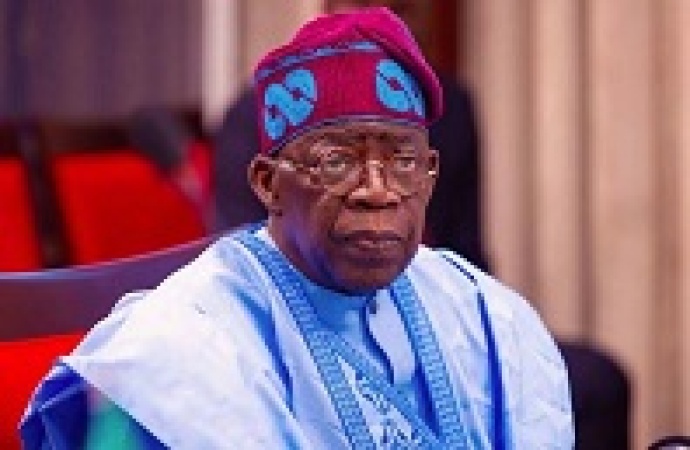
President Tinubu
An amount of N1.8 trillion has been set aside to settle outstanding payments owed to contractors for Federal Government capital projects.
This is contained in the 2026 Appropriation Bill pending before the National Assembly.
Specifically, a total of N100 billion has been earmarked for payments to indigenous contractors, as part of efforts to stabilise the construction sector and restore confidence among local firms.
The payments would cover projects executed under the 2024 fiscal year.
Highlights of the 2026 Appropriation Bill submitted to the National Assembly showed that the government is prioritising funding for contractors and construction projects, with substantial provisions for settlement of prior debts and payment of new and ongoing contracts.
The 2026 budget proposal makes significant provisions for rail infrastructure. The Federal Government has proposed an allocation of N102.3 billion as counterpart funding for the Lagos Green Line rail project. To be funded under the Ministry of Transportation, the allocation is dedicated to phase one of the Lagos Green Line Metro Rail project.
The 68-kilometre rail line is designed to run from the Lekki Free Zone to Marina, connecting key commercial and residential hubs in Lagos, including Victoria Island, Lekki and Ajah.
The budget also provided N68.5 billion for consultancy services related to the Lekki–Ijebu Ode–Ore–Kajola railway and the coastal rail corridor linking Badagry, Apapa and Tin Can Island ports. This allocation was intended to support project preparation and advisory services for the proposed rail lines.
Further allocations included N29.04 billion for ongoing and planned railway modernisation projects across the country. The funding covers the completion of the Abuja–Kaduna railway, additional works on the Lagos–Ibadan rail line and the rehabilitation of the Itakpe–Ajaokuta rail corridor. It also provides for the construction of 12 station buildings and track-laying works at auxiliary rail facilities in Agbor.
According to proposal, the same allocation will fund the design, manufacture and installation of rolling stock, as well as the supply of spare parts and maintenance equipment.
The budget proposal also included provision for signalling and telecommunications systems on the Itakpe–Ajaokuta–Warri rail line and the deployment of acoustic sensing security surveillance systems along the Abuja–Kaduna corridor.
Besides, the 2026 budget proposal further made room for feasibility studies on new standard-gauge rail lines and the engagement of transaction advisers for the concession of the Abuja–Baro–Itakpe, Aladja–Warri Port and Kano–Maradi rail projects.
Analysts said the substantial provision for contractors’ debts could help to calm frayed nerves in the sector, which had seen many protests by contractors due to non-payment for jobs done.
Estimates as at June 2025 indicated that the federal government owes local contractors between N200 billion and N400 billion. These unpaid debts were largely attributed to delayed budget releases, cash flow challenges, and procurement bottlenecks.
National President, All Indigenous Contractors Association of Nigeria, Jackson Ifeanyi, had described the delay in payment of contractors as “grave injustice.”
“We, the indigenous contractors under the auspices of the All Indigenous Contractors Association of Nigeria, wish to draw the attention of the Nigerian public, the international community, and all relevant stakeholders to the unfair and unbearable conditions our members are being subjected to by the Federal Government of Nigeria,” Ifeanyi had said at a press conference.
He explained that many indigenous contractors financed projects with borrowed funds based on assurances of timely payment.
“Unfortunately, the government has failed to honour these contractual agreements but commissioned these projects to look good in the eyes of the public without paying the indigenous contractors who made them possible,” Ifeanyi said.
He warned that contractors could no longer absorb the economic strain caused by the delays, insisting that continued non-payment would trigger sustained protests.
He said: “This is grave injustice. This government continues to lure contractors into projects it has no intention of funding while prioritising projects that serve the personal interests of certain officials”.
In December 2025, the contractors blocked the main entrance of the ministry, restricting vehicular movement and forcing staff and visitors to struggle to access the building. That action set the tone for a continued push for payment of outstanding contract fees. This action forced the Minister of Finance and Coordinating Minister of the Economy Mr. Wale Edun to meet with the protesting contractors.
The contractors insisted that they were owed for projects completed in 2024 and said the funds should be sourced from revenue already generated by the Federal Inland Revenue Service (FIRS). They argued that many of their members were facing severe financial strain due to the non-payment, and that the continued delay has become unbearable.
The federal government kept to its words and paid some contractors, a development that doused tensions days before the Christmas holidays. The exact amount that was paid to the contractors has not been disclosed but the contractors admitted that some of their members had been paid while others were waiting to get paid.
The proposed settlement comes against the backdrop of mounting pressure from contractors and warnings that unresolved liabilities could disrupt public infrastructure delivery with possible political implications ahead of the 2027 general elections. (The Nation, but headline rejigged)