Updating your news feed...
NEWS EXPRESS is Nigeria’s leading online newspaper. Published by Africa’s international award-winning journalist, Mr. Isaac Umunna, NEWS EXPRESS is Nigeria’s first truly professional online daily newspaper. It is published from Lagos, Nigeria’s economic and media hub, and has a provision for occasional special print editions. Thanks to our vast network of sources and dedicated team of professional journalists and contributors spread across Nigeria and overseas, NEWS EXPRESS has become synonymous with newsbreaks and exclusive stories from around the world.











.webp)
.webp)
.webp)


.webp)
Loading banners
Loading banners...

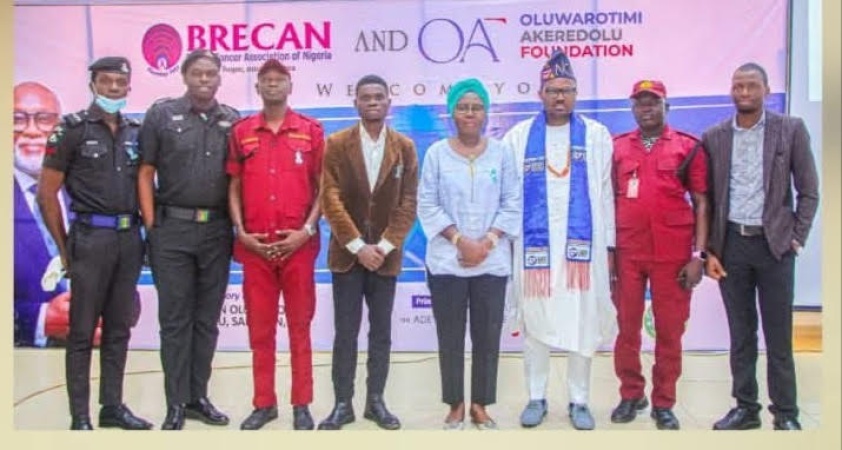
Some of the participants at the prostate cancer symposium
In Nigeria, prostate cancer is a silent killer of men, claiming approximately 31 lives daily.
In 2022, records showed that the country recorded 18,019 new cases, resulting in 11,443 deaths.
The alarming statistics placed prostate cancer as the most common and deadliest cancer among Nigerian men, with 32.8 cases and 16.3 deaths per 100,000 men.
Available records and experts said the situation is dire, with 80 per cent of cases diagnosed at an incurable stage, leading to a death rate more than twice that of North America.
The high mortality rate Is attributed to late diagnosis, limited access to healthcare, and the high cost of treatment.
Dr. Adekola Adebayo, a consultant urologist at the University College Hospital (UCH), Ibadan, who noted Nigeria’s critical shortage of urologists, said with less than 200 urologists serving a population of over 200 million, the country falls far below global recommendations.
“We need to improve awareness, screening, and treatment options for prostate cancer. Men should not wait until they have reached the advanced stage of prostate cancer before presenting themselves for medical attention,” Adebayo advised.
Some reports suggest a global recommendation of 20 specialists per 100,000 people, which would require a higher number of urologists to meet the needs of Nigeria’s population.
Adebayo made the disclosure in his keynote address during a prostate cancer symposium, with the theme: ‘Prostate Cancer: Early Detection, Timely Action, Saving Lives’, organised by Breast Cancer Association of Nigeria (BRECAN) in collaboration with Oluwarotimi Akeredolu Foundation (OAF), held at Ibadan Business School, Bodija, Ibadan.
The programme was held in memory of Arakunrin Oluwarotimi Akeredolu (SAN), a former Governor of Ondo State.
Adebayo stated further that it was doubtful if there is any preventive measure for prostate cancer that guarantees 100 per cent effectiveness.
He added that the focus should be on early detection. He advised that men should not wait until they have reached the advanced stage of prostate cancer before presenting themselves for medical attention.
He identified poor health-seeking habits, stigma and shame of discussing private parts in public, lack of awareness, misinformation, and dangerous religious and cultural practices as part of what shortened the lifespan of men in respect of prostate cancer.
He stated that part of the challenges against medical attention for prostate cancer are lack of capacity and personnel, outdated biopsy techniques, delay in obtaining biopsy reports, and inadequate centre and prohibitive cost of staging images.
Former First Lady of Ondo State, Betty Anyanwu-Akeredolu, who is the founder of the Breast Cancer Association of Nigeria (BRECAN), made advocacy for advancement of men’s health through knowledge, collaboration, early detection, and early actions.
According to her, “Prostate cancer remains one of the leading causes of cancer-related deaths among men in sub-Saharan Africa, yet it is one of the cancers where early detection offers the greatest chance for survival.
“Sadly, silence, stigma, inadequate awareness, and delayed health-seeking behaviour continue to cost our men their lives.”
She made a case for meaningful dialogue, and galvanisation of stakeholders towards timely intervention and improved outcomes for men at risk of, or living with, prostate cancer.
She emphasised the need to bring together experts in urology, oncology, pathology, public health, lifestyle medicine, patient navigation and community advocacy, because defeating the disease requires a multidisciplinary and collective approach.
“As an organisation rooted in advocacy and evidence-based action, BRECAN remains committed to ensuring that no Nigerian—man or woman, suffers or dies due to ignorance, neglect, or lack of access to timely care.
“The fight against prostate cancer is not one we can win in silos. It demands unity, commitment, and sustained action. Together, let us advance men’s health. Together, let us strengthen early detection and prompt treatment. Together, let us save lives.”
Experts also emphasised the importance of early detection and timely action in combating prostate cancer. The Prostate-Specific Antigen (PSA) test is a crucial screening tool, but many men are unaware of its significance.
Dr. Teniola Akeredolu-Michaels, a lifestyle medicine physician and daughter of former Governor Oluwarotimi Akeredolu of Ondo State, spoke about leveraging on regular ejaculations and consumption of tomatoes for reduction of risks associated with prostate cancer.
“Today, I was part of the panel and my topic was on the framework of lifestyle medicine that can help reduce the risk of prostate cancer and improve overall well-being. So, in my discussion, I was able to highlight different strategies that could help men daily to improve their overall wellness.
“So, these included diets like proper nutrition, having good social connections, exercise, avoiding risky substances, also stress management and the importance of sleep.
“The take home for men is, first of all, prostate cancer is a very common disease among men in Nigeria and also around the world. It’s very important that people are aware of this and things that can help them reduce the risk and also the realities of the disease.
“Most cancers, we don’t know the cause and it’s important that they are detected early. Once it’s detected early, then we can cure it. Early detection saves lives.”
Answering a question regular ejaculation, and consumption of tomatoes, and how they help in reducing prostate cancer,. Akeredolu-Michaels explained that there are some landmark studies that showed that frequent ejaculations might reduce the risk of prostate cancer.
‘It also improves prostate health and how it does that is it flushes out toxins in the prostate. This does not mean that this should be the standard. It is not the only thing people should concentrate on.
“You need to apply all the other factors that can help to reduce the risk of prostate cancer.
“And about tomatoes, it has to do with proper nutrition. Studies have shown that there is a substance in tomatoes that gives us a red colour called lycopene, which can help reduce the risk of prostate cancer.
“But this is what I’m telling people. If you go and start eating a lot of tomatoes, and not sleeping well, not exercising well and not going for regular screening, doesn’t mean that you will not have prostate cancer.
“It just shows that you reduce the risk. You need to combine everything together to improve your survival, or to improve that risk that we want to reduce.”
The government and public must work together to address the prostate cancer epidemic. The National Institute for Cancer Research and Treatment (NICRAT) is working to improve cancer care and control in Nigeria.
Prof Abidemi Omonisi, President and CEO of the Nigerian Cancer Society, in an interview with this reporter, agreed that prostate cancer remains the most common cancer in males in Nigeria, and that has been in the last 20 years.
‘Very sadly, most men still present an advanced stage of the disease, which at that point the only solution medically is just palliative care.
“So, men should take care of themselves. Men should take note that prostate cancer is the number one most common cancer in males in Nigeria. It therefore means that if you assemble 100 males, most likely seven of them will have the disease.
“But one thing about prostate cancer is that sometimes the disease can be very silent, and the very first time we are now seeing itself in the life of the sufferer, maybe in the advanced stage of the disease.
“It’s not only in Nigeria, but among blacks. Several studies have shown that prostate cancer is the most common cancer among blacks around the world, particularly in men of African descent and also of the Caribbean.
‘And that’s why it’s important for men to take care of their health, go for a regular check-up, particularly what we call the PSA (Prostatic Specific Antigen). That is a marker that we use to see if the prostate is healthy or not.
Answering the reporter’s question on his advice for the government to come to the aid of male citizens in terms of infrastructures that should be put in place so that early detection could be encouraged, he stated: ‘We must recognise the fact that the Federal Government has been doing a lot in the cancer space to improve outcomes in the country, compared to many years.
“We have seen the establishment of cancer centres of excellence across the country. As we speak now, we have six of such centres. And those centres are also being equipped by the Federal Government of Nigeria.
“However, in terms of advocacy, the government needs to do more, particularly in rural areas. There appears to be a gap between the urban and rural areas.
“If you get to a rural community,, you’ll still find many individuals, with different conceptions concerning prostate cancer and cancer in general. So, the advocacy needs to get to the rural communities.
“And what we have done in Nigeria Cancer Society is to not have a state chapter. For example, in Oyo State, we have the Nigeria Cancer Society, Oyo State branch. It’s our responsibility to work with the Oyo State Ministry of Health and also all stakeholders in Oyo State.
“So, with this establishment of branches in all the states in Nigeria, we know that the advocacy will get to the grassroots level. So, we need to do more advocacy.
“Then, the government also needs to invest in screening. As we speak now, we have no national screening programme for prostate cancer.
There is none. People use what we call, silos in screening. We need to have a national screening programme, not only on prostate cancer, but on multiple cancers.
“Also, we have a lot of guidelines. If you go to some institutions, the guideline they use to treat prostate cancer is not the same all over the country. People have different guidelines.
“They must have a national guideline, what we call the harmonised guideline that we should use in management of the patients.
“Of course, people suffer chronic diseases. But cancer is a catastrophic disease that is very expensive to treat. Doing a PSC test costs N11,000. How many patients can afford N11,000 to do a PSC test?
Then, equipment is also there. So, it’s very expensive. And that’s why we think the government should support individuals diagnosed of prostate cancer and also, they should be managed.
“Of course, there are National Cancer Aid Fundy that Federal Government has established some years ago. But there are serious issue with such aid fund. And the patient cannot access those supports. The National Cancer Aid Fund, should be freely accessible to those in need of it.
“So, the cost of treatment is a major issue in the country. And we think that Federal Government should look into it.”
Omonisi also spoke about drugs, saying: ‘Of course, medications too are not readily to come by, because most of those drugs are manufactured outside the country. They are imported into the country.
So, they are quite expensive. The government needs to do something about that.
“We must encourage indigenous production of those drugs through clinical trials. Many of those drugs that were even imported were experimented on the white Caucasian. And that’s why sometimes their outcome is not as comparable to those medications used on white patients.
“So, we must encourage clinical trials in our country. That is the only way we can develop our own medication that can help in management of prostate cancer and other cancer in the country.
“The government should support individuals diagnosed with prostate cancer and ensure access to affordable treatment.”
Omonisi added that men could get screened for prostate cancer at primary healthcare centres or hospitals. The cost of screening, he said, varies, but early detection is key to effective treatment.
In the same vein, Dr. Foluke Sarimiye, a radiation and clinical oncologist/ psychoncologist at the University of Ibadan, and also at the University College Hospital lbadan. She is the Executive Director of Patella Care Foundation.
She also described prostate cancer as the leading cause of cancer mortality in Nigeria among men.
“It’s very important that awareness about this is raised. The cultural and religious perception about cancer is demystified.
“We listen to how boys are raised into men, and how the peculiarities of being a male definitely influence their health-seeking behaviour. They endure pain. They’re not trained to express pain or vulnerability as compared to the other gender, the female gender.
“For the Federal Government, the government is trying their best when it comes to reducing the financial toxicity that comes with cancer diagnosis. We have what we call the Cancer Health Funds. It’s not as widely distributed as we want it to be, but prostate cancer is among the cancers that have been identified. It’s part of that scheme, it’s part of that programme, where patients can receive some funds to reduce the financial burden that comes with cancer diagnosis. ,
“The government cannot do everything. We have over 200 million people in Nigeria, male and female. So, the burden of cancer is huge.
“We need collaborators, we need partnership collaborations at federal, state, and local government levels in order to improve what the government has put in place.
“So, we want CSOs and other organisations to partner; what we called a public-private partnership. That is the way to go, so that screening, fees, and all that can be reduced for the populace, and then diagnosis, treatments, follow-up and survivorship and all that can also be better for people diagnosed or people living with cancer,” she stated.
Promise Ihezie, Chief Operating Officer, BRECAN; emphasised the importance of understanding prostate cancer, awareness, early detection, and annual medical checkups in a bid to prevent untimely death for men. He urged men to speak up, cry when necessary, and should seek help appropriately.
The stakeholders aggregately stated that prostate cancer is a ticking time bomb in Nigeria, but it’s not too late to act. (The Sun)