Updating your news feed...
NEWS EXPRESS is Nigeria’s leading online newspaper. Published by Africa’s international award-winning journalist, Mr. Isaac Umunna, NEWS EXPRESS is Nigeria’s first truly professional online daily newspaper. It is published from Lagos, Nigeria’s economic and media hub, and has a provision for occasional special print editions. Thanks to our vast network of sources and dedicated team of professional journalists and contributors spread across Nigeria and overseas, NEWS EXPRESS has become synonymous with newsbreaks and exclusive stories from around the world.





.webp)
.webp)
.webp)

.webp)
Loading banners
Loading banners...

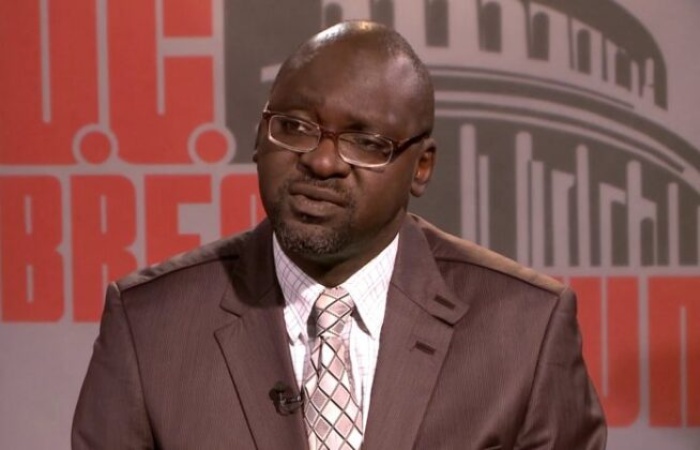
International human rights lawyer, Emmanuel Ogebe
By BONIFACE AKARAH
A Washington-based international human rights lawyer, Emmanuel Ogebe, has called on the United States government to urgently facilitate the resettlement of more than 58,000 Nigerian refugees from Gwoza currently living in Cameroon, warning that repatriating them to Borno State would amount to sending civilians back into an active terror zone.
In a statement recently sent to News Express via e-mail, Ogebe made the appeal in recommendations recently submitted to a U.S. presidential fact-finding delegation to Nigeria, shortly after the delegation concluded its assessment visit. He opposed ongoing efforts by the Borno State Government to encourage the refugees’ return, insisting that Gwoza remains unsafe and under terrorist occupation more than a decade after Boko Haram insurgency forced mass displacement.
According to Ogebe, the refugee population—currently estimated at 58,327 persons in camps in Cameroon’s Far North Region—is eligible for third-country resettlement under international humanitarian standards, having lived in displacement for over ten years with no durable solution in sight.
“Gwoza is still occupied by terrorists. Encouraging refugees to return there is a setup for disaster,” Ogebe warned in his submission, urging Washington to prioritise their relocation to Western host countries rather than support premature repatriation.
Concerns Over Undermined Resettlement Efforts
Ogebe disclosed that while some Nigerian refugees from Cameroon have previously been resettled abroad—including 97 in the United States, 106 in Canada, 125 in France, seven in Italy, and others in Europe—current policies risk stalling further resettlement.
He noted that the Borno State Government’s push for return, including financial incentives reportedly offering as little as $350 to displaced Christian refugees to rebuild destroyed homes, could undermine their eligibility for international protection.
Community leaders from Gwoza reportedly told Ogebe that the refugee population in Cameroon is about 99 per cent Christian and that allegations of unequal rehabilitation persist, with claims that Muslim returnees received completed housing while Christian refugees were pressured to return with minimal assistance.
Criticism of U.S. Immigration Policy
The lawyer also criticised recent U.S. executive actions that partially restrict Nigerian immigrant and non-immigrant visas, describing them as contradictory to Washington’s stated commitment to protecting persecuted populations.
He compared the scale of violence in Nigeria to that of South Africa, arguing that U.S. refugee priorities appeared skewed.
“Since 1990, fewer than 2,000 white farmers have been killed in South Africa. In just the last two years, 2,000 Christian farmers were killed in Benue State alone,” Ogebe stated, describing the disparity as evidence of policy inconsistency.
He further faulted what he called a “whites-only bias” in refugee considerations, particularly as the U.S. reportedly capped refugee intake for 2026 at 7,500 persons.
Call for Broader Humanitarian Action
Among his recommendations to the U.S. government, Ogebe urged an increase in refugee intake quotas, inclusion of Nigerian refugees in Cameroon in resettlement programmes, rapid relocation funding, removal of visa restrictions on non-offending Nigerians, and the granting of Temporary Protected Status (TPS) to Nigerians already in the United States.
He also called on Washington to work with Nigeria to dislodge terrorists from displaced communities, rebuild devastated towns, and support a comprehensive census of internally displaced persons nationwide.
Abuja IDP Crisis Raises Security Alarm
Ogebe’s submission referenced a newly released field report documenting severe humanitarian conditions facing internally displaced persons (IDPs) in Nigeria’s Federal Capital Territory, Abuja, despite official claims that no such camps exist.
The report, compiled by Africa Arise USA following months of field research, identified between 12,000 and 18,000 displaced persons living across eight informal camps in Abuja, many displaced since 2014. It documented the absence of government healthcare, education, sanitation, and protection services, alongside repeated eviction threats.
According to the report, over 600,000 people have been displaced in parts of Benue State alone, while Nigeria’s total displaced population is estimated at between 10 and 12 million nationwide.
Security analysts cited in the report warned that prolonged displacement poses a national and regional security risk, with studies indicating that up to 60 per cent of displaced youth could be vulnerable to radicalisation by 2030 if conditions persist.
Warning Against Forced Returns
Ogebe cautioned that pushing refugees back into insecure regions without guarantees of safety, housing, and livelihoods violates international protection norms and risks reigniting mass atrocities.
“Refugees who returned from Cameroon are now stranded in camps outside Abuja, unable to go home,” he noted, urging the U.S. and other Western allies to intervene decisively.
He reaffirmed his call for urgent international action, stressing that durable solutions—rather than symbolic returns—were necessary to prevent further humanitarian and security crises.
Ogebe, an award-winning international human rights lawyer, has previously advised U.S. administrations on Nigeria and played a role in the U.S. designation of Boko Haram as a foreign terrorist organisation.