Updating your news feed...
NEWS EXPRESS is Nigeria’s leading online newspaper. Published by Africa’s international award-winning journalist, Mr. Isaac Umunna, NEWS EXPRESS is Nigeria’s first truly professional online daily newspaper. It is published from Lagos, Nigeria’s economic and media hub, and has a provision for occasional special print editions. Thanks to our vast network of sources and dedicated team of professional journalists and contributors spread across Nigeria and overseas, NEWS EXPRESS has become synonymous with newsbreaks and exclusive stories from around the world.

.webp)
.webp)
.webp)
.webp)
Loading banners
Loading banners...
October 31, 2025 — The Trump administration made its first major move, designating Nigeria a “Country of Particular Concern” under the International Religious Freedom Act. The State Department cited what it called systematic violations of religious freedom and mounting violence against Christian communities. For Nigeria, already struggling with multiple insurgencies, the designation was more than symbolic—it put the country squarely in Washington’s crosshairs.
November 1 — Trump didn’t wait long to escalate. Over the first weekend of November, he issued stark public warnings: if Nigeria couldn’t or wouldn’t stop the killing of Christians, the U.S. might do it for them. Speaking to reporters, and later aboard Air Force One, Trump said he’d asked the Pentagon to prepare military options—everything from airstrikes to boots on the ground. He also floated cutting off aid entirely.
November 2-3 — Nigeria’s response was measured but firm. Yes, Abuja said, we’d welcome U.S. help fighting Islamist insurgents—but only if our sovereignty is respected. Nigerian officials pushed back hard on the framing, too, arguing that extremist violence doesn’t discriminate: Muslims and Christians both die in these attacks. The U.S. characterization of the crisis as primarily religious persecution, they said, oversimplified a complex security nightmare.
Mid-November — The issue went mainstream in an unexpected way when Nicki Minaj spoke at a U.N.-linked event about Christian persecution in Nigeria. Her comments drew international headlines, but they also deepened the diplomatic rift. Nigerian diplomats said they’d been shut out of the event, and saw the whole thing as another example of their narrative being ignored in favor of a simplified Western story.
November 20 — The threats got more concrete. A senior State Department official told Congress that Washington was weighing sanctions and expanding Pentagon counterterrorism operations in Nigeria. This wasn’t just talk anymore—it was policy taking shape.
Late November Through December — Behind the scenes, the U.S. was already moving. Flight-tracking data picked up American intelligence and surveillance aircraft operating over Nigeria, many flying out of Accra, Ghana. The flights were a clear sign: whatever was coming, the Pentagon was gathering intel for it.
December 23 — Two days before Christmas, the White House announced immediate visa restrictions on certain Nigerian nationals linked to security failures and religious violence. It was another turn of the screw, part of what the administration called a “comprehensive pressure campaign.”
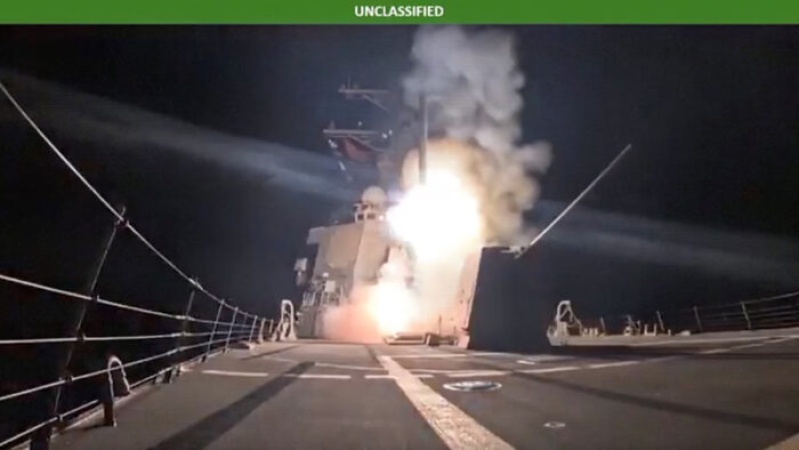
December 25 — On Christmas morning, Trump announced that U.S. forces had struck Islamic State-linked militants in Sokoto State in northwest Nigeria. AFRICOM said the operation was coordinated with Nigerian authorities and targeted fighters responsible for civilian attacks. Trump framed it simply: America had stepped in to stop the killing of Christians.
December 26 — The morning after, Nigeria’s Foreign Ministry confirmed the strikes had happened—and that Abuja had been consulted. But their framing was careful. This was joint counterterrorism cooperation, officials said, not a U.S. crusade on behalf of one religion. They reiterated what they’d been saying all along: extremist violence kills Nigerians of all faiths, and any solution has to respect Nigerian sovereignty and go through proper legal channels. (Business Day)