ADAD
ADADUpdating your news feed...

NEWS EXPRESS is Nigeria’s leading online newspaper. Published by Africa’s international award-winning journalist, Mr. Isaac Umunna, NEWS EXPRESS is Nigeria’s first truly professional online daily newspaper. It is published from Lagos, Nigeria’s economic and media hub, and has a provision for occasional special print editions. Thanks to our vast network of sources and dedicated team of professional journalists and contributors spread across Nigeria and overseas, NEWS EXPRESS has become synonymous with newsbreaks and exclusive stories from around the world.







Loading banners
Loading banners...


Ajaero, Abure
As the leadership crisis in the Labour Party (LP) deepens, KUNLE ODEREMI writes on the undercurrents and if the scenario that decapitated the once Alliance for Democracy (AD) is about to repeat itself.
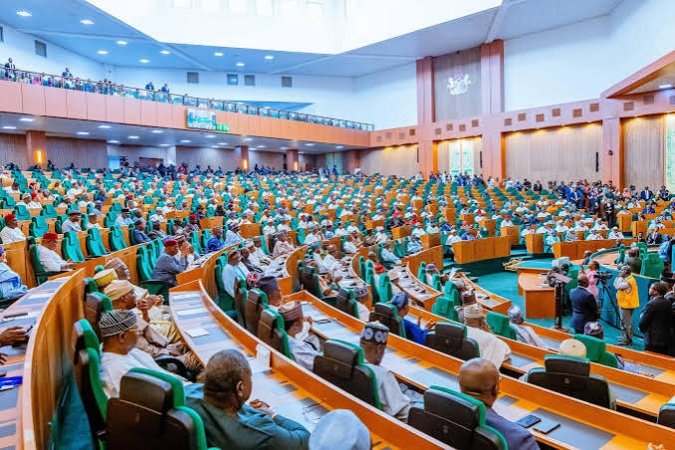
Since its inception, the Labour Party (LP) in Nigeria made its most remarkable impression at the poll in the 2023 general election. By the time the results of all the elections were concluded, the party was shown to have serious made incursions into the strongholds of the ruling PDP and the APC as it secured considerable seats in the Senate and the House of Representatives. The LP won six senatorial seats and 34 in the house, making it the third ranked party in the 10th National Assembly. According to chairman of the Independent National Electoral Commission (INEC), Professor Mahmood Yakubu, at a meeting with Resident Electoral Commissioners (RECs) in Abuja, the All Progressives Congress (APC) won 57 Senate seats; Peoples Democratic Party (PDP) 29; Labour Party (LP) six; Social Democratic Party (SDP) two; New Nigeria Peoples Party (NNPP), two; Young Progressives Party (YPP), one and All Progressives Grand Alliance (APGA), one. For the House, Yakubu said the APC had 162 seats; PDP (102); LP (34); NNPP (18); APGA, four; ADC, two; SDP, two, while the YPP got one seat.
The feat of the Labour Party bolstered the thinking that perhaps, the much-trumpeted Third Force had arrived that could pose a realistic challenge to the bigger PDP and the APC which had monopolised power at various levels of government since Nigeria returned to civil rule in May 1999. After the 2003 general election, the hitherto Party for Social Democracy (PSD) had transformed into the LP based on what the Nigeria Labour Congress (NLC), the chief promoter, described as the ideology of social democracy. The success of Dr Olusegun Mimiko in the 2007 governorship poll in Ondo State boasted the standing of the party having contested on its platform. From then, however, the influence of the LP almost paled into insignificance until some powerful forces coalesced in May 2022, to ‘’railroad’ former Anambra State, Mr Peter Obi, as its presidential candidate in the 2023 election. Whereas the party failed in the bid to produce president, it nonetheless again won a governorship seat in the person of Governor Otti of Abia State. But in another feat of irony, the party is enmeshed in a festering leadership feud. It will be recalled that a lawyer, Dan Nwanyanwu wasthe national chairman of the LP from 2004. He left office after being in the saddle for 10 years and became Chairman of the Board of Trustees (BoT).But Nwanyawu eventually quit the party in 2015 in controversial circumstances, including schism against a top official of the LP, which he adequately addrressed in his resignation letter.Part of the letter read: “I regret to observe that events in the Labour Party, especially with regard to the handling of the recently concluded nomination of candidates on the platform of the party for the 2015 general elections, are not in consonance with the integrity, transparency and accountability for which the Labour party had achieved reputation over the years.” He added: “I am unable to continue to hold the office of the chairman of the Board of Trustees (BoT) of the party or continue to associate with the party as a member. Consequently, I hereby tender my resignation both as chairman of Board of Trustees of Labour Party and member of the party. I have already taken steps to effect my resignation as member of the party at my ward as required by the party constitution.”
Almost 10 years again, the LP is embroiled in another major power struggle after a general election. The crisis is also coming in the midst of a protracted feud between two tendencies in the party that has shuttled between the court room and parallel structures (party offices) over legitimacy, as well as the rash of litigation arising from the results declared by INEC. Last week, the crisis further deepened as the NLC leadership declared no confidence in the national chairman of the party, Mr Julius Abure. The camp of the latter is fighting back, even as the caucus of the LP in the House of Representatives took a swipe at the LP leadership of the party for allegedly flouting the constitution of LP planning to hold a national conference without due process.
According to some party faithful, there are four underlining issues in the current intra party feud. One of them is said to be about the leadership style of Abure, which some party buffs claimed has failed to encourage a collective spirit. This is said to be responsible for the protest by some power centres within the party against the plan by Abure to conduct a national convention of the LP. To them, the action undermines the provisions of the LP constitution. Another issue of contention is about the supposed ambition of the major actors to have an absolute authority and control over the main structure of the party, just as the chieftains are divided on the scale of accountability and transparency in the running of the Labour Party.These have polarized the LP into the pro-NLC camp and the anti-Abure camp, bringing back the memories of the dirge of the once vibrant Alliance for Democracy (AD), which formed the tripod that governed the country at the inception of the Fourth Republic. The problem of factions in the AD almost left the party prostrate before the party was further atrophied by the Obasanjo presidency.The main promoters of AD included Chief Bola Ige, Chief Abraham Adesanya, Chief Olu Falae, Alhaji Mamman Yusuf (1st chairman of the party), Alhaji Ahmed Abdulkadir (2nd chairman), Bola Tinubu, and Chief Bisi Akande; Dr. Chukwuemeka Ezeife; Dr. Arthur Nwankwo. The AD won the governorship seats in all the six states in the South-West: Lagos, Ondo, Oyo, Osun, Ogun and Ekiti states. It retained only Lagos State in the 2003 elections. The party also secured 17 senatorial seats, but managed to retain only seven in the 2003 elections. The AD controlled all the Houses of Assembly in the states where it won the gubernatorial elections in 1999 and 2003 respectively. However, factionalisation became a major problem of the AD and the PDP under Obasanjo government lashed on the crevices to ‘capture’ five of the states from the AD. Completely orphaned and beheaded politically, the AD soon fizzled out in the competition for power at all levels as its hitherto main gladiators came up with new political groupings. Is the LP walking through a similar path that consigned AD to history? (Nigerian Tribune)