Updating your news feed...
NEWS EXPRESS is Nigeria’s leading online newspaper. Published by Africa’s international award-winning journalist, Mr. Isaac Umunna, NEWS EXPRESS is Nigeria’s first truly professional online daily newspaper. It is published from Lagos, Nigeria’s economic and media hub, and has a provision for occasional special print editions. Thanks to our vast network of sources and dedicated team of professional journalists and contributors spread across Nigeria and overseas, NEWS EXPRESS has become synonymous with newsbreaks and exclusive stories from around the world.



Loading banners
Loading banners...


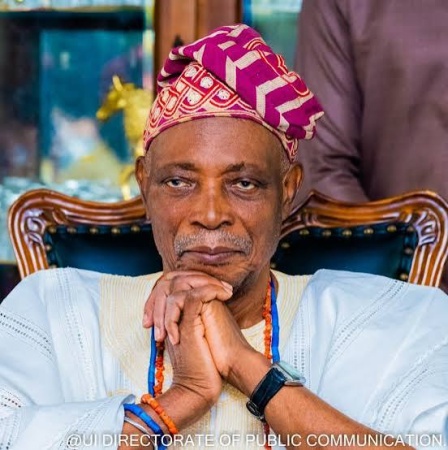
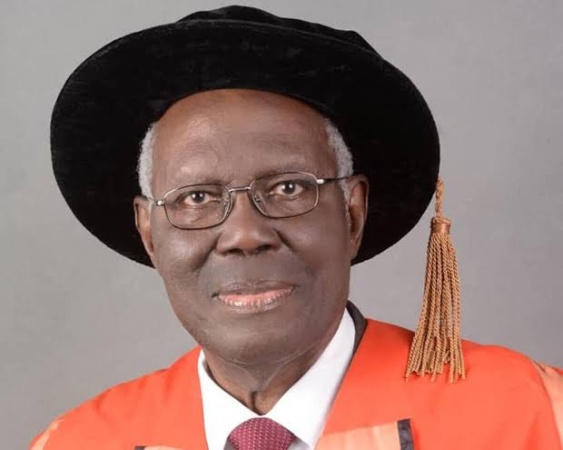
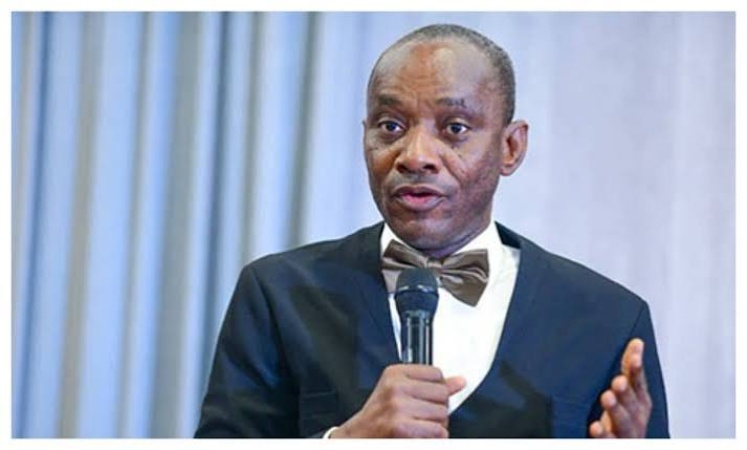
Dr Christopher Kolade
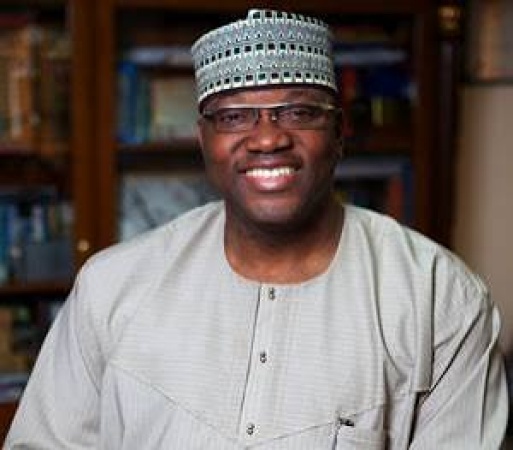
Fondly referred to as Nigeria’s Mr Integrity, Dr Christopher Kolade is one of those individuals like the late Doyen of Accounting, Pa Akintola Williams, who exemplify integrity. Born in December 1932, Dr Kolade is a former Director General of the Nigerian Broadcasting Corporation. He also served as the Nigerian High Commissioner to the United Kingdom between 2002 and 2007. Dr Kolade was a special guest on Channels Television’s Amazing Africans programme during the week. The nonagenarian spoke about his cherished relationship with Pa Williams, why youths should be involved in nation building and why politicians should do better by putting personal interest aside to enthrone national interest.
Enjoy the excerpts!
Let’s talk about your reputation over the decades.
I was asked to be chair of SURE-P (Subsidy Reinvestment and Empowerment Programme) for the Federal Government but my friends came to me and said don’t take it because the experience of others who have done the same is not attractive so don’t do it. In fact, there was a group of young people that I was mentoring at the time and they said to me in a meeting: ‘We respect you too much, don’t go for this’. I asked by God’s direction, I asked them a question: ‘I said so if I don’t take it, if
I say because I want to protect my reputation I don’t take it, whom shall I point to and say you take it, you go and endanger your reputation, you go and do this?’ I said so I cannot refuse to take it because I know somebody must do it. What I can do is to say if I go and do it, God is able to see me through it. That was what happened. So, friends can tell me their preference and sometimes I even have my own preference but I remember always that I’m God’s child and that he has my best interests at heart.
One woman wrote about you titled, ‘He Made The Difference’ which if you understand what the High Commission was back then when you joined, ‘he made all the difference’ explains it all. Can you elaborate a little bit?
When this lady came and said, ‘I want to write this book’. For me, the important thing was to say to her: ‘Listen, I did not come here to make a difference; I came here to serve, to do whatever I thought the country needed in service, to do whatever I thought the situation needed if it was going to be better. I had to ask for help in that direction. When I received that direction, I simply obeyed what I was being led to do. So, I go with relative confidence that even though I may be going into a new situation, I will be able to deal with it.
Why did she want to write this book? Why titled it ‘He Made A Difference’? What did you do that inspired her to write this book?
I thought really I hadn’t done anything that deserved being written in a book but then the way she convinced me that she would write the book. She then said: ‘There were situations that were going on that needed to be changed, they needed to be improved. You came and met those situations and you didn’t just let them lie, you worked to change them, you worked to make them better. Now, that’s what I want to write about’. And for instance, if you were living in Britain and your Nigerian passport expired, you had to renew your passport, the choice was would you have to come all the way back to Nigeria to renew your passport which was a possibility but was a very expensive possibility or could you go to the Nigeria High Commission which had a department for dealing with this kind of situation? So, anybody living in Britain would choose that option but after my first couple of weeks, a group of professional Nigerian doctors came to see me in the office and in the course of discussion, one of them said that he had just renewed his passport but he had gone all the way to Nigeria to do it and I said but why do you have to do that we have a department here that to renew passports and he said that doesn’t work, they don’t do it, you cannot get that kind of service.
So, I went down to the department where this supposed to happen and I discovered to my horror that there were passports that had expired and were due for renewal that had been submitted to the department. What the department had to do was to renew the passport and a man told me: ‘My passport has been here for 15 months and I can’t get it renewed’. I couldn’t understand it so I asked the people in the passport department, why would renewal of a passport take more than 15 months? What do you have to do? They told me what they have to do and I said how long should that take? So, we discussed and I had to lead them in the discussion, to show them that giving renewal of passport for somebody was not a favour; it was a service that person deserved.
Eventually, we got to the point where somebody wrote to me, a Nigerian, and said to me: I went to your High Commission because my wife needed to renew her passport, I didn’t want to go because I knew how tough it could be but my wife has to go to Nigeria so she has to renew her passport. So, we went to the High Commission, we arrived just between 9:30 and 10am on a certain day and we told the people what we came to do, we filled the form, we paid the fee and they said to us, ‘This will take some time so if you need to go somewhere else please do so but come back at 2:30pm and your passport will be ready’, and they didn’t believe it because they knew that you just don’t do it like that but they stayed there, they didn’t go anywhere and at 2:30pm on the dot, the lady was summoned and she was handed her renewed passport. Now, the man could not believe this.
This is why he wrote me a letter what I then did was to call my staff together and say I’ve just received this letter and I read it to them, and I said that’s what you get when you do what is right. This was just an example of what I did but you see there was nothing sensational in what I did; nothing special. I just said this is a simple matter, they come, they give you the details; they pay the fee and you stamp it. What’s difficult in that? I did not change any member of staff. I did not recruit new people. I did not increase their salaries. I did nothing that you would say was now an incentive. No; they just realised that they can do this thing in a few hours, so why take several months and they did it. So, that’s why I said to the lady: why do you want to write this, if I had done something very big, sensational, there’s something to write about but I simply said this is what you can do already, why don’t you do it?
You are one of the men that the late Pa Akintola Williams deeply respected and strongly mentored. Tell me about it.
Alright. When I joined the Nigerian Broadcasting Corporation, Pa Akintola Williams was head of his firm, an accounting firm and that accounting firm were the external auditors to Nigerian Broadcasting Corporation. That was how I first met anybody from that firm but in the course of our interaction, it was possible for him to talk to me, especially when I became the Director General. So, we had things to do together and he discovered that some of the thoughts that I had were interesting to him so he decided to take an interest in me.
I was much younger than he was and eventually he took such an interest that I felt I should really get closer to this man because he has a lot to teach me but what happened was that when I then decided to go away from that job as Director General, I was looking for somewhere in the private sector where I could continue my life. I thought let me talk to somebody who should know so I went to his office and I said I’m thinking of leaving this job but I want to go into the private sector, and live my life but first I want to know if you think that’s a good idea and second, if I’m going to make that change, ‘Do you have any recommendations for me?’
He was very good, he gave me all the confidence that I was doing the right thing but second he then told me what the options were. He said, ‘Listen, you’re director general of the National Broadcasting Commission today. Now, you cannot go into the private sector looking for a chief executive job because your experience in the public service is not a qualification for private sector job. Therefore, you must start by understanding that you have a lot to learn.’
His mentorship of me was not just to advise me but also to say if you’re going to run a successful organisation, these are the things you must not forget, these are the things you must practice and eventually, I became chairman of something called the integrity organisation and that organisation then decided to hold an annual lecture in my honour after I retired as chairman and while Pa Akintola was was able to move about, he never failed to attend those annual lectures; he always was there personally as a sign of his personal support for what I was doing – it was an endorsement that was worth more than its weight in gold.
Your wife, what role do you see her playing in the mission that you are also trying to fulfill?
When I was asked to go to London as High Commissioner, we decided that we would travel together so we moved together and we arrived at Heathrow Airport together but of course when I arrived, some of the officers of the Nigeria High commission came to the airport to welcome their new High Commissioner, three or four of them men came to welcome me.
She asked them a question at that point. She said, ‘Gentlemen, you come to welcome your new High Commissioner. Where are your wives? And they looked quizzically at each other. She said because when you come like this, are you trying to intimidate me? So they had to apologise that they didn’t bring their wives with them and so on and so forth but from that point on, they now realised that their wives were a critical part of their mission. She then got the wives together and they became the wives of the embassy staff and not only did she sort of mentor them on what they might be doing but I think she made them realise that they were not just wives of officers, they were also on a mission.
What message do you have to tell the youths?
You see at all times, we need to ask ourselves: who am I? What is my essence? Why am I here? Because unless you can come to some kind of reasonable conclusion as to why you are here, you may not understand why you’re here.
When I look at the building of a nation and I look at Nigeria and I know that before I was born there were some people in Nigeria who were building the nation, who were doing things that have added up to what Nigeria became, then I came into the world and I was able to see older people who were doing things and some of them were even going to jail to indicate that this they were serious about what they were doing and I’ve learned from those people too but Nigeria is now where it is because those people have behaved like that. Maybe not all the things they did were right, maybe they were not correct on everything but we have a Nigeria now.
So, think 20 years from now, the future, if the Lord permits will there still be a Nigeria and if there’s a Nigeria at that time, how will Nigeria be? What should be will be an a procession of what these people have done, what we’re doing now and what the young people of today do to lead to that time. So, every generation has something to do.
The youths of today should just realise that they are not they are not servants of the older generation.
Comparing politics today to those with your younger days.
My view of politics is that the practice of politics can be very sensitive and one can begin to do things, begin to participate in decisions that conflict with the values, the standards, the principles that one believes. That has been my experience.
I’ve never gone into politics because the way it was being practiced, I thought I would not be able to be myself if I became a politician now. That may be simply my own weakness but this is the situation and so when I see politicians today and the way they behave, if I compare today’s politicians with politicians of the First Republic, for example, I can tell that my experience of the politicians of the First Republic was that they actually worked for Nigeria; they actually were serving the country, they put themselves and their own interests lower than the national interests and some of them in order to serve the country well were actually imprisoned, they suffered hardships in order to get the country to where they thought it should go. I think that has changed. I believe that today many politicians, in fact most politicians that I know of, tend to put their own interests ahead of the national interest. (Channels TV)