
Updating your news feed...
NEWS EXPRESS is Nigeria’s leading online newspaper. Published by Africa’s international award-winning journalist, Mr. Isaac Umunna, NEWS EXPRESS is Nigeria’s first truly professional online daily newspaper. It is published from Lagos, Nigeria’s economic and media hub, and has a provision for occasional special print editions. Thanks to our vast network of sources and dedicated team of professional journalists and contributors spread across Nigeria and overseas, NEWS EXPRESS has become synonymous with newsbreaks and exclusive stories from around the world.





.webp)















Loading banners
Loading banners...


Chairman of the Association of Nigerian Private Medical Practitioners, Lagos State chapter, Dr M
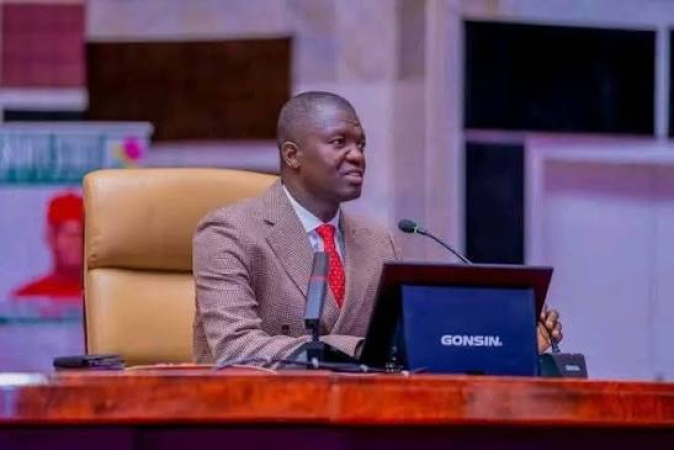
Chairman of the Association of Nigerian Private Medical Practitioners, Lagos State chapter, Dr. Makinde Akinlemibola, tells Emmanuel Ojo of The PUNCH about the controversy surrounding the missing intestine of a boy, Adebola Akin-Bright, who died on September 19, 2023
The case of the boy who died after his small intestine reportedly went missing during his treatment involves one of your members whom the Lagos State House of Assembly ad-hoc committee investigating the case directed the police to arrest. What is your position on the issue?
Well, it happened to one of our members of the Association of Nigerian Private Medical Practitioners. The patient, may his soul rest in peace, and his family used the same hospital, Obitoks, for a long time. The patient had a problem earlier this year (March 6, 2023) and was taken to Obitoks. Before getting there, he was said to have taken some medications somewhere, probably not a hospital, and then they found out through a scan done that there was an abscess (pocket of pus) around the area of the appendix, which was operated and it relieved the boy of the abscess and in the process, they couldn’t remove the appendix because of the abscess. In medical parlance, we all know what that is. So, it (the appendix) had to be left alone because an attempt to remove it can even cause more damage but it was treated confirmatively, that is, with medication and so on, and luckily the boy got better and was discharged.
Three months later, the boy came back with abdominal pain. Eventually, all things were done and it was discovered that he had intestinal obstruction, which also necessitated intervention, that is surgery. He was opened up. Along the line, it was found out that the appendix which had been very difficult to remove at that time was eventually removed and another part of the intestine was also removed, that is the duodenum. The duodenum is a very small length of the whole intestine. Part of it was removed because it was gangrenous (decaying due to lack of blood flow). So, those are part of the things that took place. Then, of course, they had to put the ends of the small intestine together with the hope that it would be healed.
Was the family well-informed of all of the procedures?
All these were explained to the mother and eventually, about five days after the surgery. They noticed that most likely, the intestine must have broken down; that is the anastomosis – that is, putting together the ends of the viable walls must have broken down and that is what we refer to as fistula. So, some particles were coming through the wound. So, in view of that, the doctor eventually explained to the mother that they may have to call another doctor from Lagos State University Teaching Hospital to come and review and also do whatever it was that needed to be done, but along that line, while they were doing that, the mother chose to go to LASUTH rather than having a doctor from LASUTH come to them. So, the boy was discharged and referred to LASUTH. They got to LASUTH, and for whatever reason that they had chosen, they didn’t intervene surgically for the first 28 days that the boy was there. Eventually, they said that the boy was operated on and then, the explanation was given to the mother. One thing led to the other and there was an outcry of having a loss of the intestine and as it were, we were not there, so, we cannot say what really transpired. All we know is that at the private hospital from where he was transferred, there is evidence that the intestine was there, and even viable.
What are the pieces of evidence that the small intestine was still intact when he left the private facility?
You cannot really say that the small intestine was still intact if a little bit of it had been removed but what we are saying is that a large chunk of the small intestine was still intact and it was confirmed with a scan that was done when they got to LASUTH. So, what led to keeping the patient for 28 days before intervening is something that I wouldn’t know because I wasn’t part of that team and one thing led to the other until information started going out that put the integrity of the doctor in Obitoks at stake and we just feel that it is unfair. So, we have to chronicle the event from when the patient was operated on and what happened, when he was referred, and so on.
You also mentioned in a press statement your association released on the issue that when they got to LASUTH, a scan was done to confirm that there were intestinal movements. How did you get and confirm that?
You know I told you right from the onset of this interview that the doctor (at Obitoks) had been the family doctor of the patient and after they left, the doctor was still following up to confirm if they had done the surgery or not and they said they had not done it. So, there was nothing he could say or do in terms of the fact that the management of the patient had been out of his hands but despite that, he still had the compassion to follow that case. He was constantly getting in touch with the family to ask how the patient was and so on. It was during that period that they sent the scan test that they did in LASUTH to him (the family doctor at Obitoks hospital) and he saw it and saw that there was bowel movement, so, there was nothing to go further on.
The mother of the patient mentioned to the Lagos State governor, Babajide Sanwo-Olu, during his visit to the patient at LASUTH that both the private hospital and LASUTH didn’t acknowledge the removal of the small intestine despite the pieces of evidence you claimed she had. What do you think could have brought about the confusion?
Well, I wouldn’t know but the thing is that, whether she said it or didn’t say it, what is incontrovertible is the fact that at the time the patient got to LASUTH and a scan was done, it was confirmed that there was bowel movement.
Do you think there could have been a gap in communication or miscommunication?
Maybe a gap in communication or someone misquoting someone whom I wouldn’t know and that’s the truth. Maybe it’s a misunderstanding of what the doctor at LASUTH explained to the mother that caused the issue there but if they had told her something and she couldn’t comprehend it, then she had the right to shout out as to where the intestine is but along the line, if they had asked the private doctor and the doctor could confirm that he didn’t remove the small intestine, then, it is left to the LASUTH doctors to explain what really happened. Maybe they misunderstood one another or something like that, I wouldn’t know but that is the situation and at any rate, you can ask either in Nigeria or anywhere in the world. If you remove an intestine, you can’t do anything with it. You can’t transplant it or do anything else with it. The issue of using someone’s intestine for somebody else is a technical thing and not something that can be done like that. So, what will they do with the intestine, either at the private hospital or LASUTH? If the intestine has been removed, which we are sure was not done in the private hospital, then, something must have gone wrong with the intestine and they found out that it wasn’t viable and they had it removed. Just as simple as that.
How long can a patient survive without the small intestine?
For a patient to survive without the small intestine, that will also depend on some things. Let me explain a bit about the small intestine. The small intestine itself is where the majority of the food that we eat is digested and it is along that path while traversing the small intestine that nutrients are absorbed and everything beneficial to the body. So, it is not easy for a patient to survive without an intestine and the only way the patient can survive is to now do what we call total parenteral nutrition and that has to be administered intravenously, like a drip. So, all the food that one is supposed to eat and the nutrients absorbed, since that cannot be done, those nutrients are congregated together in the form of drip, which is very expensive, and administered to the patient to continue to survive.
And how long can that go?
It can go for as long as possible, as long as you are balancing all the requirements of the patient and you are giving adequate nutrition through that. It can go on for as long as possible.
Before the boy died, he appeared malnourished. Do you think he wasn’t having the required nutrients by the body?
Well, keeping one alive is totally different from giving adequate nutrition and so on. Yes, everybody feels that it is synonymous that what they were giving him was not enough to allow him to put on weight and so on but what we are talking about here is the issue of cost. It could be that the cost limited the amount of nutrition that they gave him. So, the cost might be a factor that made the boy look the way he did. Maybe it would have been better if what he was given was adequate, but we are in Nigeria and the economic situation is not palatable. I can imagine the parents getting those things to keep the boy alive. I can imagine them getting it at that price and so on.
You also mentioned that the small intestine cannot be transferred from one person to another. If the boy had been taken abroad for treatment, would a transplant have been possible?
That is exactly what the governor was trying to do. As far as my knowledge takes me, it is only in America and in India that such a thing can be done, that is, a transplant of the intestine. Let me go a little further. If you remove an intestine from an individual, you cannot preserve it because, once there is a loss of blood supply to that intestine, within five hours, it will die, and it will not be viable anymore. So, if for any reason, a doctor removes the intestine, it is most likely because that part of the intestine is no longer viable. It doesn’t give the doctor any benefit.
Is the removal of a part of the small intestine a usual practice in surgery as was done at the private facility?
Yes, there are so many conditions that will make us remove a part of the intestine. We call it (the passage) the alimentary canal and it starts from the mouth, through the oesophagus, through the stomach, duodenum, and the different parts of the small intestine, leading to the large intestine and eventually leading to the rectum after the body must have extracted all it needs from it which will then produce the faeces that is passed out. There shouldn’t be any breach in continuity from there down to the anus but there are situations like that or many situations where a little part of the intestine gets spoilt and once it gets spoilt, food will not be able to move along that line because there will be lack of peristalsis. Peristalsis is the movement of the intestine whereby the intestine assists its contents to move further down until it gets to the anus. In that wise, once a section of the intestine is bad, then peristalsis can be seen before and after that part that is bad but that part of the intestine cannot transmit whatever content that it has again to the other side, and once that is noted and the diagnosis has been made which most of the time you see during surgery. You might have sensed it but when you open up and you look at it, you look at the texture of the intestine if there is movement, the colour of that part and so many things that will be looked at. Once you notice that one part of it is bad, your best bet is to cut out that part that is bad and oppose the remaining one so that there will be continuity. It will be joined to the remaining part and it must be ensured that there is no leakage whatsoever. If there is no continuity, there is no way the patient can survive.
Was that exactly what happened at the private hospital?
No. Let’s get some things right. Yes, there was a part of the intestine that was bad that the doctor removed but the thing is that he noticed that and he had already apposed the remaining one together. In such situations, there is also a possibility that it will break down. It might break down and that’s why it is necessary to wait and see if there will be anything of such and if there is, it would then be necessary to conservatively begin to manage such a patient or you go in again and try to repair whatever damage that might be there.
How is a transplant of an intestine done?
Well, to tell you the truth that process itself is novel. It is new in the profession and even if there will be anything of such, whatsoever (material) that must be brought into the intestine, must be viable and it involves a lot of processing. (Saturday PUNCH)




