Updating your news feed...
NEWS EXPRESS is Nigeria’s leading online newspaper. Published by Africa’s international award-winning journalist, Mr. Isaac Umunna, NEWS EXPRESS is Nigeria’s first truly professional online daily newspaper. It is published from Lagos, Nigeria’s economic and media hub, and has a provision for occasional special print editions. Thanks to our vast network of sources and dedicated team of professional journalists and contributors spread across Nigeria and overseas, NEWS EXPRESS has become synonymous with newsbreaks and exclusive stories from around the world.














Loading banners
Loading banners...


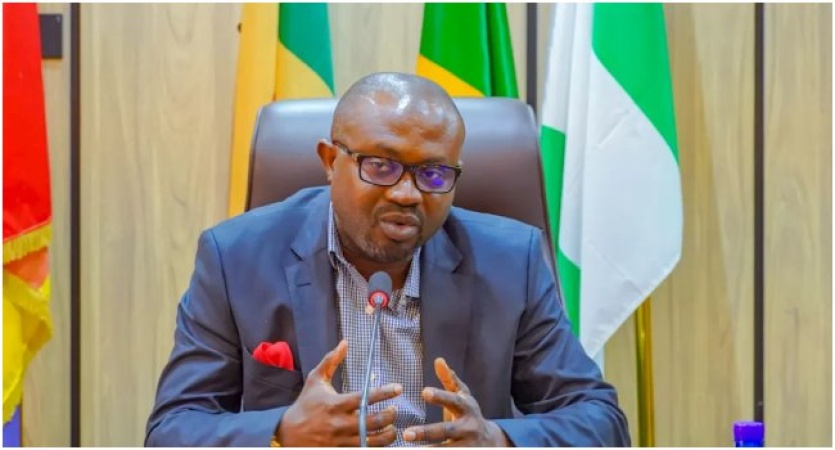
Rabiu Yadudu
Capt. Rabiu Yadudu, the Managing Director of the Federal Airports Authority of Nigeria (FAAN) in this interview said the management’s plan to make the Murtala Muhammed International Airport (MMIA), Lagos a hub remains on course. He also explained why the agency cannot put the underground car park at the airport for use, among other issues. Excerpts:
What concrete steps have been taken towards the creation of a hub at the airports, especially Lagos Airport as well as the planned connection of the international and local airports to ease passenger facilitation?
The issue of the hubs for Lagos Airport is something we have been working on for a very long time and it is long overdue.
As of now, the government is driving it aggressively through the Federal Airports Authority of Nigeria (FAAN). By aggressively, I mean we have already gone far in processing for the company that can do it.
We are working with the Bureau for Public Enterprises (BPE) and we have already got our designs and we are going through selection for the designs. We are at the active procurement stage; we have gone to the stage of going to the BPE.
We are working with the Lagos State Government and our own engineers to develop a rail system that will connect the old international and the General Aviation Terminal (GAT) at the Lagos Airport with the new international terminal.
This is to ease passenger facilitation. You cannot have a hub airport whereby there is no connectivity that is either direct or indirect between the two terminals, especially considering that passengers need to transit. And of course, there are lots of baggage that need to be moved from one terminal to the other.
We had a very robust master plan for this airport, but along the way, over the years, we had challenges that made it practically very difficult for this connection to take place.
But, as for now, we are working on it, through the establishment of a rail system and of course working with the airlines to see what we can do to establish their own connectivity for their passengers’ baggage and other belongings with other terminals.
It is being processed, but we have not reached BPE yet. I believe we will have it ready between now and the end of the year.
We are working in full collaboration with the Lagos State government, considering their work in connecting most of state with Ikeja bus terminals and we are working to see what we can do to see that we achieve integration so that between Ikeja bus stop, there will be a connecting bridge that will link with the airport, near that National Filling Station. We are actively working on it and I believe in the next four to five months, we shall see it on ground. There is also a security reason we really want to make it an up station. There is demand and there are lots of passengers coming.
Recently, you saw Ethiopian Airlines, which has started flying from Lomé to the United States. It is all because of Lagos. How many passengers are there in Lomé? There is a huge potential that Nigeria and Nigerians are not taking. So, they are operating Lomé to the USA because there are lots of passengers. I think they operate about three or four flights out of Lagos and out of Abuja. And they are feeding Lomé to fly to the USA all because of the inconveniences in facilitation in Lagos. So, this new initiative, if we can connect through the rail, which has the potential of carrying a larger number of passengers, it is much easier than buses. And then the shuttling of the baggage will be much easier for all of us.
Haw far has the planned relocation of the control and fire towers at the Abuja Airport gone?
It is something that is an operational consideration. Right now, we wanted to move it, then, the pressure of the second runway in Abuja came up. It has already been approved by Mr. President. There is a plan and design to construct a second tower on the other side near the second runway. So, we consider it nice to have two towers for efficiency.
We are already relocating the current one along this side and we have the main one, which might be the permanent one at the location of the new runway. Now, when we have both, at the implementation stage, we will see whether it will be possible to maybe have one that will be the master tower or the only one. At this stage, the second one has not yet been constructed, but we are looking at the two. We will maintain this one and that one.
But once it is coming, the Nigerian Airspace Management Agency (NAMA) will look at it and see what we can do, either to integrate both or to nullify one and have one standing. The key consideration is the connectivity in terms of ground movement and the line of sight so that the tower can see all the ground activities going on at the airport.
These are the main factors that determine whether it is possible or not. Inasmuch as we have so many things on paper, and in the design, it is when they are constructed that we can actually know, from the point of view of direct evidence and determine whether we maintain one or use the two.
Remember, in many airports, you can have even two. It depends on the scope of activities each one is controlling. We can have one doing most of the airspace and maybe some of the ground control and then the other one doing most of the control near its own vicinity. In many airports, you can get two frequencies.
In terms of a fire station, we are trying to do another fire station on the side of the General Aviation Terminal (GAT). It is pretty much work in progress and we are working actively with NAMA and the Nigerian Civil Aviation Authority (NCAA) because anything that has to do with fire and control tower is not an exclusive FAAN preserve. It involves these three agencies. Right now, we are working on the two. But, along the way, practical challenges will come up that will sway us to one particular decision in place of the other one. So, we have two now. But, what happens with the two; how they communicate and control the airspace and ground movement will be determined as it is progressing and becoming active.
What are the challenges of revamping the underground car park at the international wing of the Murtala Muhammed Airport?
We started working to revamp the underground car park two years ago. I believe it is done slowly because there are challenges. And you know it is not entirely empty. There are some equipment kept in that place. Even if we revamp it, I don’t think we will start using it. Before they will start using it, we have to make sure that we resolve all the security challenges first.
Even if we resolve them, we have to be sure that the government will support us because there is another feature of security challenges across Nigeria. In a situation like that, any little thing can result in the whole airport imploding. So, it will only take somebody with the wrong intention to make the whole airport collapse below itself.
That is why we have cleaned all the pool of water that is collecting under. But, utilisation might not bein the near future. We have to make sure we coordinate the security and maybe get the buy-in. We do an assessment to see if we have the security cover. Is it really needed and worth it, considering the risks? It will take only 0.01% of lapse for someone to actually undermine the whole airport. That is our primary challenge.
Why are there conflicting statistics of traffic at the airports and why is the data not displayed on the FAAN website?
Statistics usually have challenges. Like I can say in Nigeria, ours is maybe a little beyond the tolerance value. You always have small differences with statistics. We have meetings for the harmonisation of data across all the agencies. So it is the harmonised data that we use officially. The only delay is that we cannot have current data as it is being generated. We need to have it concluded, sit down and do the harmonisation before it becomes official. As it is now, whatever you get from NAMA, FAAN is just like raw data. Harmonisation takes away most of the inefficiencies. And I think it is because most of the data and statistics are not fully automated.
The ADR16 used by NAMA is not an automated system. It is handwritten. But we had a meeting earlier this year at the office of the permanent secretary; myself with the Managing Director of NAMA and our plan is to expedite full automation of data generation and collection so that we can manage it well. And it becomes a veritable data.
And towards that, I think SITA is working with NAMA to implement an arrival manager depart manager (AMDM) system that will now be fully automated. When traffic is coming in and going out, it will capture it and disseminate directly to FAAN and NCAA. Until that one is fully implemented, we still have to continue with the semi-automated radial system. It is important.
Additionally, the Managing Director of NAMA also mentioned that they are also automating the Aeronautic Information Service (AIS) fully. When we have AIS fully automated, it is even bigger and more encompassing than the AMDM. But, the AMDM will come first; when they fully automate AIS, then any critical stakeholder such as security agencies, Nigeria Intelligence Agency (NIA), Department of State Services (DSS) can get it. We are taking it in phases.
There is work already going on to implement the AMDM. However, the final solution will be that of AIS and it can work with the AMDM that we will integrate. So there is active work to automate data collection and generation in Nigeria.(Sunday Independent)