ADAD

Updating your news feed...
NEWS EXPRESS is Nigeria’s leading online newspaper. Published by Africa’s international award-winning journalist, Mr. Isaac Umunna, NEWS EXPRESS is Nigeria’s first truly professional online daily newspaper. It is published from Lagos, Nigeria’s economic and media hub, and has a provision for occasional special print editions. Thanks to our vast network of sources and dedicated team of professional journalists and contributors spread across Nigeria and overseas, NEWS EXPRESS has become synonymous with newsbreaks and exclusive stories from around the world.

Loading banners
Loading banners...

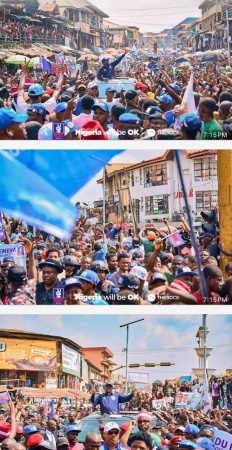
Obi acknowledging cheers from crowd
Since October 2026, Mr Peter Obi, presidential candidate of the Nigeria Democratic Congress (NDC), accompanied on several occasions by his running mate, Senator Rabiu Musa Kwankwaso, has embarked on a series of nationwide town hall meetings and grassroots engagements. The purpose is to interact directly with Nigerians, listen to their concerns and present their vision for the country.
The following is an updated account of the engagements from 27 October to 27 November 2026.
1. Lokoja, Kogi State – October 27, 2026
In Lokoja, Obi paid a courtesy visit to the Maigari of Lokoja, explored historical landmarks and interacted with traders at Kpata Market. At the town hall, discussions centred on corruption, agriculture, tourism and the abandoned Ajaokuta Steel Company. He also highlighted the tourism potential of Kogi State and the need to preserve its historical heritage.
2. Akwanga, Nasarawa State – October 28, 2026
Obi and Kwankwaso engaged residents on insecurity, corruption, agriculture, education and healthcare. Participants highlighted the difficulties women face accessing their farms and the neglect of persons with disabilities. Obi emphasised national unity, security and investment in human capital, promising functional primary healthcare centres in every political ward.
3. Abakaliki, Ebonyi State – October 29, 2026
Obi interacted with residents and traders at Nkalagu and Ezillo before proceeding to Abakaliki, where he joined supporters on a road walk. At the town hall, concerns included kidnapping, corruption, unemployment, education and healthcare. He reaffirmed his commitment to inclusive governance and the welfare of vulnerable Nigerians.
4. Enugu, Enugu State – October 29, 2026
The Enugu meeting, attended by Kwankwaso, attracted a large crowd. The candidates also met with the Christian Association of Nigeria, reaffirming their commitment to religious harmony and national unity. Discussions centred on insecurity, corruption, poverty, education and healthcare.
5. Yenagoa, Bayelsa State – October 30, 2026
In Yenagoa, Obi participated in the homecoming activities of Senator Henry Seriake Dickson and discussed the economic prospects of the Niger Delta. He emphasised maritime development, the revival of existing ports and the establishment of a new port in Bayelsa. He also participated in a traditional boat regatta at Toru-Orua, highlighting the region’s economic and tourism potential.
6. Owerri, Imo State – October 31, 2026
In Owerri, Obi visited markets and interacted with traders before addressing a town hall meeting. He highlighted the hardship facing ordinary Nigerians, criticised unproductive borrowing and emphasised security, accountability, education, healthcare and poverty reduction.
7. Calabar, Cross River State – November 4, 2026
Obi and Kwankwaso received a welcome in Calabar and paid a courtesy visit to the Obong of Calabar. At the town hall, discussions focused on reviving Calabar Port, tourism, security and economic development. Obi emphasised the state’s maritime and tourism potential. The visit was briefly marred by a security scare near the U.J. Esuene Stadium axis, which Obi condemned while urging peaceful political engagement.
8. Ikeja/Oregun, Lagos State – November 12, 2026
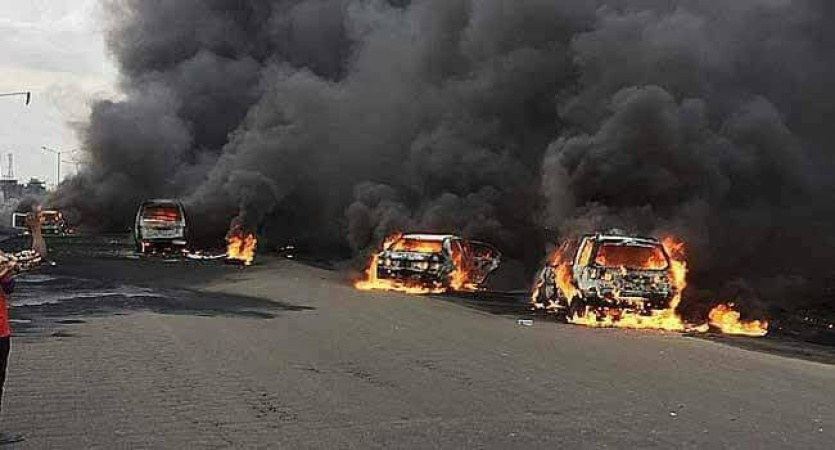
Obi and Kwankwaso took their mobilisation to Nigeria’s commercial capital, visiting markets and engaging stakeholders. Armed thugs disrupted the Oregun town hall venue ahead of the candidates’ arrival, damaging vehicles and injuring supporters. Obi nevertheless proceeded with his engagements, explaining that the town halls were designed to listen directly to citizens rather than hold conventional campaign rallies. He emphasised the importance of accessibility, physical presence and consistent engagement in presidential leadership.
9. Warri, Ughelli, Asaba and Ubulu-Uku, Delta State – November 13, 2026
Obi’s engagements in Delta State included a visit to Pastor Ayo Oritsejafor, former President of the Christian Association of Nigeria, to celebrate his birthday. He also visited the family of former Governor Emmanuel Uduaghan to offer his condolences. While travelling from Warri to Asaba, he stopped at Ughelli Market to interact with traders about the economic difficulties affecting their businesses. He concluded his engagements by attending the Catholic Charismatic Renewal Conference at Ubulu-Uku, where he urged Christians to pray for those in public office and for responsible management of public resources.
10. Kano and Zaria, Kano and Kaduna States – November 14, 2026
Obi travelled to Kano, where he served as Special Guest of Honour at the fifth convocation ceremony of Skyline University. He subsequently travelled with Kwankwaso to Zaria, Kaduna State, where they held a town hall meeting. Before the meeting, they commissioned the senatorial campaign office of the NDC candidate for Kaduna North, Mohammad Turad Sha’aban. Discussions focused on national unity, corruption, education, healthcare, poverty reduction and the cost of living.
11. Onitsha, Anambra State – November 20, 2026
Returning to his home state, Obi began with a visit to his alma mater, Christ the King College (CKC), Onitsha. He subsequently travelled through Head Bridge, Ochanja and Main Market, interacting with traders, drivers and other residents before proceeding to the town hall at the Archbishop C. J. Patterson International Auditorium Complex, All Saints Cathedral.
He presented measurable development targets, including expanding Nigeria’s electricity generation, transmission and distribution capacity from approximately 4,000MW to at least 10,000MW, establishing 10,000 functional primary healthcare centres and constructing 40,000 primary school blocks. He also urged citizens to treat election day as a national responsibility and remain at their polling units until votes were counted and transmitted.
12. Karu, Nasarawa State – November 23, 2026
Obi continued his grassroots engagements in New Karu, Nasarawa State, where he held a town hall meeting at Global Village. Before the meeting, he paid a courtesy visit to the Esu of Karu, His Royal Highness, Pharmacist (Dr.) Luka Panya Baba. The engagement provided an opportunity to interact with residents, party supporters and other stakeholders.
13. Benin City, Edo State – November 25, 2026
Despite last-minute venue disputes and an attack on the NDC convoy that left one person with gunshot injuries, Obi and Kwankwaso proceeded with their Edo State engagements. They paid a royal visit to the Oba of Benin, Oba Ewuare II, who prayed for the team and indicated that the palace would verify the statistics Obi presented. At the town hall held at Baptist High School, Benin City, Obi linked separatist agitations across Nigeria to prolonged misgovernance and pledged to move the country from a consumption-driven economy to a production-based one.
14. Minna, Niger State – November 26, 2026
Obi and Kwankwaso returned to Niger State for consultations and grassroots engagements in Minna. They visited former military President General Ibrahim Badamasi Babangida at his hilltop residence, where Babangida urged issue-based campaigning and condemned political violence. They also paid homage to the Emir of Minna, interacted with traders at the building materials market and visited the Internally Displaced Persons’ camp in Gwada, Shiroro Local Government Area. Obi reiterated his commitment to restoring security and protecting citizens’ livelihoods.
15. Aba, Abia State – November 27, 2026
Obi and Kwankwaso concluded this phase of their nationwide engagements in Aba, Abia State, with a town-wide greet-the-people tour and a town hall meeting at Primetime Events Centre, Kilometre 1, Port Harcourt–Aba–Enugu Expressway, Abayi. The visit was widely described by local party coordinators as a homecoming to the commercial city associated with the emergence of the Obidient Movement.
The town hall brought Obi and Kwankwaso into engagement with members of the business community, academics, artisans and other residents. The concerns raised and issues discussed included unemployment, the difficult operating environment for businesses, insecurity, education, healthcare, electricity and the wider economic condition of the country.
Obi said that the government he and Kwankwaso hoped to form would not give Nigerians excuses for failure. He pledged that public funds would be used for the public good and identified the fight against corruption, national unity, security and economic transformation as priorities. He also reiterated the need to move Nigeria towards a production-based economy, create jobs and improve the conditions under which businesses operate.
On electricity, he restated the commitment to generate, transmit and distribute at least 10,000MW. He also spoke about the need for a government with the energy and commitment to deliver results, arguing that the presidency should not become a retirement home. He called for a change of leadership in the 2027 election, saying that the incumbent administration had failed to fulfil its promises.
The Aba engagement thus brought the series to a significant commercial centre, where the candidates had the opportunity to hear directly from traders, manufacturers, artisans and young people about the challenges confronting their livelihoods.
WHAT THESE ENGAGEMENTS REVEAL
Three features of this series of engagements deserve attention.
First is the physical commitment involved in travelling across different parts of the country, often within tight schedules, to visit markets, schools, traditional rulers, religious institutions, IDP camps and town hall meetings. The engagements have taken the candidates beyond conventional political gatherings and into direct contact with different sections of society.
Second is the emphasis on participatory governance. Rather than limiting their engagements to prepared speeches, the town halls provide opportunities for citizens to raise questions, express grievances and discuss their expectations. Obi has also presented measurable targets, including 10,000MW of electricity, 10,000 primary healthcare centres and 40,000 primary school blocks. These are campaign commitments against which the public can demand accountability.
Third is the emphasis on accessibility and empathy. The visits to markets, schools, traditional institutions and displaced persons’ camps reflect an approach that seeks to connect national leadership with the everyday experiences of citizens. The engagement at Gwada, in particular, brings attention to the plight of Nigerians displaced by insecurity.
THE QUESTION OF PRESIDENTIAL READINESS
The presidency requires intellectual capacity, administrative experience, integrity, sound judgement, courage, compassion and physical stamina. These are important considerations in assessing any presidential candidate.
Obi’s record as a former governor, his experience in business and financial management, and his public emphasis on accountability and investment in human capital form part of the basis on which his candidature should be examined. His present engagements also provide an opportunity to assess his accessibility, communication, stamina and approach to public participation.
He is not merely waiting for votes; he is taking his message to Nigerians and presenting his case for national leadership. Ultimately, voters will have to assess his record, proposals, experience and capacity against those of other candidates.
There is another dimension to these engagements: Obi’s message increasingly resonates with what the Germans call Zeitgeist — the spirit of the time. Nigerians are expressing growing concern about electoral credibility, political intimidation and the protection of their votes. His repeated call for citizens to remain at polling units and ensure that votes are counted and transmitted speaks to this concern. The NDC maintains that its vote-protection message is a call for lawful civic vigilance, not violence or intimidation.
The 2027 election will provide an opportunity for Nigerians to determine the direction they want their country to take.