ADAD

Updating your news feed...
NEWS EXPRESS is Nigeria’s leading online newspaper. Published by Africa’s international award-winning journalist, Mr. Isaac Umunna, NEWS EXPRESS is Nigeria’s first truly professional online daily newspaper. It is published from Lagos, Nigeria’s economic and media hub, and has a provision for occasional special print editions. Thanks to our vast network of sources and dedicated team of professional journalists and contributors spread across Nigeria and overseas, NEWS EXPRESS has become synonymous with newsbreaks and exclusive stories from around the world.

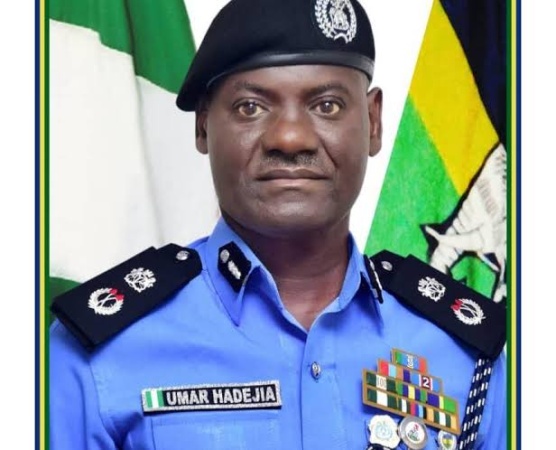
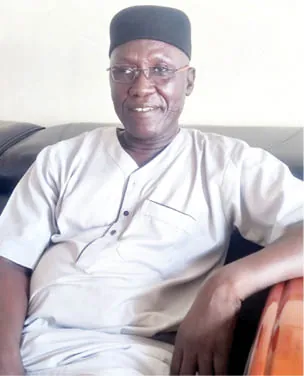


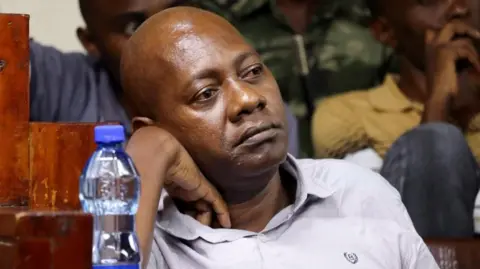




With more than three decades of experience in policing and law enforcement, Deputy Inspector-General of Police Bala Ciroma (retd), is well placed to assess the implications of Nigeria’s proposed state police system. Enlisted into the Nigeria Police Force in March 1990, Ciroma rose through the ranks, serving as Commissioner of Police in the Federal Capital Territory, Assistant Inspector-General of Police in charge of Zone 7 and the Department of Operations at Force Headquarters, Abuja. He also served as Head of Operations at the Economic and Financial Crimes Commission (EFCC). His experience in the command and administration of the force gives him a valuable perspective on the institutional, operational and political challenges that could determine whether state police succeeds or becomes another layer of dysfunction. In this interview, he examined the conditions that must be met for the proposed system to work, warning that state police would struggle to deliver results if the existing challenges in policing are left unaddressed.
Is state police the magic bullet for Nigeria’s security challenges?
There was a lot of public outrage over police performance. Several committees were set up and submitted reports on how to improve the performance of the police in our society. However, notwithstanding their findings and recommendations, the situation remained largely the same. I do not know why.
Therefore, introducing another idea, perhaps by establishing another police force, could bring some innovation that might enhance security.
Against that background, I felt it was not a bad idea, even though it was not my ideal solution. What I wanted was for us to address the problems hindering the effectiveness of the existing police force.
Your former boss, IG Kayode Egbetokun, was initially a strong opponent of state police but appeared to change his position towards the end of his tenure. Did you share his initial reservations? What is your assessment of state police?
I shifted my position because we had tried several things without achieving the desired results. Perhaps establishing state police forces would bring about the improved security system we all hope for. Some people have also argued that the majority carries the vote. Almost all the states have now endorsed the idea.
What specific shortcomings of the Nigeria Police Force did you believe needed to be addressed?
You know them. We had challenges, primarily in terms of logistics. Transportation, deployment and the use of modern technology, such as surveillance cameras across cities and other parts of the country were not adequately in place to improve our security operations. Therefore, when the idea of state police came on board, my thinking was that if it could provide a solution to our security challenges, then let it be.
Some argue that state police could reproduce, or even worsen the problems of the federal police, much like the concerns surrounding state electoral commissions and the Independent National Electoral Commission (INEC). Why not strengthen the existing police structure instead of creating another one?
That would be a very difficult question for me to answer because you are asking me to respond from the government’s perspective. It would be difficult for me to say much about that. However, I want to make one point: We have reached a stage where there is almost no turning back.
The state Houses of Assembly have approved the constitutional amendment. The National Assembly is expected to work on it and forward it to the president, which I understand has already been done. The president is now seeking legal advice before perhaps assenting to the bill.
So, at this stage, you cannot change much. You have no option but to key into the process and see where you can offer advice or play a role in ensuring that the decision already taken succeeds.
You will recall that a similar policy of posting junior officers to their states of origin was introduced during the Babangida administration. What lessons can be drawn from that experience?
I recall. I think it was during the Babangida administration that DSPs and officers below that rank were transferred to their states of origin to localise the police cadre and enhance its efficiency. The assumption was that because they came from those localities they had better knowledge of what was happening there.
However, I also recall that the policy was eventually jettisoned for reasons best known to the government at the time.
Were you affected by that policy, or had it been reversed before your set joined the force?
It was reversed before our set came in. The officers who were a course ahead of us were posted to their states of origin after passing out. Fortunately, by the time we joined the force, the policy had been reversed, so we were posted to states other than our own.
Why do you consider yourselves fortunate that the policy was reversed? Do you think it was a flawed approach?
If it had been successful, one would assume it would have continued. I would rather look at it from the perspective that perhaps the government was not satisfied with the results of the policy. That may explain why it was reversed.
But the truth is that the current agitation for state police is largely based on the perceived shortcomings of the federal police. Many people believe that security would be better enhanced if states had their own police forces.
Whether that would actually improve security is a matter of opinion, as far as I am concerned. If states do not provide the enabling environment for the police to flourish and operate effectively, we may still find ourselves in the same position, notwithstanding the establishment of state police. Therefore, states must ensure that once established, their police forces are adequately provided for in terms of welfare, logistics and other essential requirements. Training is also important. There are many things that must be put in place to build a strong and effective police force.
The proposed state police bill is almost through the legislative process. Beyond the necessary constitutional amendments, what must be put in place before state police can become operational?
Importantly, once you establish the structure, you also need to take care of the people who will operate it. You must get the right personnel and ensure they are appropriately trained. That is what will determine the success of the programme.
If you establish the structure without having the right people to operate it, the outcome will be almost zero.
Apart from personnel, what other operational requirements must states provide?
Personnel are key. Beyond that, you need logistics, including transportation, communication and modern technology. All these must be adequately provided. Otherwise, the situation may remain the same as it is today.
Do states have the financial and institutional capacity to run police forces effectively, given the challenges the federal police have struggled with over the years?
Going by the recent information we have about the allocations to the states, I think that would go a long way in enhancing their ability to establish and fund an effective state police system.
What immediate steps should states take in terms of funding, recruitment, training and infrastructure to prepare for state police?
Importantly, we already have a National Police Service and a Police Service Commission at the federal level. The states will also need to establish their own police service commissions and training institutions for the training of police personnel. Basically, these are the things that come to mind.
Who should qualify to head a state police force, and what criteria should guide recruitment into the service?
I think we have an advantage at the outset because there is already a federal police structure in place. The operational models exist, so we are not starting from ground zero.
As for recruitment, states could adopt the same procedures used by the federal police. There is a pool of young people with the required educational qualifications who could be recruited from the states establishing their own police forces.
The idea, as they say, is to localise policing by bringing in people who are assumed to have better knowledge of the terrain, the people and the nature of offences committed within their jurisdictions than outsiders.
Should serving senior officers in the federal police be allowed to move to state police, or should governors rely on retired officers? How do we prevent political appointments that could compromise the institution?
Well, if a governor does that (allow politics), it would be a mistake on his part because he is trying to build an institution.
An institution must have the requisite knowledge and experience to function effectively. Therefore, if you appoint a political loyalist as commissioner of police without any law enforcement background, you are definitely planning to fail.
Would retired senior police officers or other security personnel with relevant experience be suitable to head state police forces?
Well, we are talking about policing. If you are establishing a police organisation, you are expected to look for people with experience in policing.
You cannot just pick anybody whose training and exposure have not been in law enforcement. It will serve your purpose better to have someone with a law enforcement background because that is what you are trying to establish: a law enforcement agency.
I think that, particularly at this foundational stage, experienced police officers should be brought in to establish the state police. There are serving officers at the federal level who may prefer to return to their home states and contribute to the process.
There is also a pool of retired security personnel in every state. Governors should not simply wake up and appoint inexperienced young men as commissioners of police. They would be primed to fail.
You need experienced people to nurture the system and allow it to grow. Perhaps, in the future, the younger officers can take over.
Given the jurisdictional disputes between the Police Service Commission and the Nigeria Police Force over recruitment, how should states structure their own process? Who should recruit officers, and who should train them?
I think institutions must learn to work together. Under the existing arrangement, the Police Service Commission handles recruitment, while the Nigeria Police Force is responsible for training the personnel.
Ideally, I think that is the arrangement that should be adopted. No institution should work in isolation because the ultimate objective is to produce well-trained personnel. Both institutions must work in synergy to avoid friction. I believe that approach was adopted by the Police Service Commission and the Nigeria Police Force, and that is how we have been able to recruit and train personnel.
However, that appears to be a temporary arrangement because, as they say, everybody’s responsibility is nobody’s responsibility.
We have seen several agencies where the governing boards and executive management clash. Sometimes, you have to find a common ground and clearly define responsibilities to ensure that the system works.
In our case, the police were involved in the recruitment process while recognising that the Police Service Commission has the constitutional mandate to recruit.
At the same time, the commission also recognises that the Nigeria Police Force is the end user of the personnel. You cannot shave someone’s head in their absence. That is why there is close collaboration between the two institutions.
Even now, I understand that a recruitment exercise is underway. About 50,000 personnel have been recruited and handed over to the police for training.
Will the proposed arrangement finally resolve the contradiction of governors being chief executives but not having operational control over the police? What powers will they have?
Well, I really don’t know what the final arrangement will look like, but I know that state governors will be allowed to appoint their commissioners of police. There will also be measures to provide checks and balances and ensure that the process is properly regulated.
However, you must note that state police will not exist in isolation. The federal police will remain. Essentially, what will distinguish the two will be the nature of the crimes they are mandated to handle.
Certain categories of crimes will be handled by the state police while others will remain under the federal police. That should make it easier to determine who is responsible when something goes wrong.
How will oversight work, particularly in cases of human rights violations, unlawful arrests or politically motivated operations? Who will hold state police accountable if governors abuse their powers?
I think the proposed structure provides for state police service commissions, just as we have the Police Service Commission at the federal level. So, just as the federal commission exercises oversight over the federal police, the state commission will oversee the police in its jurisdiction.
In states where ethnic or religious minorities fear political persecution, how can their concerns be addressed, particularly in recruitment? I think nothing should exclude the minorities. My opinion is that we must all act responsibly.
No state belongs to one group or another. We have multi-religious and multi-ethnic states, so those responsible for operating the system must be fair. If they are not, the consequences could be disastrous.
You find that in some states, minority groups face discrimination in employment. Even in teaching, which is often considered a last resort for graduates waiting for better opportunities, state teachers’ service commissions sometimes refuse to employ people on the grounds that they are not indigenes but settlers…
That is a major problem we have in this country. It is something we must address as it arises. At the federal level, we have the concept of federal character.
I believe anything that guarantees fairness is worth considering. If provisions for minority representation in state police recruitment will guarantee fairness, then it is worth including.
How should the responsibilities of federal and state police be defined to avoid jurisdictional conflicts?
As I said earlier, there will apparently be a division of responsibilities. Certain categories of crimes will be handled by the state police, including localised policing and patrols, while the federal police will retain responsibility for specific crimes within its jurisdiction.
Therefore, I do not envisage many conflicts between the federal and state police.
What happens when a suspect commits a crime in one state and flees to another? How will the different state police forces coordinate, and what role will the federal police play?
In complicated cases, the federal police may have to intervene. But you are asking me to predict the future and I am not a soothsayer. However, I want to point out that even in the United States, they had teething problems when the system was introduced. With time, they were able to narrow down the challenges and perfect the system.
I believe that, through practice, we will also reach that level of efficiency in Nigeria.
With several states already operating vigilante and neighbourhood watch outfits, how can state police avoid becoming another layer of security agencies? Should these existing outfits be absorbed into the new structure?
The way I see it is that most state governments that advocated state police had already established vigilante groups and other security outfits to enhance security. Therefore, with the establishment of state police, I hope they would collapse these agencies into the state police structure, including neighbourhood watch groups.
You need to regulate the activities of the vigilante groups that have already been established. One of the best ways to achieve this is to bring them under the state police structure.
If you go around the states you will find different groups wearing different uniforms. Everybody wants to wear a uniform.
In fact, to a certain extent, many of these vigilante groups now carry pump action guns.
Are we losing sight of the need to strengthen the Nigeria Police Force itself as attention shifts to state police? Why is it so difficult to fund and equip the police to meet international standards?
I don’t want to cite any particular country, but you have travelled and seen how policing works elsewhere. Why is it difficult for us to fund our police?
I don’t know how other countries structure their police forces, but policing is an expensive venture. If you want a police force to succeed, you must provide the basic equipment required for effective policing.
You must also ensure that officers are well taken care of so that, as you rightly observed, nobody would even think of approaching a policeman with an improper offer.
In some countries, you see patrol vehicles everywhere. They also have control rooms equipped with cameras covering the areas they are responsible for monitoring.
Take China for instance, you hardly see police officers on the streets in some cities, but when an incident occurs, a patrol vehicle arrives within a very short time. That is because much of the policing is done from control rooms. Cameras cover entire cities, allowing the authorities to monitor activities and deploy the nearest police patrol to any location where an incident occurs.
Which is more cost-effective: recruiting thousands of police officers or investing in technology supported by well-trained personnel?
I don’t want to look at the cost for now. The world has become a global village, and even criminals have the luxury of using technology to their advantage in committing crimes.
If you are not technologically equipped, how would you checkmate those who use technology to perpetrate crimes?
We should be concerned that crime is evolving and some offences are now being committed with the aid of modern technology. To stop them, those responsible for enforcement must be well equipped and trained, perhaps even a step ahead of the criminals, to counter them effectively.
Whether we like it or not, we must invest heavily.
Given the high cost of policing, what will motivate financially weaker states to invest in their own police forces when the federal police will still be available?
They have to find the resources because they accepted the law and passed it. That means they must have the capacity to implement it. The initiative is now left to the respective states.
Each state must assess its peculiar security challenges and develop solutions accordingly.
There are states where violent crime is relatively minimal. You don’t expect such a state to buy AK-47 rifles when most of its security challenges may involve white-collar or technology-related crimes. Such a state should invest more in technology.
There are other states facing physical security threats. You don’t expect them to invest only in computers. They may need combat vehicles, rifles and even drones to address their peculiar challenges.
I think every state must respond to its own security needs.
Given the increasing involvement of the military in internal security operations, do you see Nigeria returning to a system where the police take primary responsibility for domestic security?
The situation determines what you do. You have militants and other security threats carrying AK-47 rifles, anti-aircraft weapons, missiles and grenades. In such circumstances, do you expect the police to operate without adequate firepower? No.
The authorities must equip police officers appropriately to deal with the threats they are expected to confront. If terrorists are carrying sophisticated weapons, the police must have comparable capabilities to protect themselves and perform their duties.
Regarding the militarisation of the police, it has been traditional for the police and military to operate alongside each other in certain situations.
If you recall, during the civil war, whenever the military liberated an area, the Mobile Police Force would sometimes come in to take over while the military advanced.
So, there is a history of such cooperation. But whether the military is now being deployed in situations where it performs ordinary police duties to the detriment of the police is another matter.
Beyond policing, don’t you agree that unemployment, corruption and poor leadership also contribute to insecurity?
I don’t want to look at any of these issues in isolation. It is a system, and we must recognise the problems and plan accordingly.
We must find ways to tackle corruption and address unemployment.
Fortunately, the establishment of a new police force also creates employment opportunities for many people. That could help address part of the unemployment problem and consequently, reduce crime.
That is why I say we should not isolate one problem and focus on it. Everybody has a role to play in making the society work.
Journalists have their responsibilities, just as police officers and lawyers do. We are all responsible.
If you look at the police alone and conclude that they are the problem, you are ignoring the other institutions in the society. Which institution is without its own problems?
The police cannot operate in isolation; they are part of the society. (Daily Trust)