ADAD

Updating your news feed...
NEWS EXPRESS is Nigeria’s leading online newspaper. Published by Africa’s international award-winning journalist, Mr. Isaac Umunna, NEWS EXPRESS is Nigeria’s first truly professional online daily newspaper. It is published from Lagos, Nigeria’s economic and media hub, and has a provision for occasional special print editions. Thanks to our vast network of sources and dedicated team of professional journalists and contributors spread across Nigeria and overseas, NEWS EXPRESS has become synonymous with newsbreaks and exclusive stories from around the world.





.webp)









Loading banners
Loading banners...

The Inspector-General of Police, Tunji Disu, on Tuesday warned politicians against turning the 2027 general elections into a theatre of violence, vowing to arrest and prosecute anyone involved in attacks on political opponents, destruction of campaign venues and the use of dangerous weapons.
But opposition parties cautioned that continued attacks on their candidates and supporters could force them to resort to self-defence, raising fresh concerns over the security of political campaigns ahead of the January 16, 2027 presidential election.
While the African Democratic Congress said it would not deny its members the right to defend themselves, the Allied Peoples Movement warned that no political party had a monopoly on violence. The Nigeria Democratic Congress and Labour Party also called for stronger security protection for political actors.
The Peoples Democratic Party, however, urged its members not to take the law into their hands, proposing the establishment of special courts to ensure speedy prosecution of electoral violence offenders.
The ruling All Progressives Congress rejected reprisal attacks and self-help, insisting that political disagreements must be resolved through lawful means.
The differing positions emerged amid a spate of attacks on political rallies, campaign convoys and supporters across the country, including the killing of six persons during an attack on the campaign entourage of former Deputy Senate President, Ovie Omo-Agege, in Delta State on Monday.
Speaking at a high-level security meeting in Abuja with the Independent National Electoral Commission, political party leaders, civil society organisations and other stakeholders, Disu described the growing incidents of political violence as a serious threat to public peace and democratic participation.
He cited attacks on campaign venues, violent clashes among supporters, intimidation of opponents and the use of dangerous weapons as developments that required urgent intervention.
“Political competition must never become justification for violence. Democracy gives citizens an opportunity to freely express their political preferences, support candidates of their choice, and hold differing opinions without fear of intimidation.
“It must never become a contest of who can mobilise more thugs, deploy more weapons or inflict greater harm on political opponents,” the IG said.
Disu declared that the police would remain neutral in the political process, warning that party affiliation, political office or personal influence would not protect offenders from prosecution.
“The position of the Nigeria Police Force is clear. Our neutrality in the political process is non-negotiable. We owe allegiance to the Constitution, the law and the Nigerian people, not to any political party or individual. We will not protect political interests; we will protect the Nigerian people,” he said.
He urged party leaders to take responsibility for their candidates, officials and supporters, warning against inflammatory statements, intimidation and the mobilisation of armed groups.
The police chief also condemned Monday’s killing of six persons in Uduere community, Ughelli North Local Government Area of Delta State, describing the incident as unacceptable.
The Chairman of INEC, Prof. Joash Amupitan, also expressed concern over the growing violence, warning that attacks on political actors could undermine the credibility of the elections even before voting begins.
He urged politicians to see elections as an opportunity to present their programmes to Nigerians rather than engage in intimidation and attacks.
“You will recall during my address to the leaders of political parties and members of the National Peace Committee on August 18, 2026, I emphasised one very key point: that we should not turn our election into a battlefield,” he said.
Amupitan warned that violence could prevent citizens from freely participating in political activities, thereby compromising the electoral process.
“When participants cannot assemble, campaign or organise themselves, express their views freely, the political process is compromised long before election day.
“And that is what this violence is meant to be, to scare the people so that the people will not turn out to vote,” he said.
He urged the police to arrest and prosecute perpetrators, particularly those responsible for inflammatory campaign statements and the deployment of armed groups.
Citing sections 95, 96 and 97 of the Electoral Act 2026, the INEC chairman reminded political parties of their obligations to conduct peaceful campaigns and warned against organising or retaining security groups and political vanguards.
He also disclosed that INEC would hold a security conference on Thursday, November 26, with service chiefs, the police and other members of the Inter-Agency Consultative Committee on Election Security to address emerging threats.
The Nigeria Democratic Congress disclosed that it boycotted the meeting with the IG, citing alleged police bias and failure to protect its members from attacks by suspected political thugs.
The opposition party said it no longer had confidence in the Nigeria Police Force, accusing security operatives of failing to prevent violence against its members allegedly perpetrated by supporters of the ruling All Progressives Congress.
The decision followed a series of reported attacks on NDC members and campaign activities in different parts of the country, including Benue, Edo, Cross River, Enugu and Delta states.
Make PUNCH part of your everyday experience.Add us to your Preferred Sources
In a statement by its National Publicity Secretary, Osa Director, the party condemned what it described as a growing pattern of politically motivated violence against its members and accused the police of failing to investigate the incidents and prosecute those responsible.
He said, “The NDC has decided to boycott the security meeting called by the Inspector-General of Police. We no longer feel safe and protected by a Police Force that watches helplessly the slaughter of our members across the country by hired thugs of the ruling APC. We will not lend legitimacy to a process that has failed to protect us.”
Director specifically recalled an incident in Benue State, where he said their presidential candidate, Peter Obi, was prevented from entering the state by thugs loyal to the APC government.
He said, “Politics and campaigns are not supposed to be war. However, the APC government has turned the campaign into a battlefield, where lives have become nasty, brutish and uncertain.”
The NDC further raised concerns that the police and other security agencies failed to intervene during the killing of four of its members in Delta State, describing the incident as evidence of the alleged compromise of security institutions.
“The situation is compounded by the complicity of the Police and security forces. The killing of four members of the NDC in Delta State was done in the full glare of the Police and security forces who were supposed to protect all Nigerians,” it added.
Director said the party’s decision to shun the meeting was informed by what he described as the failure of security agencies to conduct credible investigations into attacks on its members and bring the perpetrators to justice.
The NDC called on the international community to prevail on President Bola Tinubu and the APC-led Federal Government to uphold democratic standards and guarantee the safety of opposition politicians.
“We call on the international community to compel President Bola Ahmed Tinubu and the APC government to play by internationally accepted democratic standards.’’
Meanwhile, opposition parties expressed frustration over what they described as inadequate protection for their candidates and supporters.
The National Publicity Secretary of the ADC, Bolaji Abdullahi, said the party had repeatedly raised concerns about attacks on opposition figures but had yet to see sufficient action from security agencies.
He warned that failure by the government to protect citizens could push them towards self-help, with dangerous consequences for national security.
“We believe security agencies need to wake up and protect citizens. If people feel that the state can no longer protect them, they may naturally resort to self-help, which could only result in anarchy.
“Our party is committed to non-violence, but we cannot continue to tell people to forgo their right to self-defence simply because they are our members,” Abdullahi said.
The NDC presidential candidate, Peter Obi, through his spokesman, Idris Zekeri, also called on the Federal Government to strengthen security around presidential candidates, warning that the state must not wait for candidates to formally request protection before discharging its responsibility.
Zekeri condemned the reported attack on the campaign convoy of the party’s vice-presidential candidate, Senator Rabiu Kwankwaso, in Bichi, Kano State, and urged President Bola Tinubu to ensure that members of his party complied with his call for peaceful campaigns.
He said the government should double the security attached to Obi and other leading political figures.
According to him, the responsibility for protecting candidates and their supporters rests primarily with the government and security agencies.
He said, “We don’t have to start protecting ourselves. We want a situation where agencies of government and law enforcement protect everybody, including the APC from itself.
“So we don’t have to do it because it amounts to nearly taking laws into our hands, and that is not in our character.”
Zekeri recalled that Obi’s supporters had resisted attempts by suspected thugs to disrupt a town hall meeting in Lagos, maintaining that political campaigns must be protected from intimidation.
The NDC had earlier accused security operatives of failing to prevent attacks allegedly carried out by APC supporters against its members in Benue, Edo, Cross River, Enugu and Delta States. It also alleged that four of its members were killed in Delta, demanding investigations and prosecution of those responsible.
The PDP National Publicity Secretary, Jungudo Muhammad, took a different position, warning that asking supporters to defend themselves could escalate tensions and lead to further bloodshed.
He urged political leaders to draw lessons from former President Goodluck Jonathan’s declaration that his ambition was not worth the blood of any Nigerian.
Muhammad stated, “We are a political party, and we have confidence in the country’s security system. We will continue to preach peace and urge our members not to take the law into their own hands. Instead, they should report any incident to the relevant security agencies.”
He called for specialised courts to try electoral violence offenders, arguing that speedy trials and punishment would discourage others from engaging in political violence.
“Once offenders are brought to justice within the shortest possible time, it will serve as a deterrent to others and discourage them from engaging in electoral violence,” he added.
The APM National Publicity Secretary, Abubakar Yusuf, accused the APC-led Federal Government of using intimidation to weaken opposition parties, but said his party would not encourage members to take the law into their hands.
He warned, however, that the party would not remain indifferent to attacks on its supporters.
“We will match action for action because no one has a monopoly on violence,” Yusuf said.
He added that the party would continue to conduct its campaigns within the law, urging security agencies to intervene promptly to prevent political disagreements from escalating.
Similarly, the Labour Party National Publicity Secretary, Ken Asogwa, called on political parties to take reasonable steps to protect themselves against attacks while insisting that security agencies must provide equal protection to all political groups.
He said the law recognised the right to self-defence but cautioned against anarchy.
“The law does not expect someone confronted with an attack by non-state actors to simply fold their arms and allow themselves to be killed,” he said.
Asogwa urged the police to ensure that security at political rallies was not the exclusive preserve of the ruling party.
However, the APC National Chairman, Prof. Nentawe Yilwatda, through his media aide, Abimbola Tooki, said the ruling party would not support self-help, reprisal attacks or the use of violence to settle political disagreements.
He pledged that the APC would work with security agencies and other stakeholders to protect its members and supporters while urging them to report threats and attacks to the appropriate authorities.
“The APC will always defend the rights, safety and legitimate interests of its members and supporters, but we will not encourage self-help, reprisal attacks or the taking of the law into one’s hands,” he said.
Yilwatda added that the right to protect one’s life in the face of immediate danger must not be interpreted as a licence to organise retaliation, carry illegal weapons or engage in violence.
The SDP National Chairman, Prof. Sadiq Gombe, also called for equal security protection for all political parties, warning that any perception of police bias could erode public confidence in the electoral process.
He urged security agencies to investigate reported attacks promptly and prosecute offenders regardless of their political affiliations.
The growing tension has been accompanied by a series of attacks on political activities in different parts of the country.
On November 23, six persons were reportedly killed when gunmen attacked the campaign entourage of Omo-Agege in Uduere community, Delta State. The police confirmed six deaths, against the four earlier reported by the former deputy Senate president’s campaign organisation.
On November 13, the convoy of President Tinubu was reportedly attacked in Abuja after he observed Jumu’ah prayers at a mosque in Garki, with some individuals said to have thrown stones and other objects at the vehicles.
In Kano, suspected thugs reportedly attacked the campaign convoy of Kwankwaso and the NDC governorship candidate, Aminu Abdussalam Gwarzo, in Bichi, vandalising several vehicles and injuring supporters. The party’s campaign organisation alleged that about seven vehicles were damaged.
Earlier in November, Obi’s convoy was attacked in Calabar, Cross River State, while some of his supporters were reportedly assaulted during a town hall meeting in Lagos.
Supporters of former Vice-President Atiku Abubakar, the ADC presidential candidate, have also reportedly faced attacks in Benin, Edo State, Kaduna and Cross River State.
On October 30, the African Action Congress presidential candidate, Omoyele Sowore, and members of his entourage were attacked at a restaurant in Ado-Ekiti, Ekiti State. Their vehicles were vandalised, while Sowore and some members of his team sustained injuries.
The National Peace Committee’s monitoring report, published by The PUNCH on November 11, further highlighted the scale of the problem.
The report, covering August 19 to October 27, documented 109 breaches of the National Peace Accord in 26 states and the Federal Capital Territory. Political violence and thuggery accounted for 33 incidents, while misinformation and disinformation recorded 29.
Kaduna had the highest number of breaches, with nine, while the FCT recorded seven. The committee also identified Kaduna, Edo and Enugu as electoral flashpoints.
In a related development, former Chief Justice of Nigeria, Justice Olukayode Ariwoola (retd.), on Tuesday warned against a repeat of the violence that followed the 2011 general elections, when more than 800 people were killed, according to Human Rights Watch.
Speaking in Abuja, Ariwoola, who chairs the Council of the Wise of the Savannah Centre for Diplomacy, Democracy and Development, expressed concern over attacks on political convoys, rallies and gatherings in several states.
He called on security agencies to deploy adequate personnel to campaign venues, arrest and prosecute perpetrators, and confiscate dangerous weapons.
He also urged political parties to discipline members involved in violence and called on INEC to enforce electoral laws impartially.
Ariwoola said, “Democracy thrives on the peaceful contestation of ideas and visions, not on bloodshed or coercion.
“It will be an unfortunate national shame if Nigerians collectively allow a repeat of what happened after the 2011 elections. The 2027 elections must be won at the ballot boxes, not on the streets through intimidation and bloodshed.”
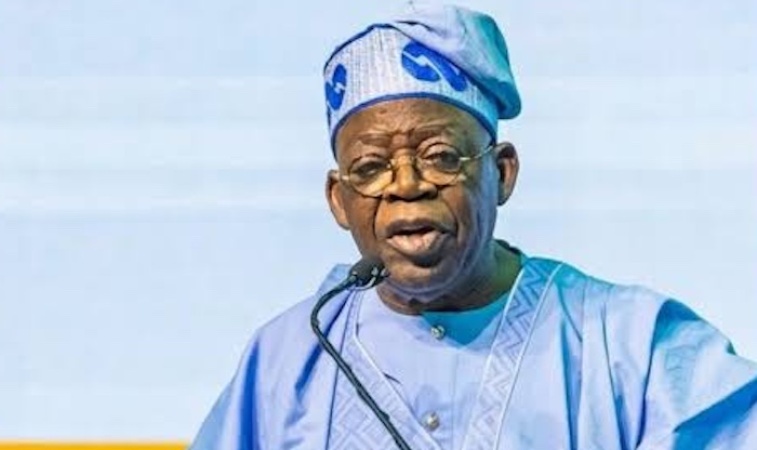
President Tinubu recently condemned political violence and directed security agencies to act firmly against those threatening public order.
“Every form of violence stands condemned. Violence should never have a place in our political campaigns as we move towards the 2027 general elections,” the President said, urging politicians to focus on issues and the contestation of ideas. (PUNCH)